
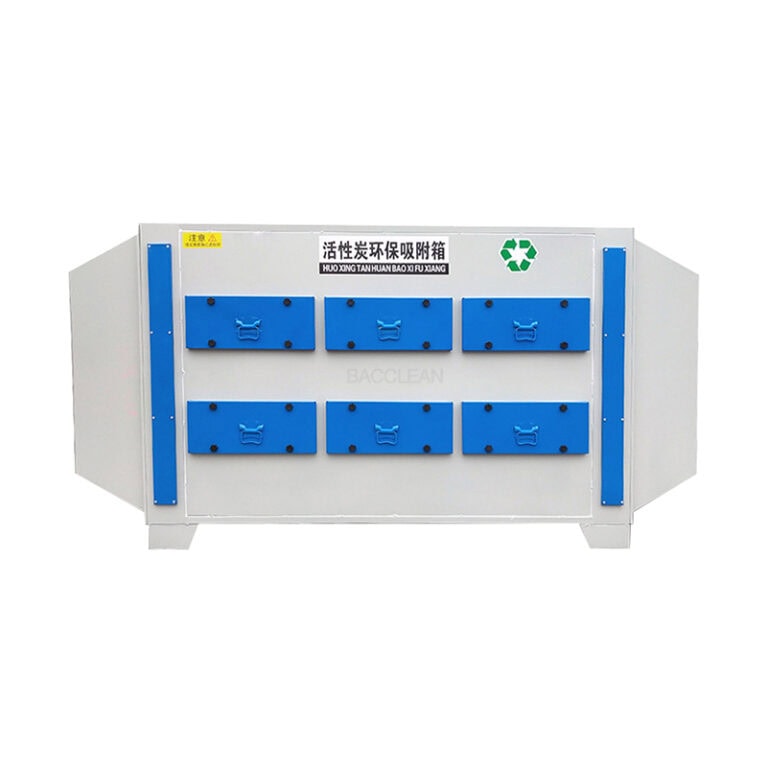
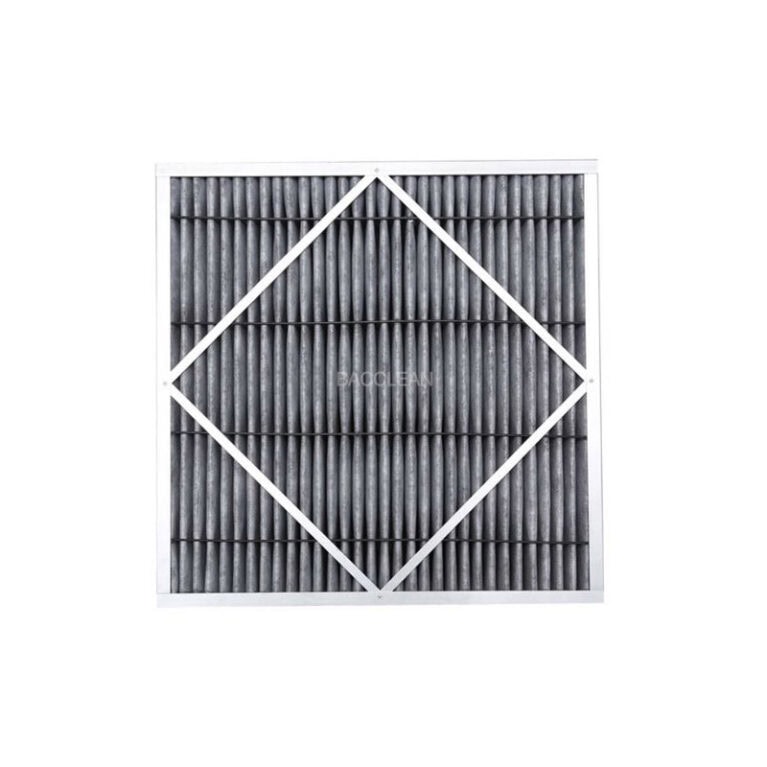
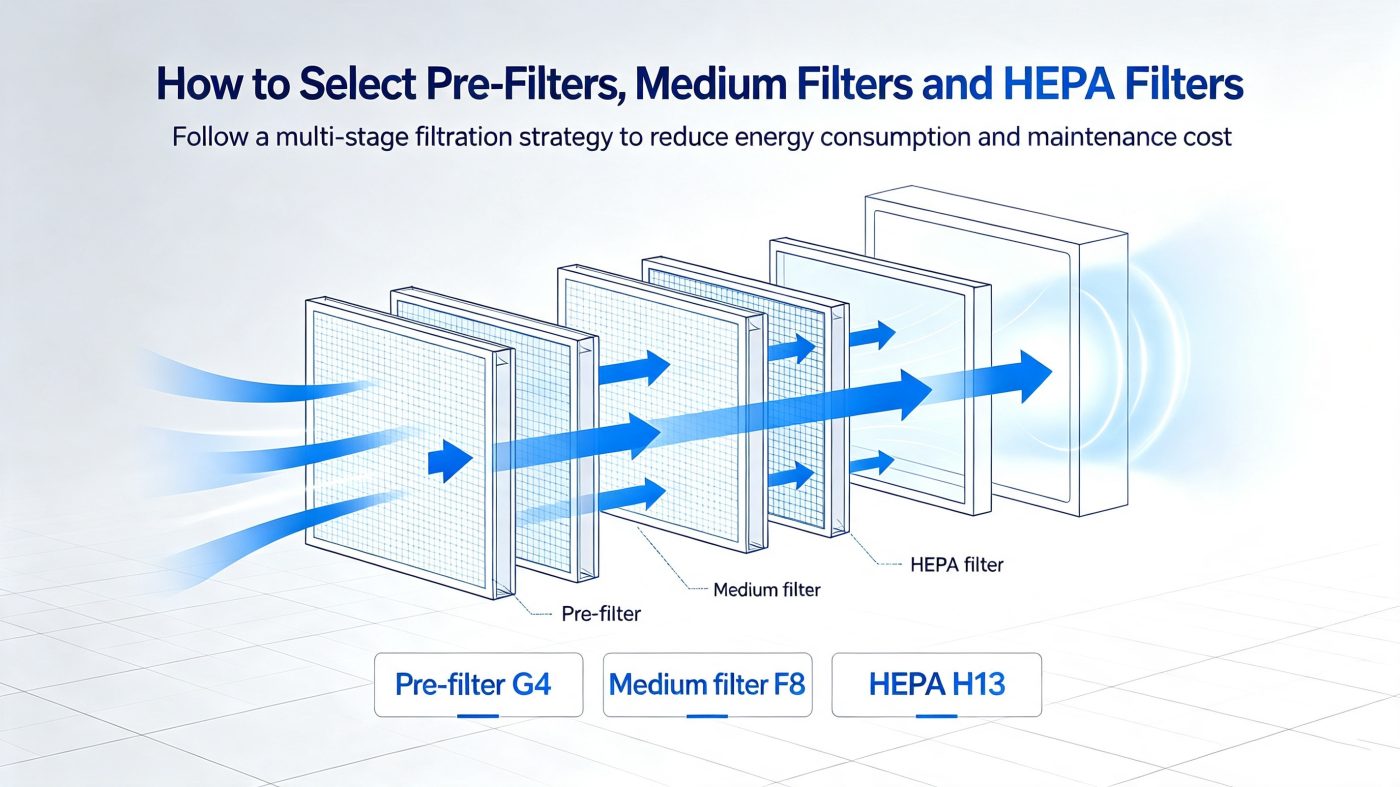
Initial, medium, and high-efficiency filters are not necessarily better the higher their rating. Selection should be based on a comprehensive evaluation of cleanroom class, air pollutant types, airflow volume, pressure drop requirements, site conditions, maintenance budget, and relevant standards (e.g., GMP/ISO14644). Following the core principle of staged filtration—coarse filtration first, fine filtration later—the front-end filter protects downstream precision filters, ensuring compliance with purification standards while controlling fan energy consumption and filter replacement costs.
I. Before Selection: Clarify 8 Fundamental Parameters (Prerequisites for Selection)
Before selecting a filter, gather essential site information; missing parameters can lead to incorrect model selection:
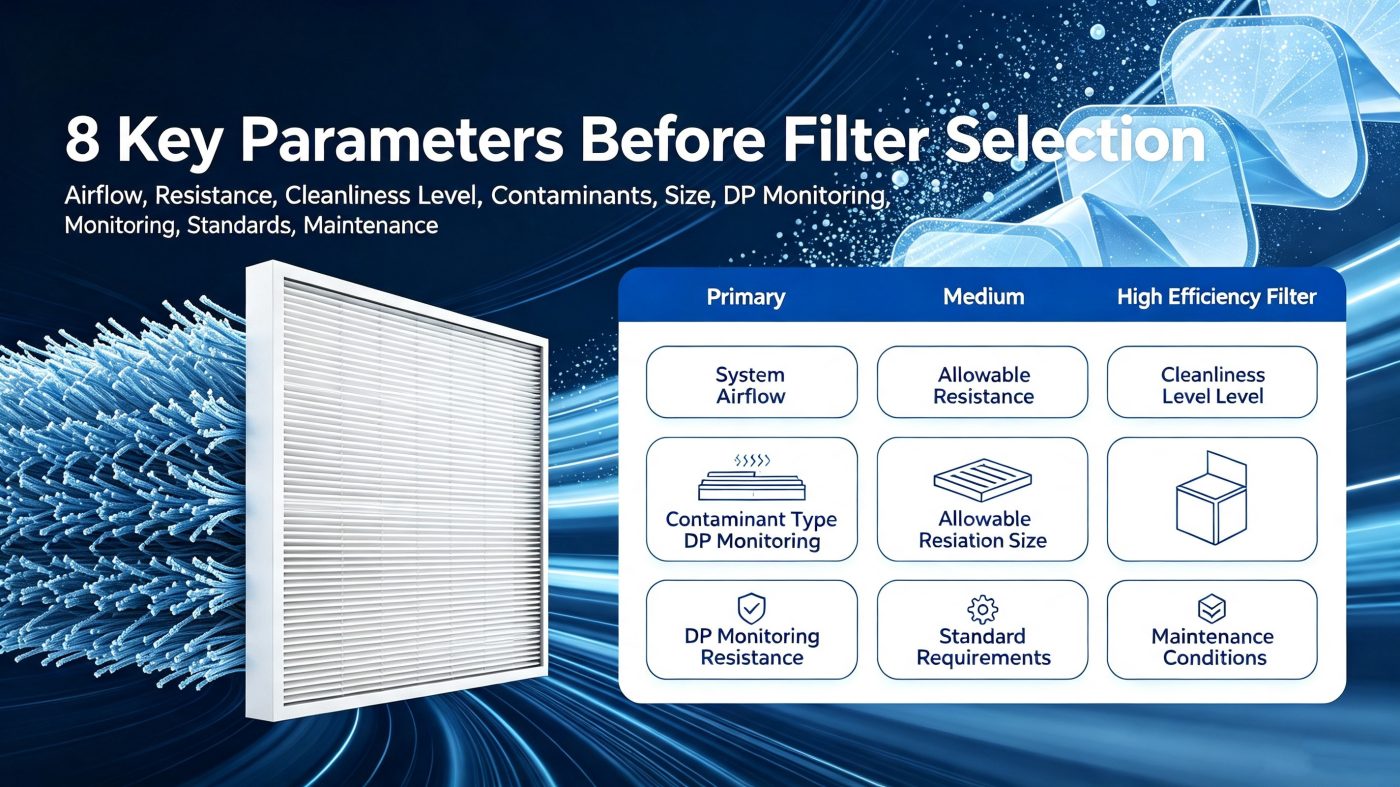
– System airflow: Rated airflow of air handling units, FFUs, or fresh air units (m³/h); actual filter airflow must not exceed rated capacity, as excessive airflow increases resistance and reduces efficiency.
– Allowable pressure drop range: Fan static pressure margin; prioritize low-resistance filters to save electricity long-term.
– Target cleanliness level: ISO5–ISO9 cleanrooms, general ventilation, operating rooms, laboratories, exhaust gas treatment, etc.
– Pollutant characteristics: Dust, fibers, cooking fumes, moisture, mold, chemical aerosols; presence of high temperature, high humidity, or corrosive gases.
– Installation space dimensions: Filter frame external dimensions and frame type (bag-type, panel-type, liquid-seal, pleated).
– Differential pressure monitoring: Whether equipped with a differential pressure gauge to determine replacement intervals.
– Compliance requirements: Pharmaceutical GMP, medical devices, electronics manufacturing often have mandatory specifications for filter materials, leak testing, and outlet air cleanliness.
– Maintenance conditions: Ease of installation and removal, need for washable media, budget, and expected replacement cycle.
II. Graded Selection Guide: Initial Efficiency Filters
1. Filtration Grade Selection (EN779 / GB/T14295)
G1–G2: Rarely used, only for basic dust prevention in simple ventilation systems; not recommended for purification systems.
G3: Suitable for general factory ventilation and coarse fresh air filtration; ideal for low-dust environments.
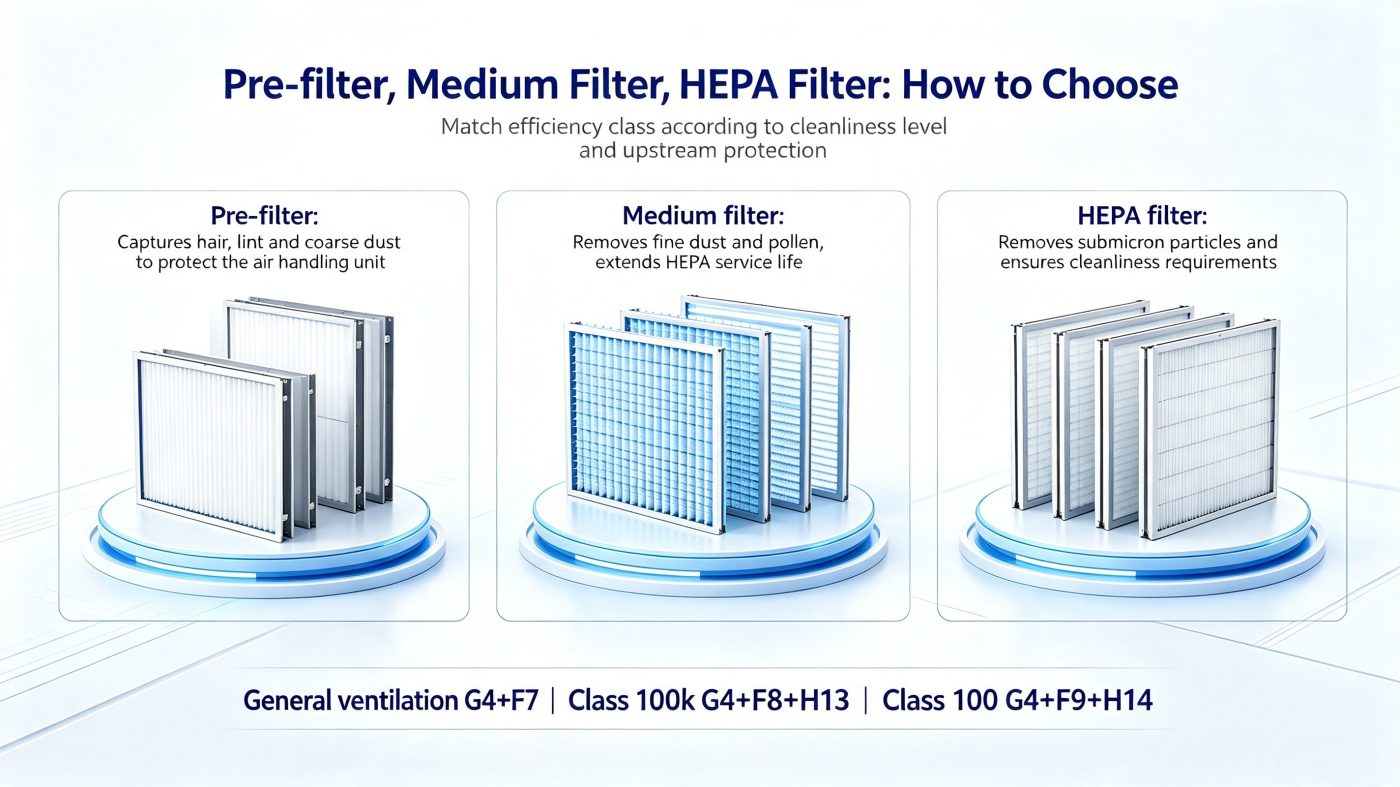
G4 [Standard for purification projects]: Preferred choice for upstream filtration in clean air conditioning systems; commonly paired with medium and high-efficiency systems.
2. Structural Type Selection
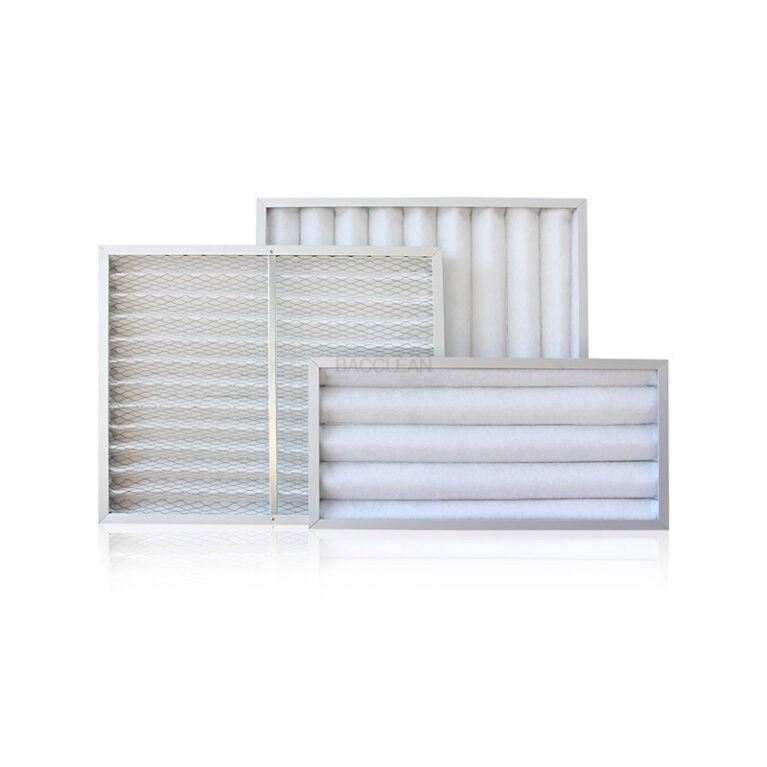
Flat non-woven fabric filter: Low cost, suitable for fresh air sections in standard air handling units; disposable.
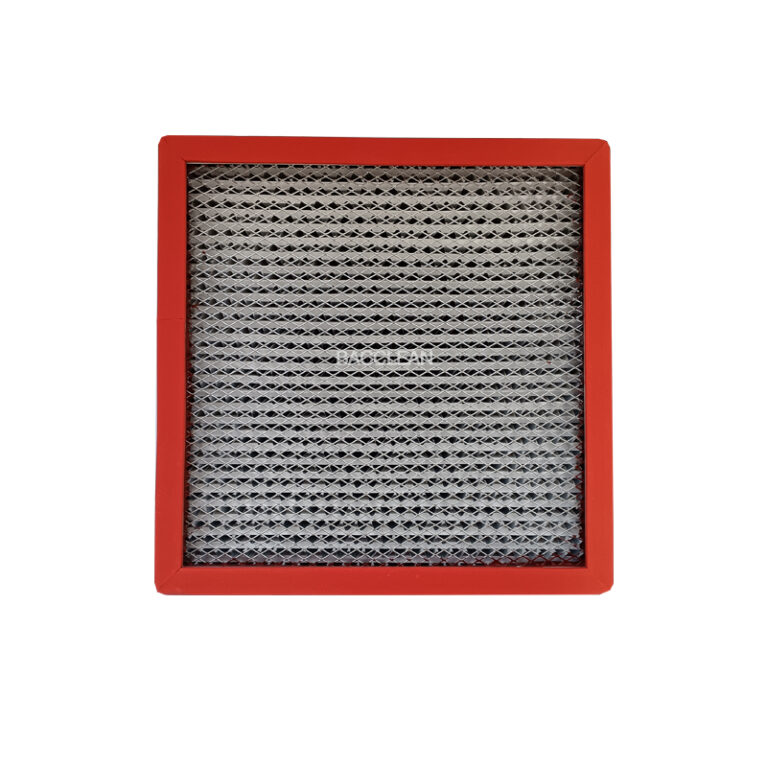
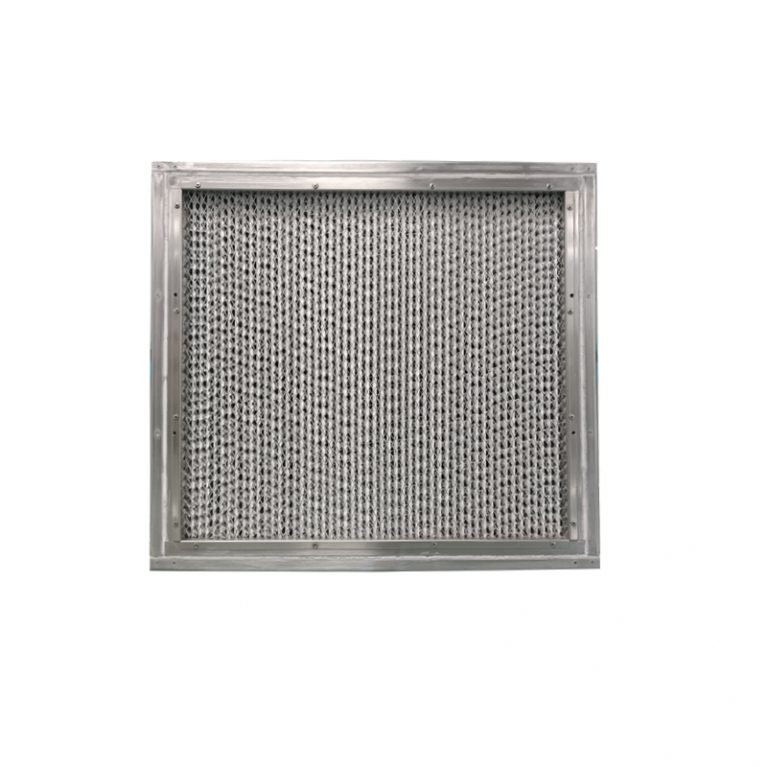
Metal mesh filter (aluminum or stainless steel): Ideal for oily environments and high-temperature conditions; washable and reusable; limited to coarse filtration with efficiency equivalent to G1–G3.
Pleated panel initial filter: Higher dust-holding capacity and lower resistance; strongly recommended as an alternative to flat models.
3. Application Scenarios
✅ Fresh air inlet in clean air conditioning systems: G4 pleated initial filter
✅ Kitchen exhaust and grease pre-treatment: Washable stainless steel metal mesh
✅ Simple factory or equipment room ventilation: G3 flat initial filter
Note: Minimum grade for cleanroom systems is G4; G3 and below are not recommended due to insufficient protection.
III. Graded Selection Guide: Medium-Efficiency Filters
Medium-efficiency filters serve as the most critical protective layer for high-efficiency filters; improper selection significantly shortens the service life of HEPA filters.
1. Filtration Grade Selection
F5: Suitable for conventional central air conditioning and office building fresh air systems without downstream high-efficiency filters.
F6/F7: General-purpose fresh air and ordinary factory ventilation; auxiliary filtration for ISO9 and ISO8 low-grade cleanrooms.
F8 [Commonly used]: Front-end protection for 100,000-class (ISO8) cleanrooms, typical cosmetic and food processing facilities.
F9 [High-end configuration]: For 10,000-class (ISO7) cleanrooms, pharmaceuticals, medical devices, and laboratories; protects H13/H14 high-efficiency filters.
2. Structural Forms
Bag-type medium-efficiency filter: High dust-holding capacity and moderate resistance; mainstream choice for modular air handling units (F7/F8/F9).
W-shaped pleated panel (dense pleat design): Ideal for tight installation spaces; occupies less space at the same airflow; slightly lower dust-holding capacity compared to bag-type.
Application Pairing Reference Only pre-filter + medium-efficiency, no high-efficiency: fresh air systems, shopping mall HVAC → F5~F7
With H13 high-efficiency downstream (ISO8/ISO7 cleanroom): start from F8
With H14 high-efficiency downstream (Class A laminar flow, sterile pharmaceutical ISO5): prefer F9
⚠️ Prohibition: In cleanroom systems, F5 and lower medium-efficiency filters must not be used to protect high-efficiency filters.
IV. Grading Selection Guide: High-Efficiency Filters HEPA/ULPA (EN1822, GB/T13554)
High-efficiency filters are installed at the end of the system and directly determine the cleanliness level. Selection should focus on efficiency rating, sealing type, and filter media.
1. Efficiency Rating Selection
H10/H11: Ventilation purification, dust removal equipment; not suitable for cleanroom terminal use
H12: Simple purification booths, general local dust collection
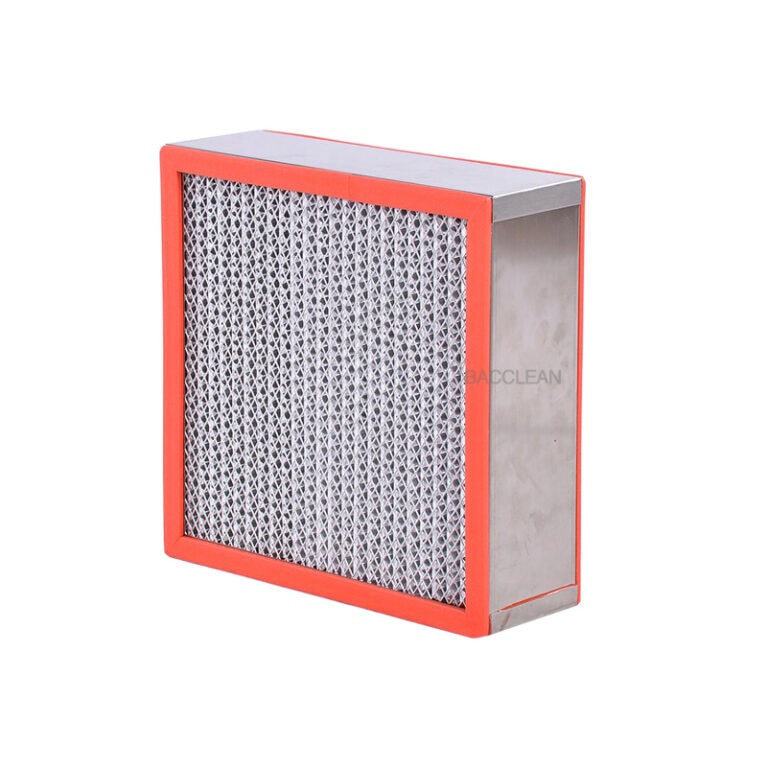
H13 MPPS ≥ 99.95%: Class 100,000 and Class 10,000 cleanrooms, lithium battery workshops, standard dust-free workshops (most widely used in industry)
H14 MPPS ≥ 99.995%: Class 100 clean zones, sterile pharmaceuticals, operating rooms, biosafety laboratories, Class A laminar flow hoods
U15–U17 ULPA: Ultra-high-purity semiconductors, microelectronics, ultra-clean laboratories; rarely used in civilian purification projects
2. Structural Type Selection
Frameless High-Efficiency Filter
Ultrafine glass fiber filter media with hot-melt adhesive spacers—thin profile, uniform airflow, low resistance; mainstream choice for FFUs, laminar flow hoods, and ceiling supply air grilles; ideal for conventional ambient-temperature cleanrooms.
Pleated High-Efficiency Filter
Aluminum foil spacers provide better humidity resistance; suitable for high-volume airflow and high-temperature environments; larger in size and gradually being replaced by frameless types.
Liquid Seal High-Efficiency Filter
Used with liquid-sealed ceilings, offers excellent sealing performance; mandatory first choice in GMP pharmaceutical facilities, prevents frame leakage, and facilitates PAO leak testing.
High-Capacity High-Efficiency Filter
Larger airflow capacity within the same dimensions; suitable for large plenum chambers, reducing installation quantity.
3. Filter Media Selection
Ultrafine Glass Fiber Filter Media: Standard option, highly stable, good temperature resistance, cost-effective; most commonly used
PTFE Coated High-Efficiency Media: Hydrophobic, moisture-resistant, resistant to certain chemical vapors; preferred in VHP hydrogen peroxide sterilization zones and high-humidity environments; higher cost
V. Standard Complete System Matching Solutions (Directly Apply Combinations)
Ordinary office buildings / factory central air conditioning (no high-efficiency)
G4 pre-filter + F7 medium-efficiency
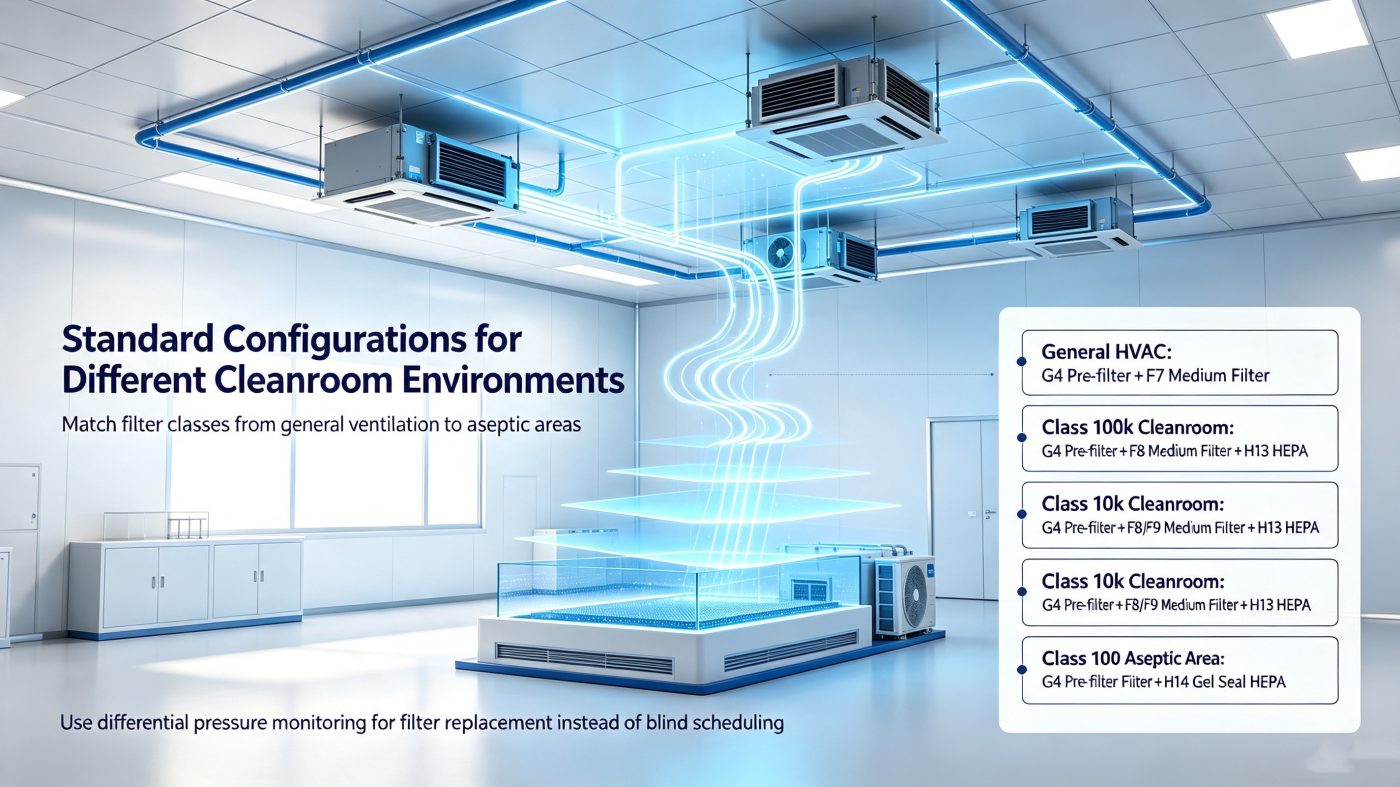
ISO8 (Class 100,000) food, cosmetics cleanrooms
G4 pre-filter + F8 medium-efficiency + H13 frameless high-efficiency
ISO7 (Class 10,000) medical devices, lithium battery dust-free workshops
G4 pre-filter + F8/F9 medium-efficiency + H13 high-efficiency
ISO5–ISO6 (Class 100 / Class A) sterile pharmaceuticals, operating rooms, biological laboratories
G4 pre-filter + F9 medium-efficiency + H14 liquid-seal high-efficiency
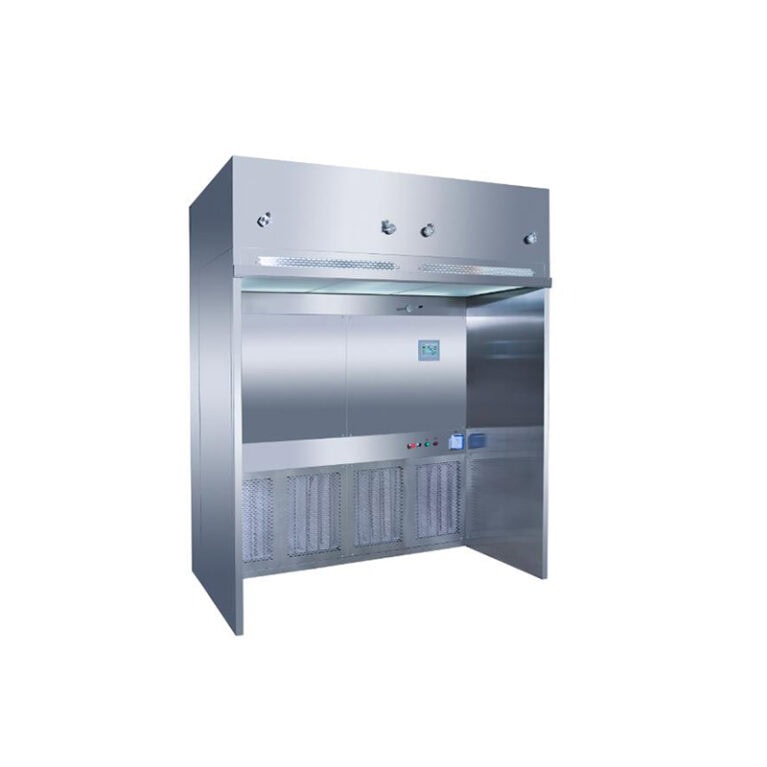
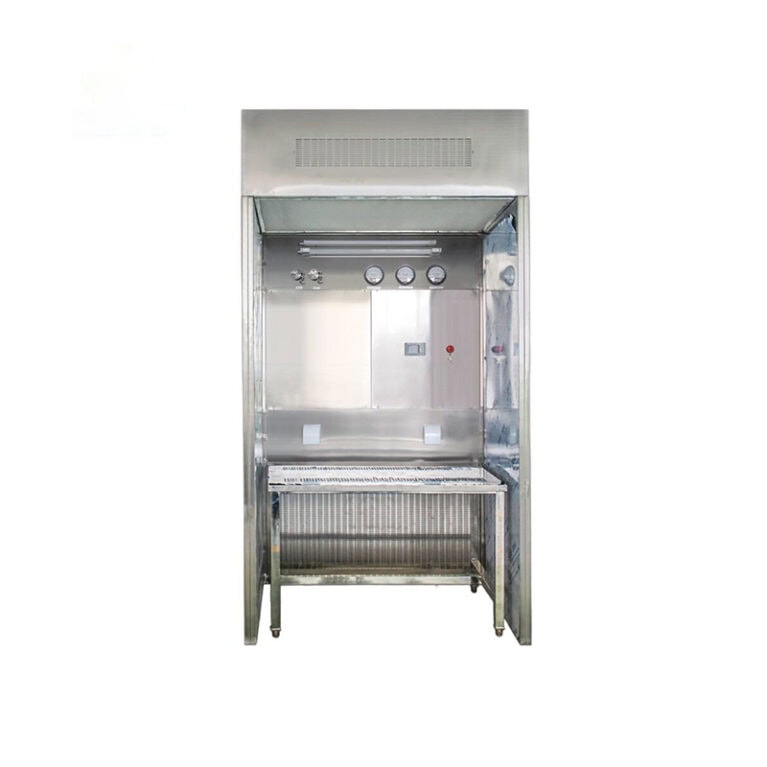
FFU, laminar flow hood, weighing unit terminals: install H13/H14 high-efficiency filters separately; pre-filtration handled by air handling units
VI. Selection Pitfalls: Common Mistakes
Skipping medium-efficiency filter, connecting pre-filter directly to high-efficiency
Severe error! Dust directly impacts high-efficiency media, causing rapid clogging and damage; maintenance costs double.
Blindly selecting highest-grade filters
Unnecessarily choosing H14 or F9 leads to increased resistance, higher fan load, long-term high energy consumption, and over-engineering.
Random custom sizing without matching airflow
Filter smaller than required airflow causes excessive velocity, increased resistance, media breakthrough, and potential leakage risks.
Using standard glass fiber high-efficiency filters in high-humidity or VHP sterilization areas
Long-term exposure to humid conditions promotes microbial growth; PTFE-coated high-efficiency filters should be used instead. Pharmaceutical project standard frame high-efficiency replacement liquid tank high-efficiency
Inadequate sealing, frame leakage, PAO leak test failure, difficult to meet GMP inspection requirements.
VII. Material and Special Operating Condition Requirements
High-temperature environment (>60°C): Use heat-resistant filter media and aluminum alloy frames; avoid plastic components
High-humidity or frequently disinfected areas: Stainless steel frame, PTFE filter media, moisture-resistant sealing strips
Dusty or fiber-rich environments: Increase coarse and medium efficiency dust-holding capacity, shorten replacement intervals
Antibacterial requirements (hospitals, pharmaceuticals): Optional antibacterial nonwoven filter media
VIII. Operational Cost Optimization Selection Strategy
Prioritize filters with low initial resistance to reduce fan energy consumption;
For the same filtration grade, select larger models with higher dust-holding capacity to extend replacement cycles and reduce material procurement and downtime frequency;
Rationally distribute load across three-stage gradients—front-end efficient interception protects high-cost high-efficiency filters;
Provide pressure differential monitoring interface, using pressure drop as replacement criterion instead of fixed time-based replacement.
IX. Summary
Filter selection is a systematic matching process: first determine cleanliness class and operating conditions, then match coarse → medium → high-efficiency grades, followed by structural design, frame type, filter media, and dimensions, finally verify airflow and resistance. Proper configuration ensures compliance with regulatory acceptance standards while balancing initial procurement costs with long-term operational electricity and consumable expenses.
