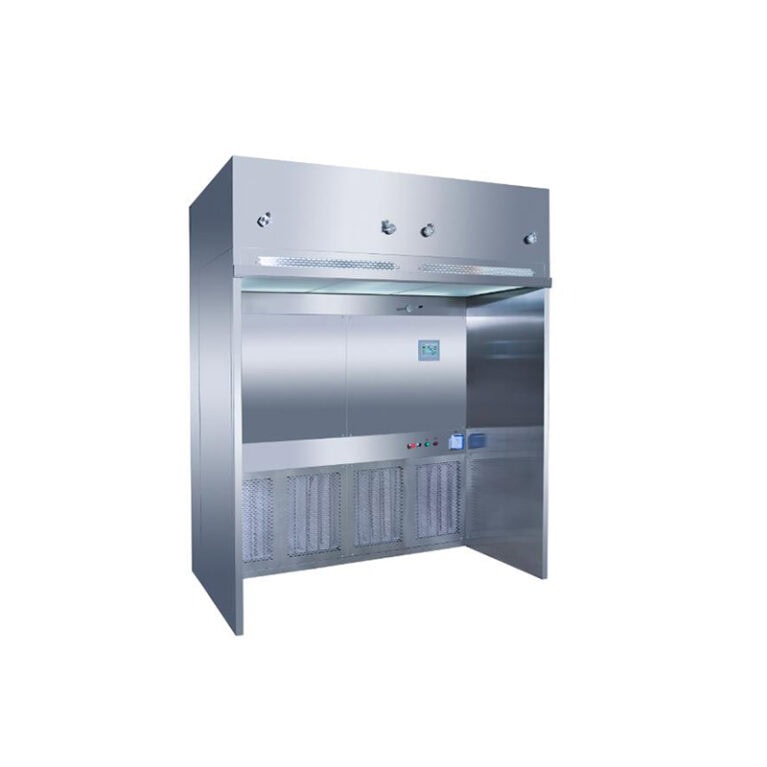
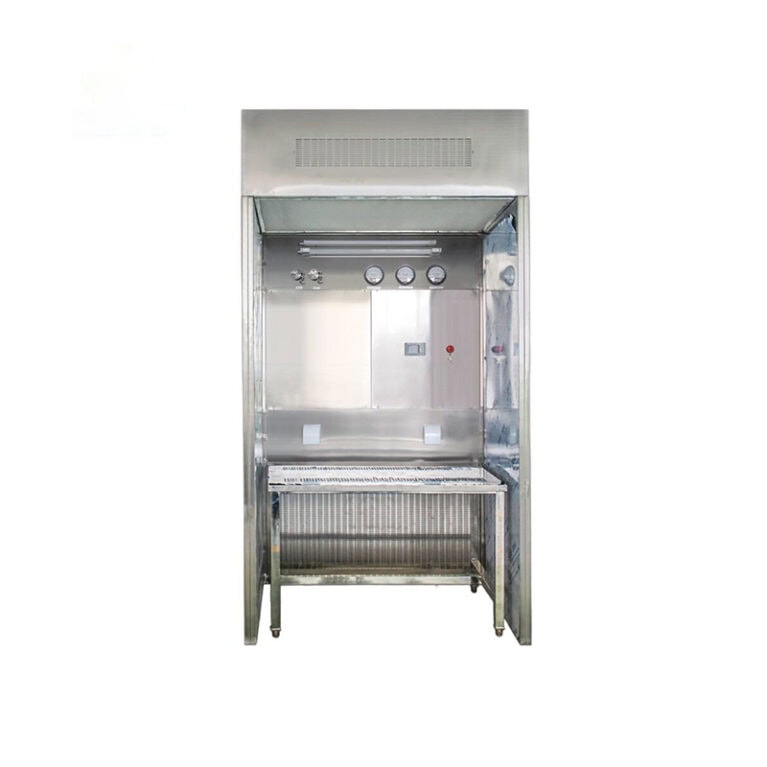
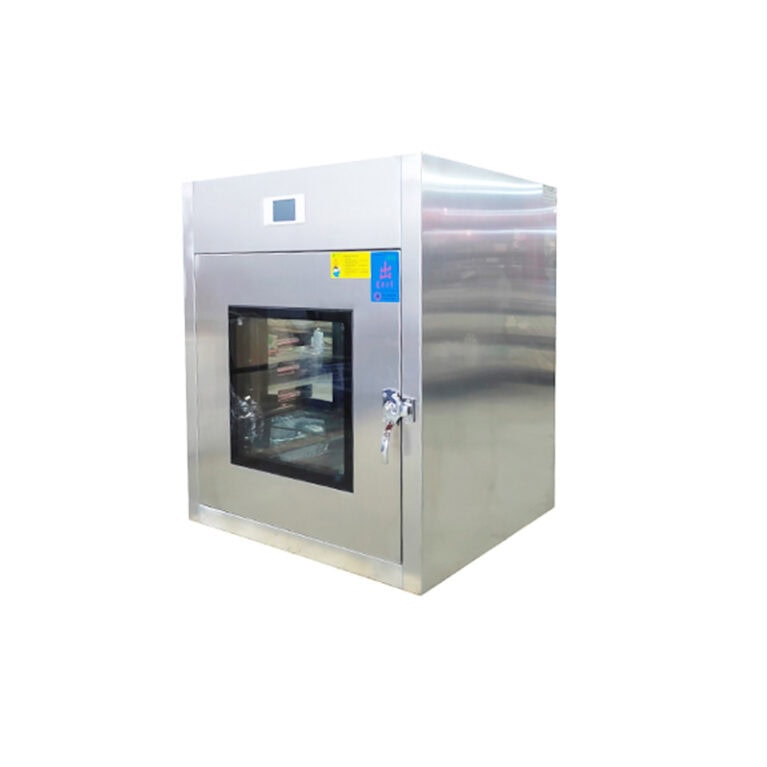
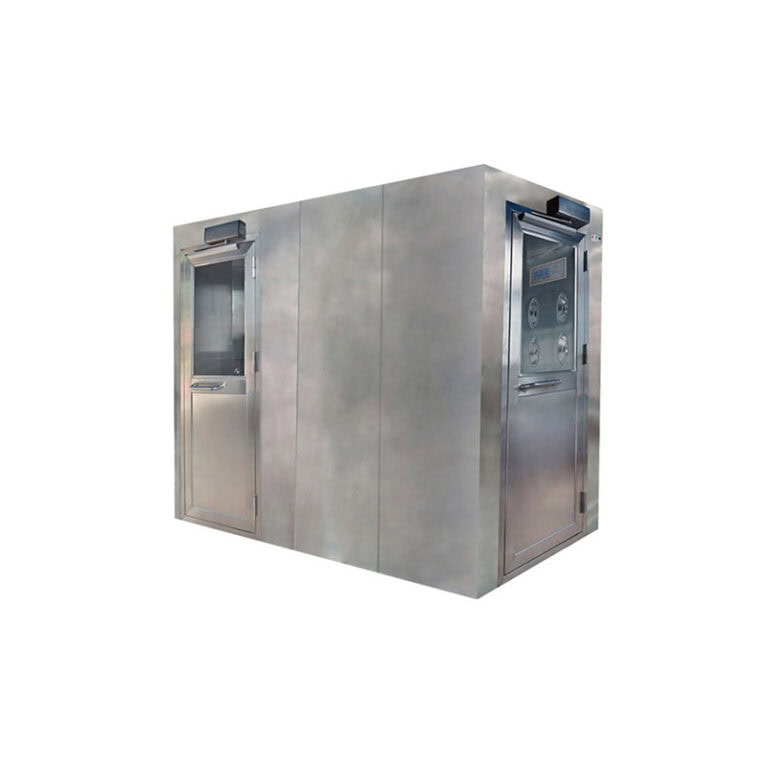
The working principle of the explosion-proof air shower room can be summarized as follows: high-speed clean air flow circulation for dust removal + full-loop explosion-proof electrical and anti-static design + double-door interlocked air lock isolation. It simultaneously achieves personnel purification and inherent safety in flammable and explosive environments.
1. Basic purification principle (the same as ordinary air shower room)
Induction and interlock: When personnel enter the air shower room, the explosion-proof infrared sensor detects the position, and the dual-door electronic interlock is activated. The two doors cannot be opened simultaneously, forming an air lock isolation.
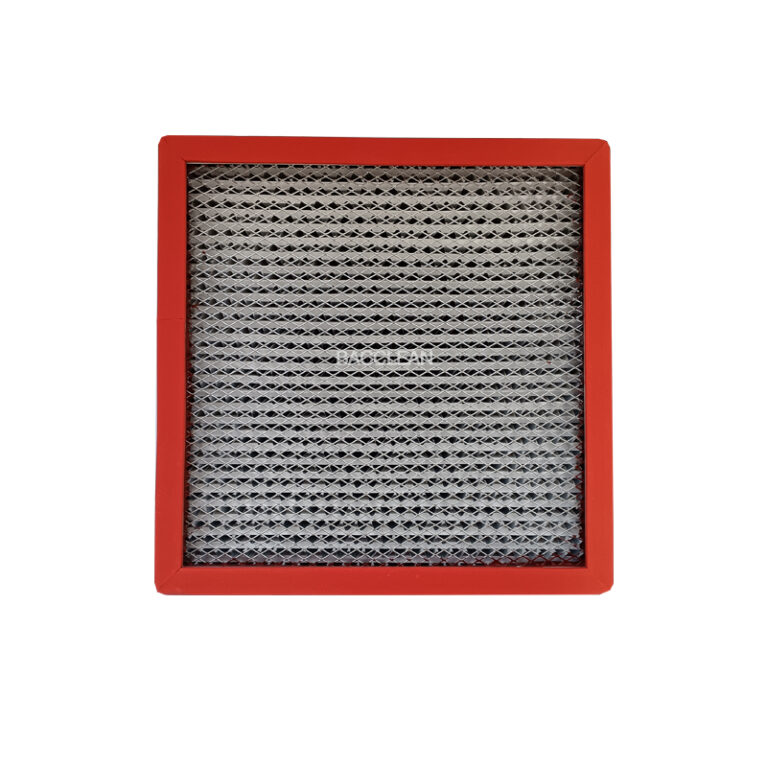
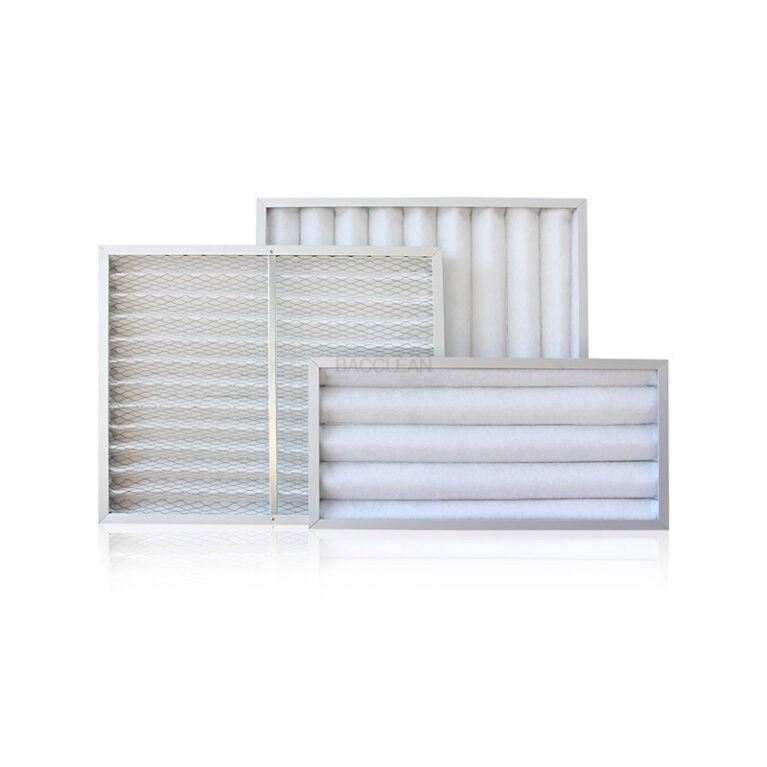
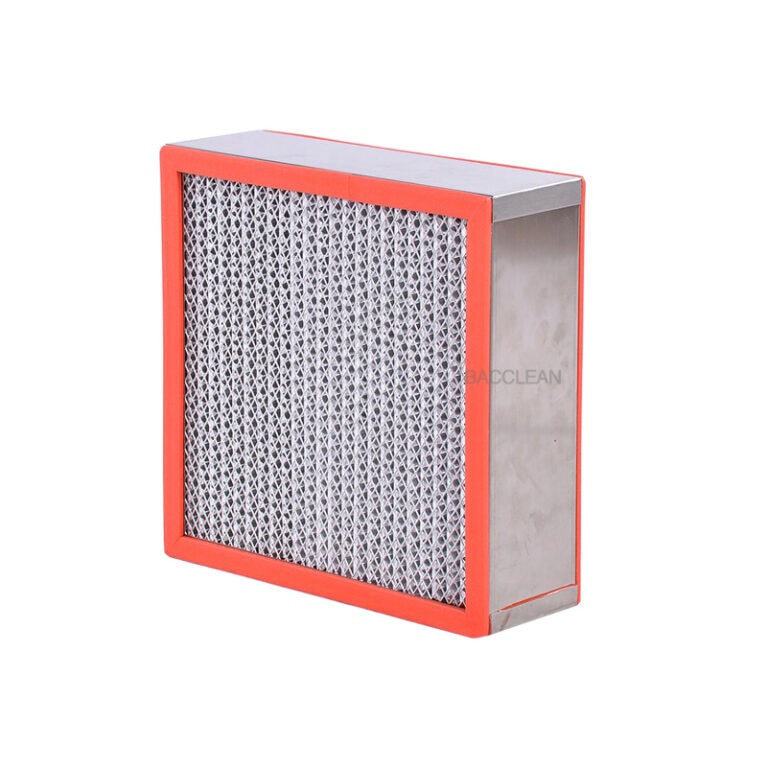
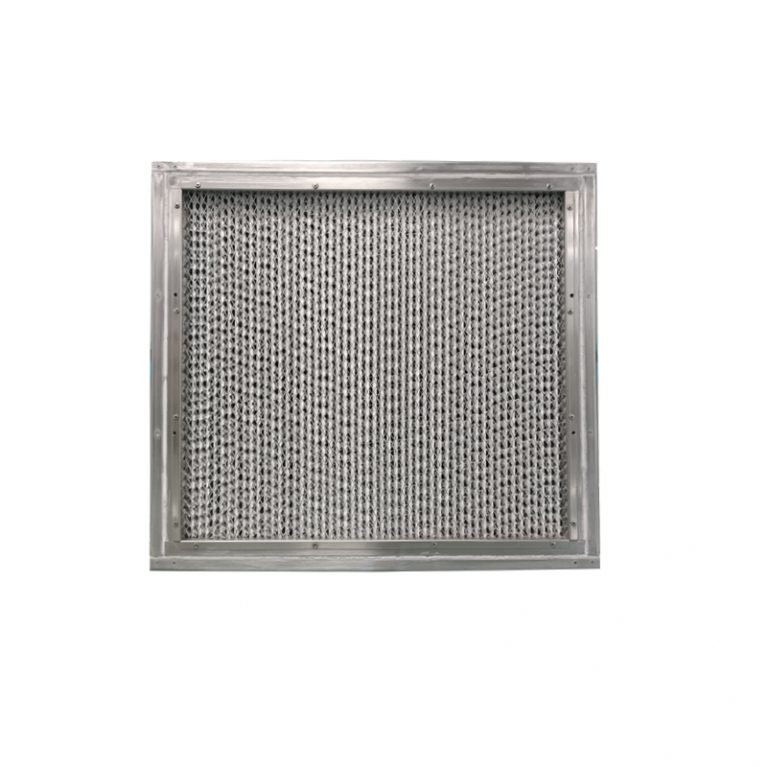
Air circulation: The explosion-proof centrifugal fan sucks in the indoor air, passing through G4 primary filter (intercepting particles larger than 5 μm) → static pressure box for pressure stabilization → H13/H14 high-efficiency filters (filtering particles of 0.3 μm with an efficiency of ≥ 99.97%).
High-speed blowing: Clean air is blown through the multi-angle adjustable nozzles on both sides and the top of the box at a speed of 25–35 m/s, forming a 360° no-corner blowing, removing dust, fibers, and microorganisms from the surface of clothing.
Return air filtration: The contaminated air flows back through the bottom return grille and enters the primary / high-efficiency filters for further purification, preventing pollution from leaking out.
End unlocking: The blowing and showering time (usually 10–30 seconds) ends, the fan stops, the rear door unlocks, and personnel enter the clean area.
2. Explosion-proof safety principle (core difference)
Based on the ordinary air shower room, all electrical and structural components are designed in accordance with the explosion-proof standards of GB 3836, eliminating sparks, static electricity, and high-temperature sources.
1) Explosion-proof electrical configuration (Ex d IIB T4 level)
Explosion-proof fan: Explosion-proof motor, without spark structure, the impeller and the casing are protected from spark contact.
Explosion-proof control: Explosion-proof PLC, explosion-proof switches, explosion-proof emergency stop buttons, explosion-proof lighting (fluorescent lamps / LED).
Explosion-proof sensors: Explosion-proof infrared sensors, explosion-proof electromagnetic locks, explosion-proof junction boxes / wiring boxes.
2) Anti-static and spark-free structure
Box material: 304/316 stainless steel or anti-static cold-rolled steel plate, overall grounding to eliminate static charge accumulation.
Nozzle / fan blades: Stainless steel or aluminum alloy to avoid sparks caused by friction and impact.
Sealing and wiring: Explosion-proof sealing rubber rings, explosion-proof cable sealing joints, lines passing through explosion-proof steel pipes to prevent flammable gases from entering the electrical cavity.
3) Safety interlock and emergency
Door interlock: Dual electronic + mechanical double interlock for the two doors. The interlock is forced closed during the showering to prevent the leakage of flammable gases.
Status indication: Explosion-proof indicator lights (green / red) display the standby / working status.
Emergency stop protection: Multiple explosion-proof emergency stop buttons inside and outside the room, one-click power-off unlocking to ensure emergency evacuation.
3. Work process (one-step completion)
Personnel enter → Front door closed → Infrared sensor triggered → Dual-door interlock locking.
Explosion-proof fan starts → Air passes through primary + high-efficiency filters → Nozzle high-speed blowing for dust removal.
Contaminated air returns for filtration → Circulation purification.
Time ends → Fan stops → Rear door unlocks → Personnel enter the explosion-proof clean area.
4. Application scenarios
Suitable for clean environments with flammable gases, combustible dust, and explosion hazards:
Lithium battery manufacturing (aluminum powder, electrolyte vapor)
Chemical / pharmaceutical (organic solvents, combustible dust)
Spraying / ink workshop (paint mist, solvent vapor)
Military / aerospace (propellant, flammable powder)