
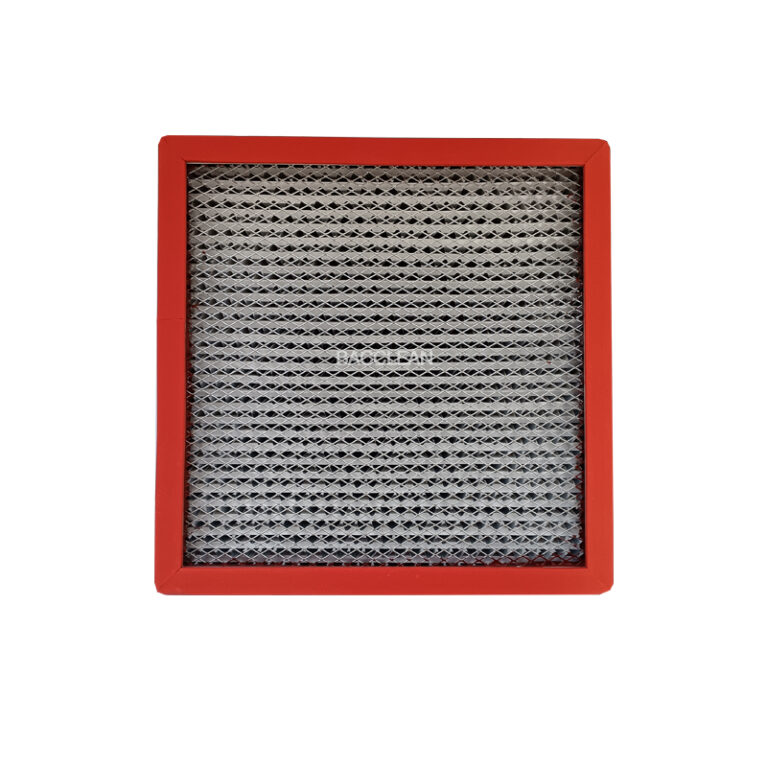
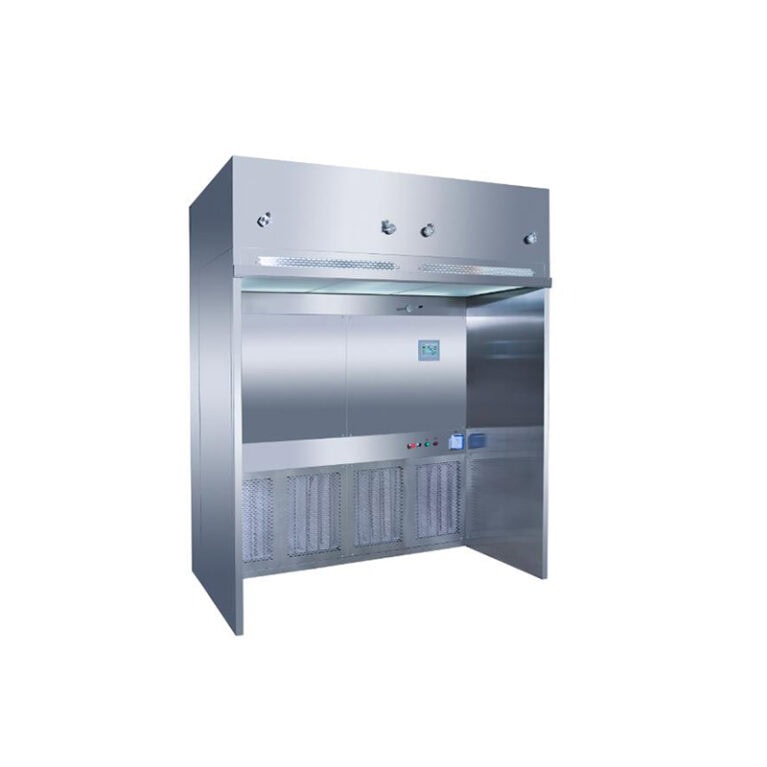
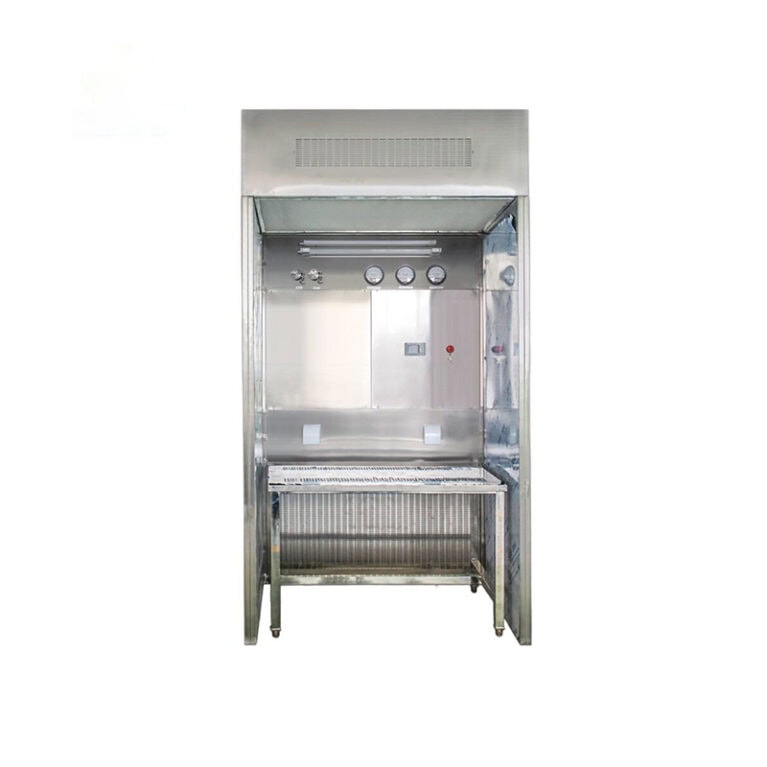
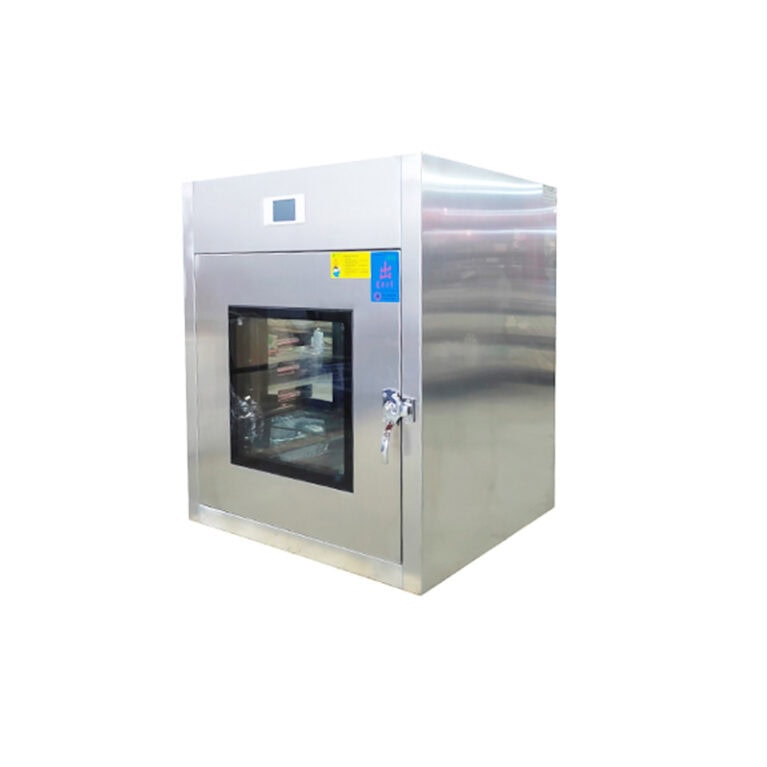
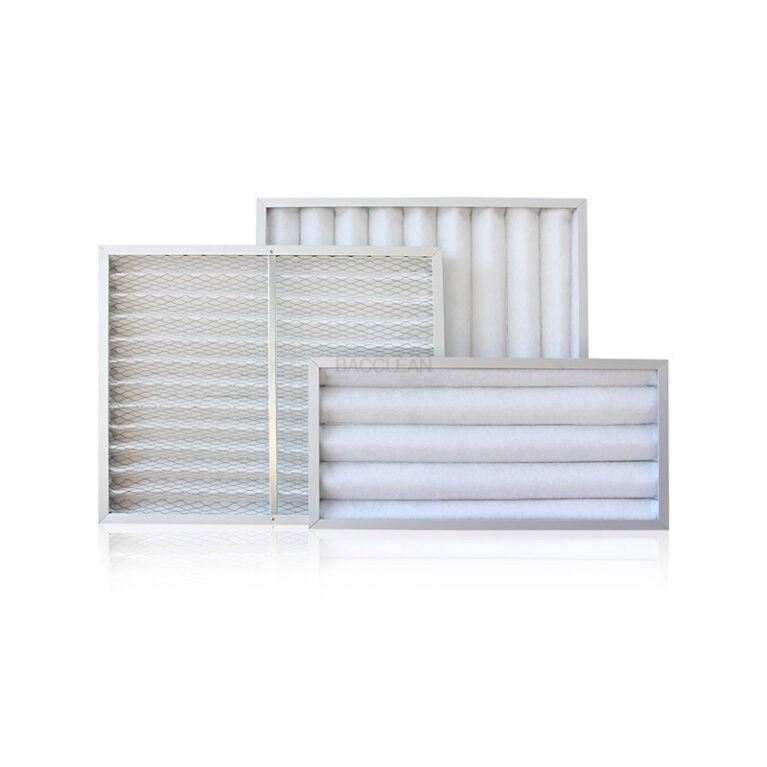
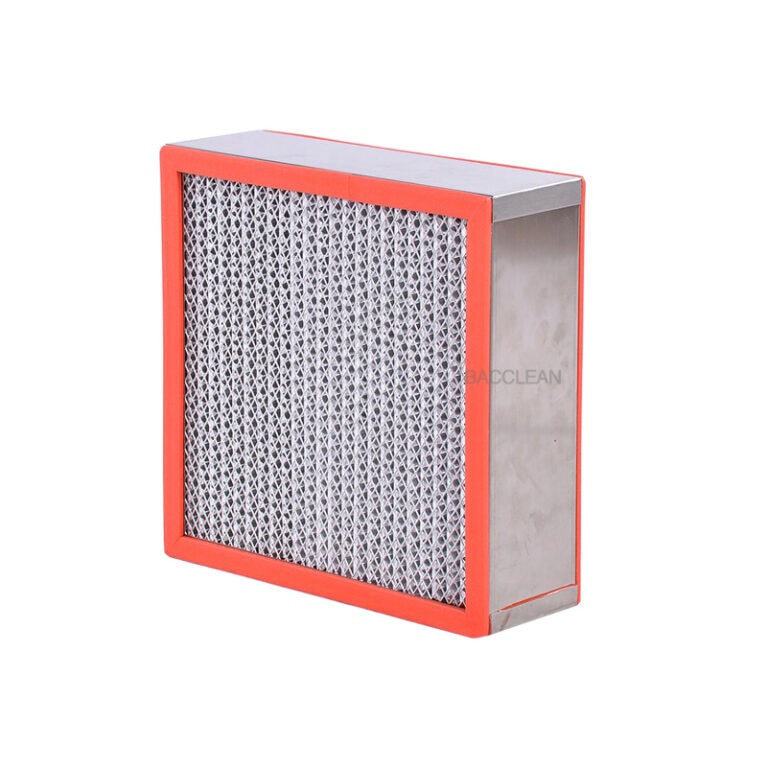
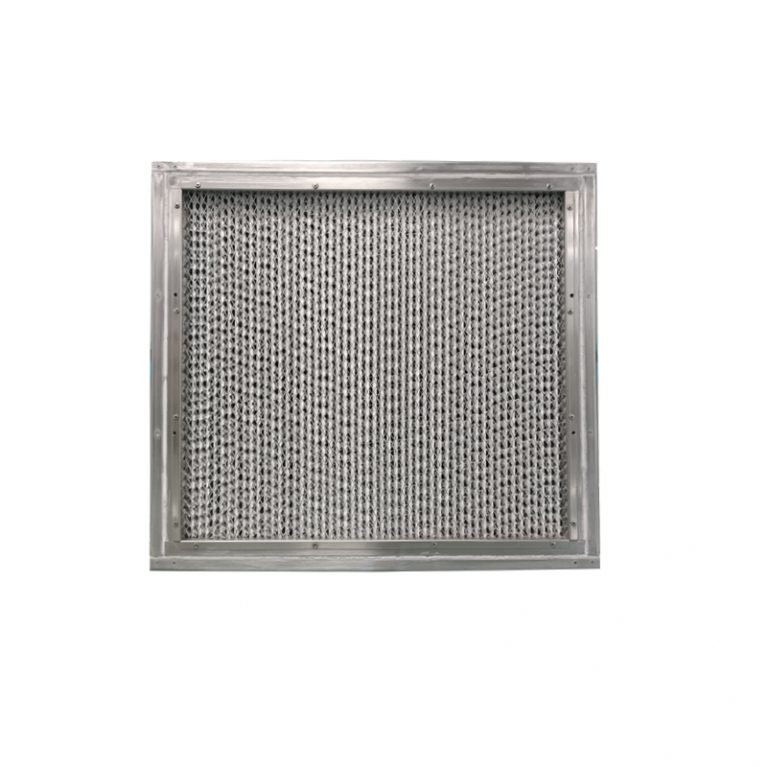
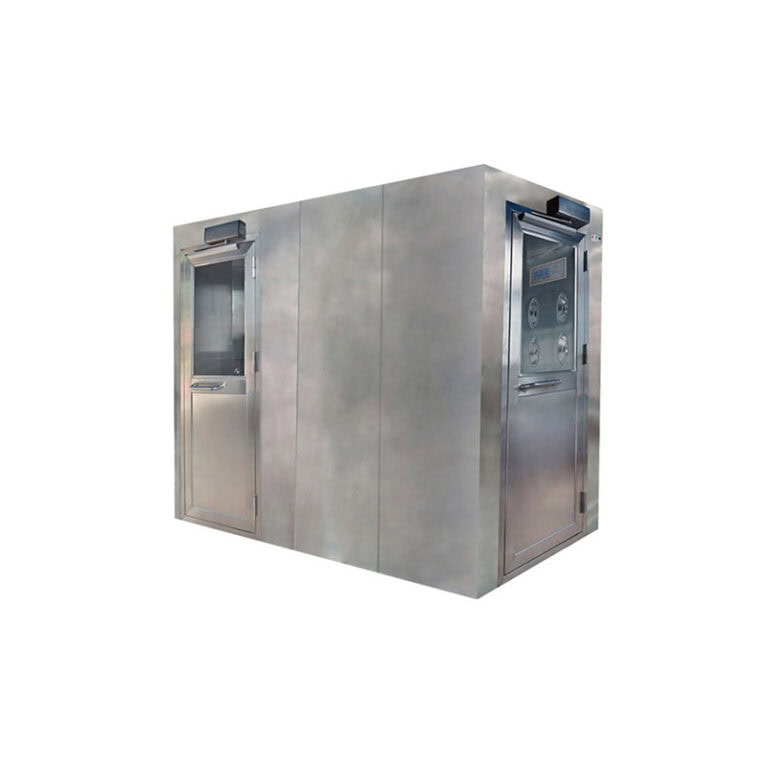
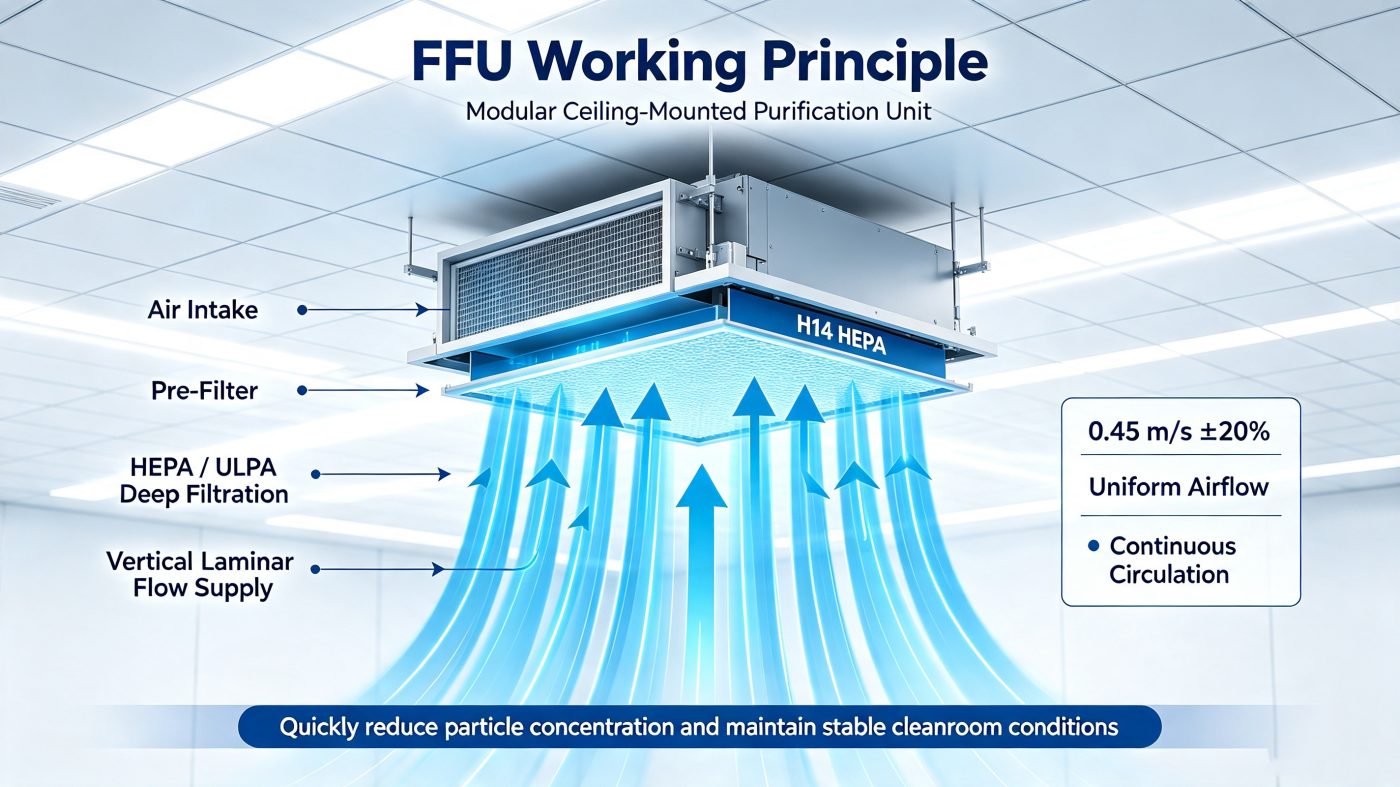
The core working principle of FFU relies on active circulation and staged filtration purification. Ceiling-mounted inside cleanrooms, the built-in brushless EC fan draws indoor air from the top. Air first passes through a pre-filter to trap large particulate contaminants, then undergoes deep filtration via H13/H14 HEPA filters or ULPA ultra-low penetration air filters. Purified air is discharged downward in a uniform vertical laminar flow, continuously circulating and purifying indoor air. This rapidly reduces airborne particle concentration and maintains stable clean conditions. The outlet airflow velocity of standard FFUs is controlled at 0.45m/s ±20%, delivering superior airflow uniformity without dead zones or turbulence, precisely meeting laminar flow cleanroom requirements.
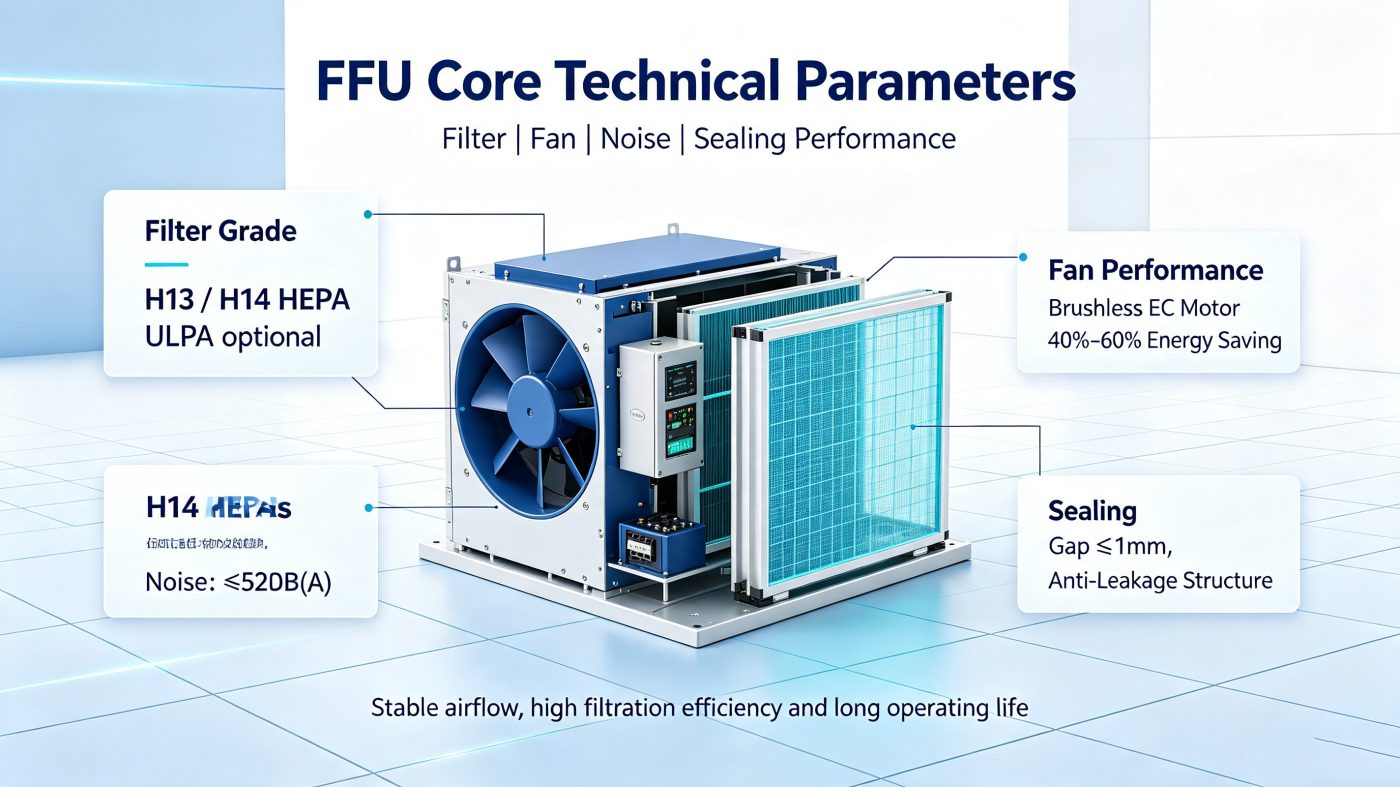
Core technical parameters directly determine FFU purification performance and adaptability, forming the fundamental basis for equipment selection.
- Filter Grade: H13 HEPA filters are adopted for general industrial scenarios, achieving ≥99.95% filtration efficiency for 0.3μm particles. High-end semiconductor facilities and precision laboratories require H14 HEPA or ULPA filters, which reach over 99.9995% efficiency for tiny 0.12μm particles to satisfy ultra-high cleanliness demands.
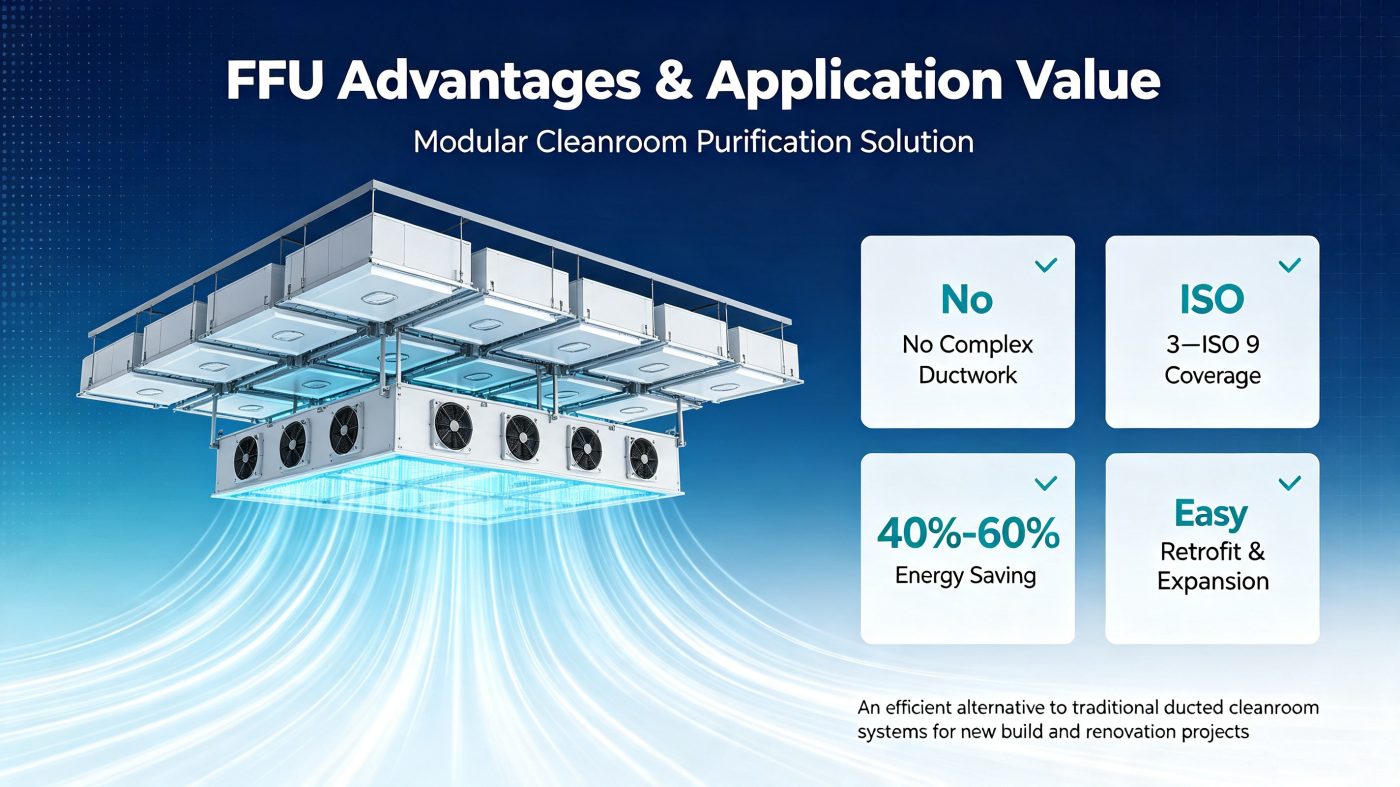
- Fan Performance: Mainstream FFUs are equipped with brushless DC EC motors. Fan impellers achieve G2.5 dynamic balance grade for stable operation, low energy consumption and long service life, supporting continuous operation exceeding 50,000 hours. They realize 40%~60% energy saving compared with traditional AC fans.
- Operating Noise: Premium FFUs maintain overall noise ≤52dB(A), suitable for quiet production and laboratory environments.
- Sealing Performance: The installation clearance between unit frames and ceiling keel is controlled within 1mm, with 100% fully filled sealing foam to avoid purification failure caused by air leakage.
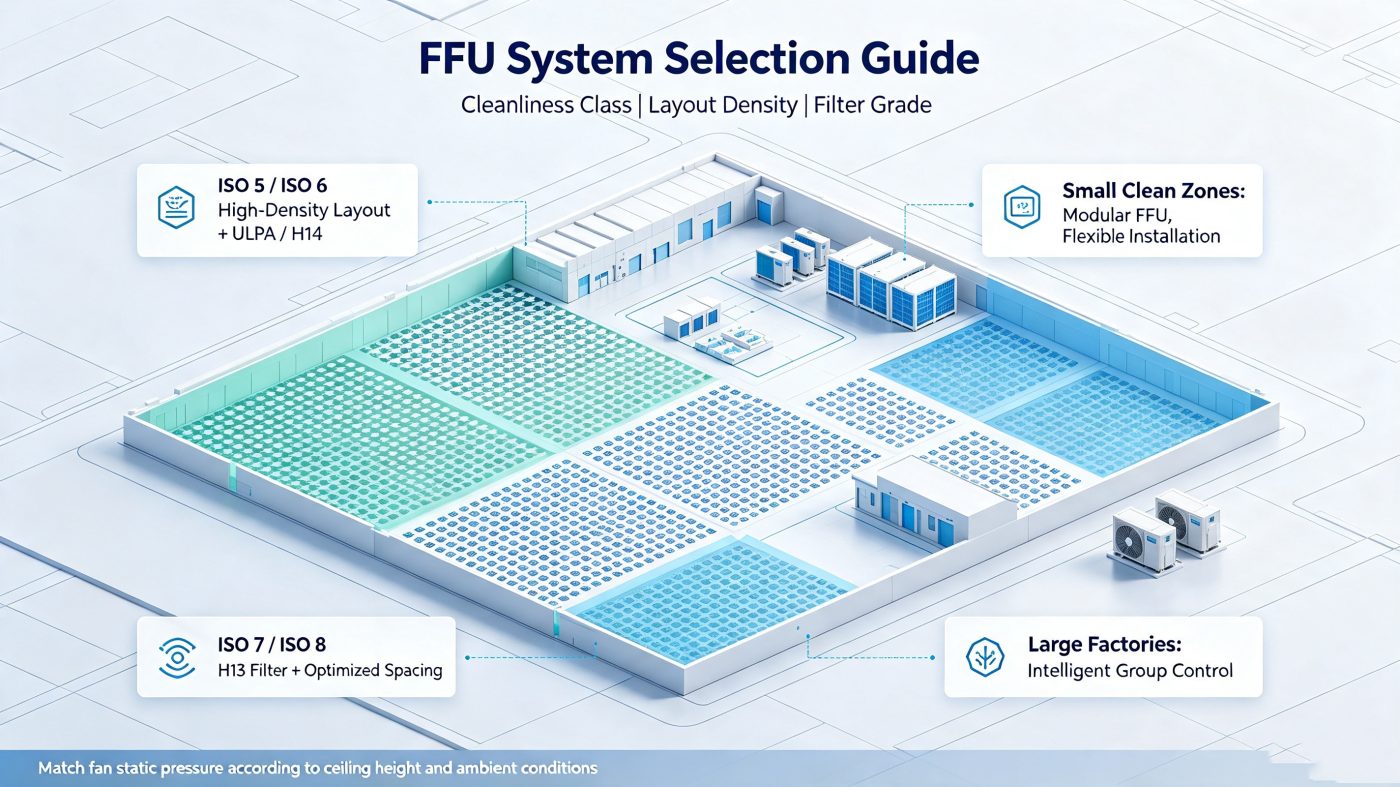
FFU system selection shall comprehensively consider cleanliness classification, on-site working conditions and energy consumption demands.
- High-cleanliness zones (Class 100 / Class 1000, ISO 5 & ISO 6): Adopt high-density FFU layout matched with ULPA filters to guarantee full and uniform airflow coverage.
- General clean workshops (Class 10,000 / Class 100,000, ISO 7 & ISO 8): Reduce layout density and select H13 filters to balance purification performance and capital cost.
- Small cleanrooms & local clean workstations: Prioritize modular FFUs for flexible arrangement and rapid installation.
- Large connected clean workshops: Deploy intelligent group control systems to uniformly adjust wind speed and unit startup/shutdown for centralized energy-saving managemen
Meanwhile, fan static pressure parameters must be matched according to workshop ceiling height, temperature and humidity conditions, preventing insufficient air supply and layered cleanliness issues in high-ceiling scenarios.
Benefiting from modular design and intelligent control, FFUs thoroughly resolve pain points of traditional cleanroom systems including difficult renovation, high power consumption and poor flexibility. They have become the mainstream purification solution for newly-built and renovated cleanroom projects.
