
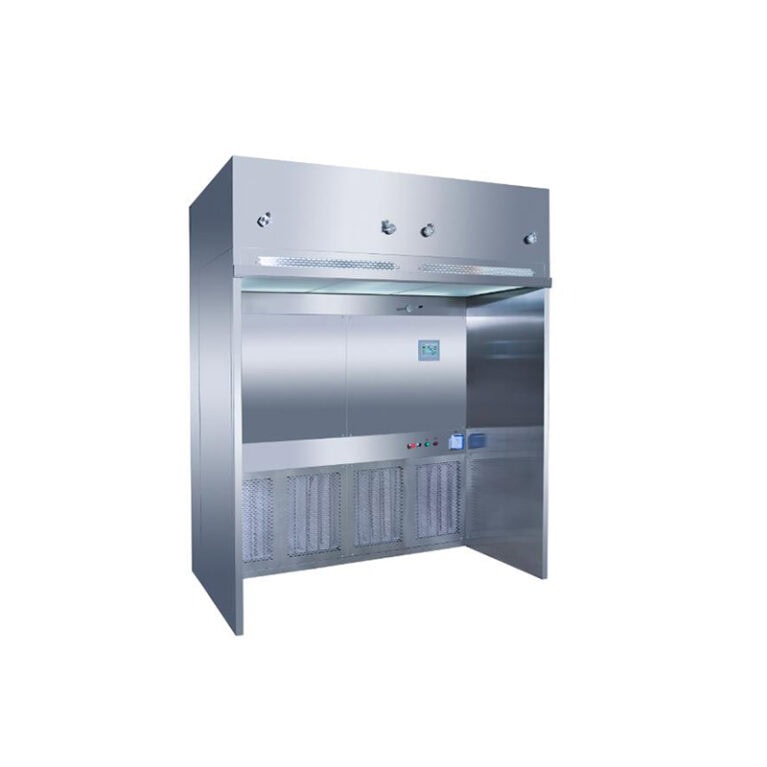
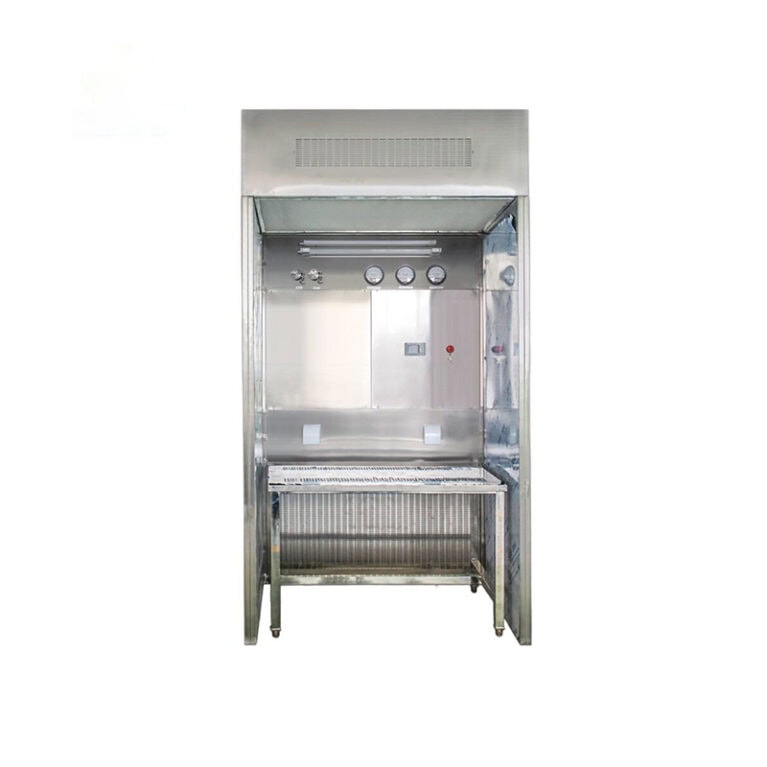
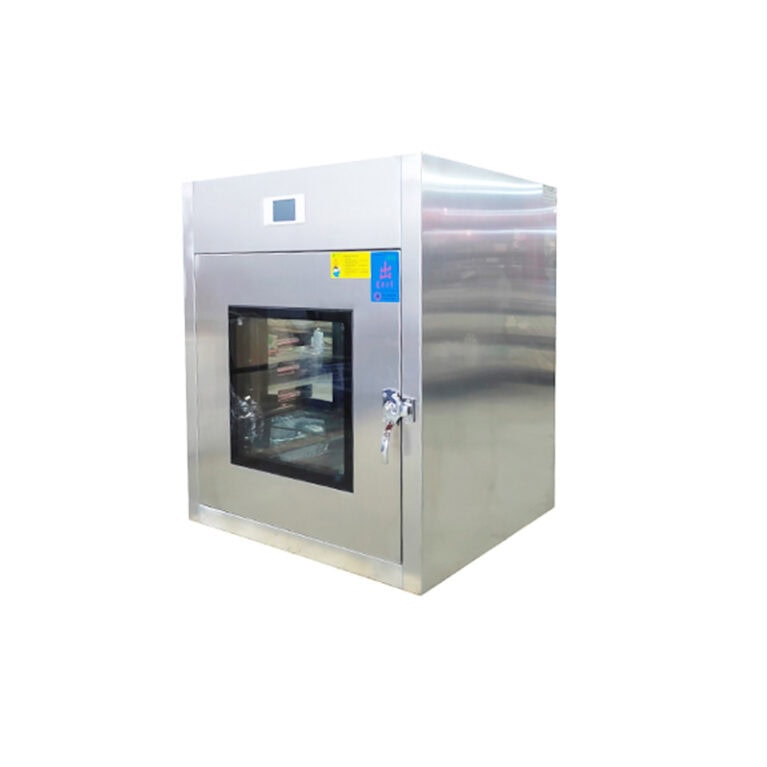
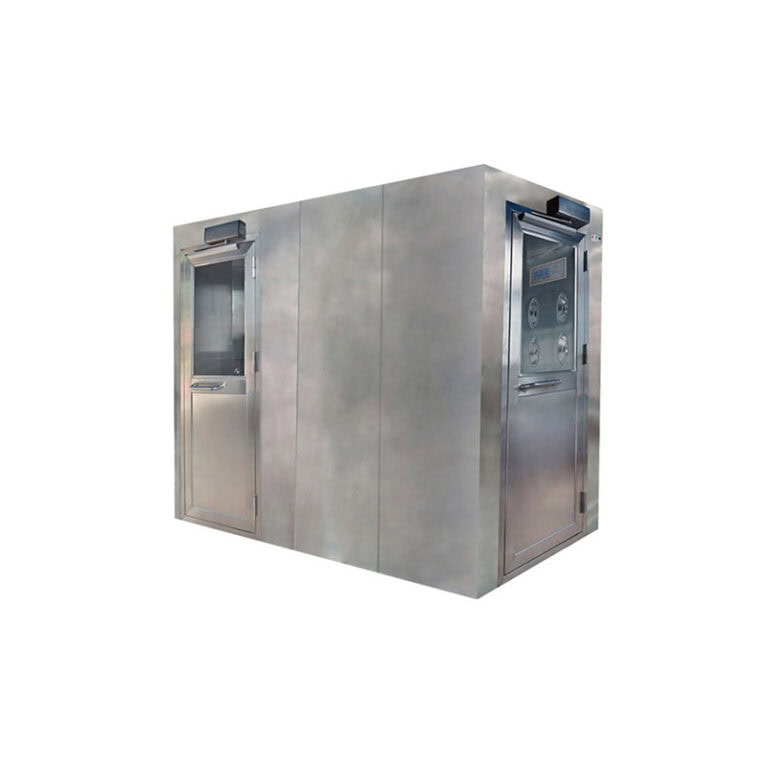
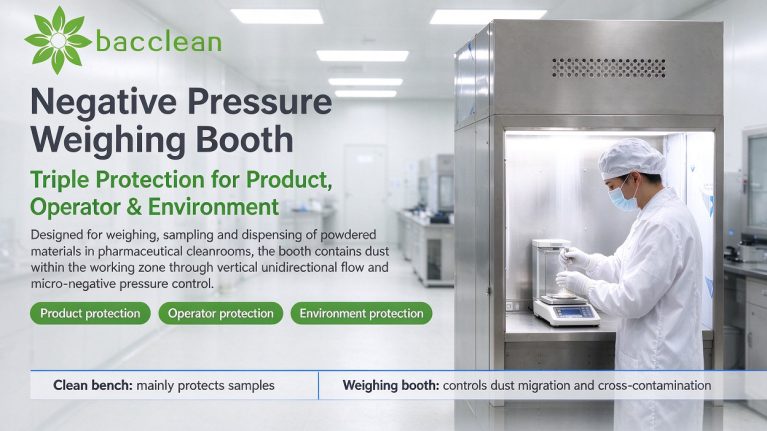
Different from ordinary clean benches, the negative pressure weighing booth requires not only cleanliness in the working zone, but also prevention of dust leakage to outside. Clean bench mainly protects samples with outward airflow. The negative pressure weighing booth relies on negative pressure control to stop dust-laden air leaking into adjacent clean areas, so it is more suitable for high-risk processes such as raw material weighing, powder dispensing and active material sampling.
1. Working Principle of Negative Pressure Weighing Booth
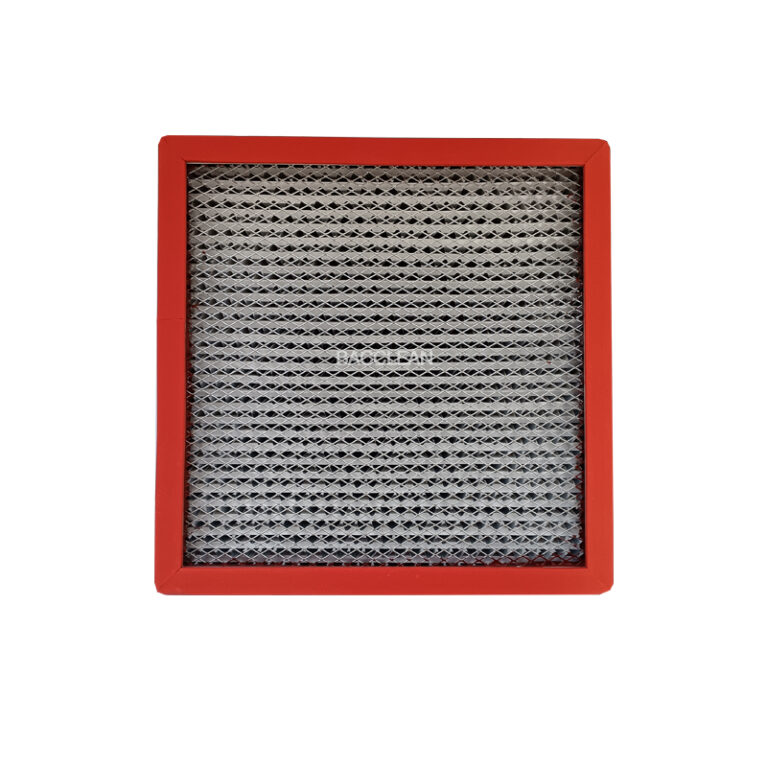
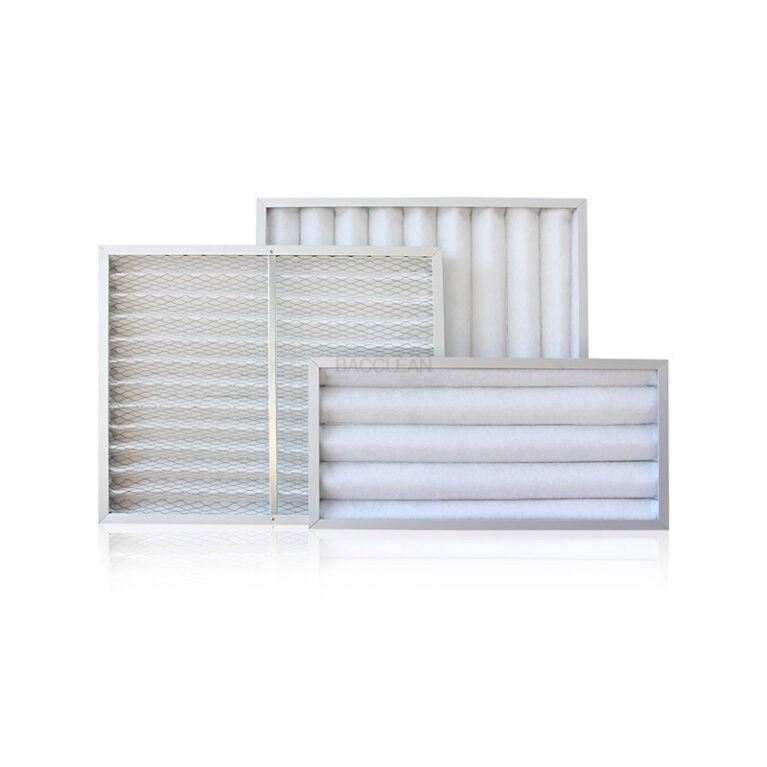
The negative pressure weighing booth adopts the working mode of 3-stage filtration + vertical unidirectional flow + circulating exhaust. Air from the room or clean room first passes through the pre-filter to intercept hair, fibers and large dust particles. Then it goes through the medium filter for secondary filtration to protect the downstream HEPA filter. After that, the centrifugal fan sends air into the plenum chamber, and the air is purified by HEPA filter to form clean air.
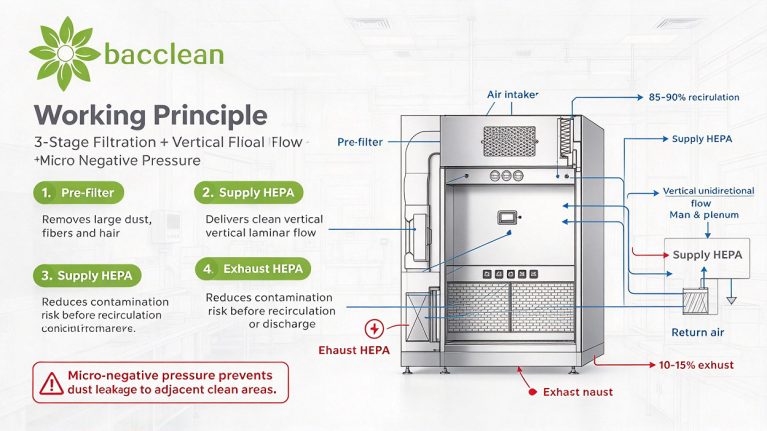
Clean air is evenly delivered downward from the top air distribution plate to form stable vertical unidirectional flow covering the weighing table surface. Dust generated during operation is suppressed by the downward airflow and enters the return air system together with return air, going through pre-filter and medium filter again. Most clean air circulates inside the equipment, while a small part is exhausted after filtered by exhaust HEPA filter. Normally, circulating air accounts for about 85%~90% of total air volume, and exhaust air accounts for about 10%~15%. This part of exhaust creates micro-negative pressure in the working zone relative to the external environment, preventing dust leakage.
This airflow organization can not only maintain high cleanliness in the weighing area, but also confine dust generation locally, avoiding contamination of balances, adjacent stations and clean corridors.
2. Main Structure & Key Configuration
The negative pressure weighing booth generally consists of working zone, return air cabinet, fan cabinet, air supply cabinet, outer cabinet and control system. The wall and tabletop of working zone are mostly made of 304 stainless steel with smooth, dead-corner-free surface for easy cleaning and disinfection. HEPA filter and flow equalizing membrane are installed on the top to ensure uniform air supply. Return air outlets and exhaust adjustment devices are arranged at the bottom or lower side. A transparent observation window or soft curtain is equipped on the front side to reduce external airflow disturbance.
The control system usually includes fan frequency conversion control, differential pressure monitoring, wind speed monitoring, filter resistance display and alarm functions. Some equipment is equipped with touch screen, data recording, online particle monitoring, UV disinfection and other modules to meet stricter process management and verification requirements.
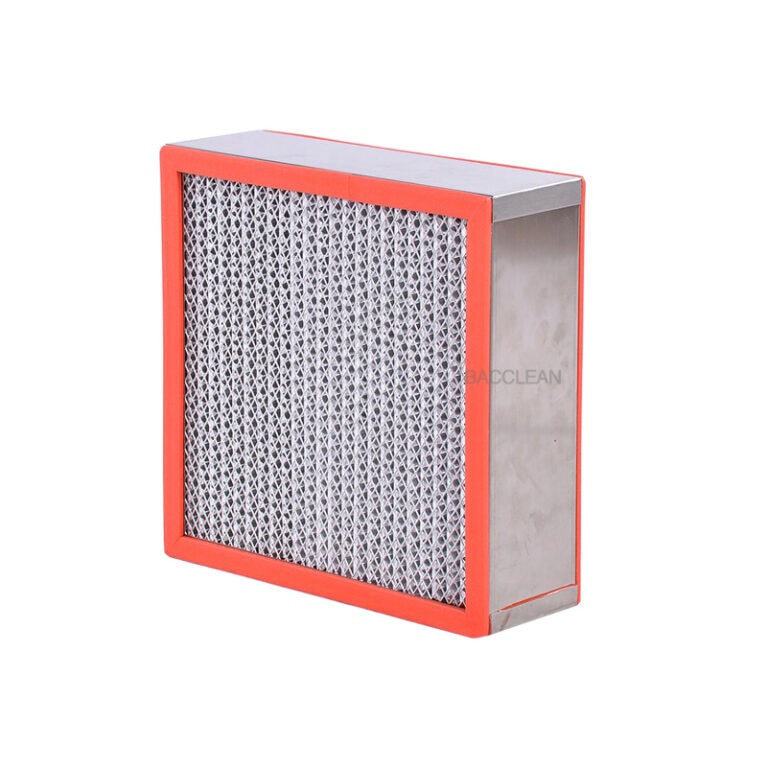
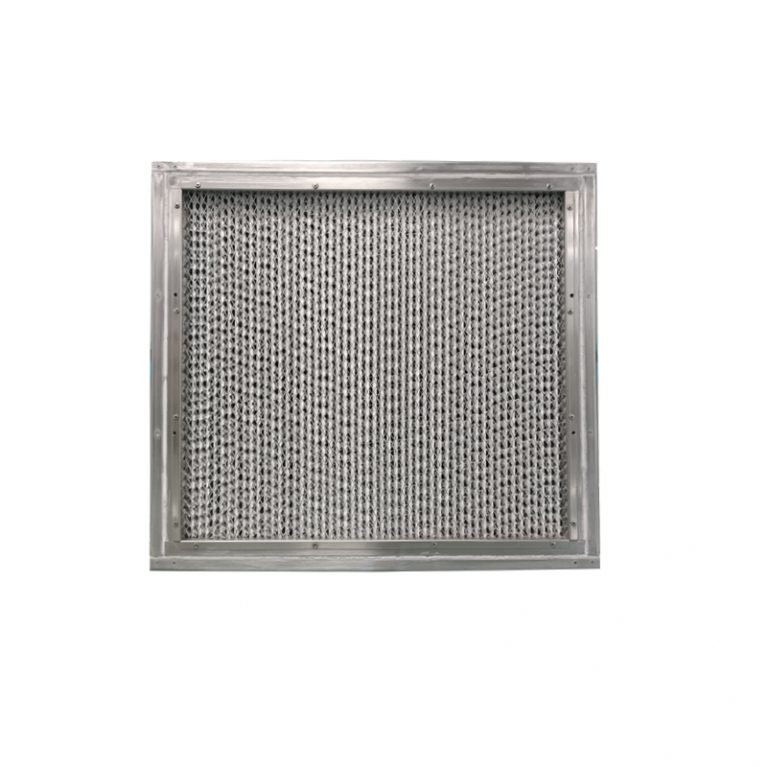
HEPA filter is the core component. HEPA filters are usually configured at both air supply side and exhaust side. The exhaust HEPA filter prevents dust-laden air from directly discharging into the clean room and reduces secondary pollution risk. Filters shall be reserved with leak detection ports for PAO/DOP integrity test.
3. GMP Cleanliness Requirements
According to pharmaceutical GMP and relevant design specifications for clean workshops, raw material weighing shall be carried out in specially designed weighing booth or weighing room. Dust-generating operation rooms shall maintain relative negative pressure or adopt special measures to prevent dust diffusion and cross-contamination.
-
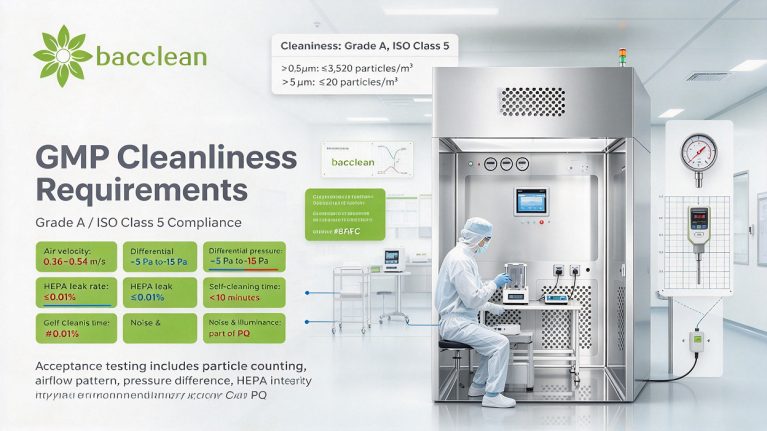
Cleanliness: The working zone of negative pressure weighing booth generally meets Grade A, corresponding to ISO Class 5 (Class 100). Under static condition, the number of suspended particles ≥0.5μm shall not exceed 3520 per cubic meter, and particles ≥5μm shall not exceed 20 per cubic meter.
-
Air velocity: The average wind speed of working zone is controlled at 0.36m/s~0.54m/s, commonly set at 0.45m/s. Too low wind speed fails to suppress dust effectively; too high wind speed may disturb balance weighing and damage laminar flow stability.
-
Differential pressure: The weighing booth shall maintain micro-negative pressure relative to adjacent clean areas. For normal dust-generating weighing room, the negative pressure is -5Pa~-10Pa compared with adjacent areas. For high-activity, hormone, cytotoxic or sensitizing materials, negative pressure is usually higher, controlled at -10Pa~-15Pa.
-
HEPA integrity: The leakage rate of HEPA filter shall not exceed 0.01%.
-
Self-cleaning time: Self-cleaning time is generally less than 10 minutes, meaning the time for equipment to recover from polluted state to specified cleanliness level.
4. Operation & Validation Management Points
Before commissioning, the negative pressure weighing booth shall complete Installation Qualification(IQ), Operation Qualification(OQ) and Performance Qualification(PQ). Performance confirmation usually includes wind speed uniformity, differential pressure stability, cleanliness, airflow pattern, HEPA leak test, self-cleaning time, noise and illuminance.
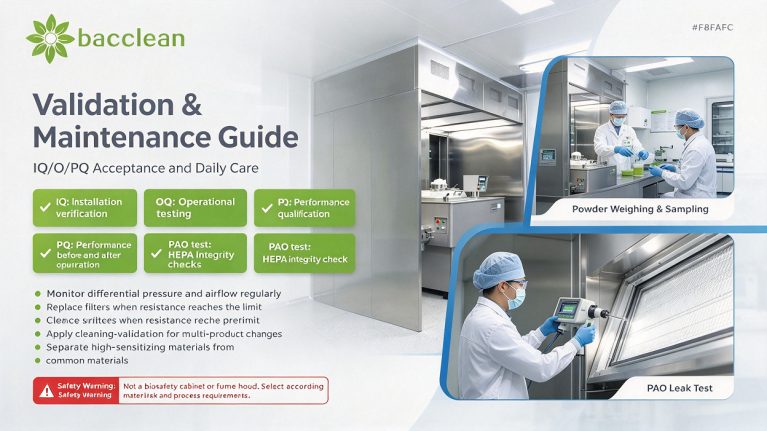
In daily management, regularly check whether differential pressure and wind speed are normal. Replace filters in time when filter resistance rises to the set value. Clean the tabletop, return air grille and balance surroundings before and after weighing. Implement cleaning validation for multi-product switching to avoid cross-contamination. High-sensitizing and high-activity materials should not share the same weighing station with ordinary materials.
Important note: Negative pressure weighing booth is mainly used for dust control and local clean protection. It cannot replace biosafety cabinet for high-risk pathogenic microorganism operation, nor replace fume hood for handling large amounts of volatile toxic chemicals. Selection and application shall be comprehensively determined according to material characteristics, cleanliness level, dust generation intensity and GMP verification requirements.
