
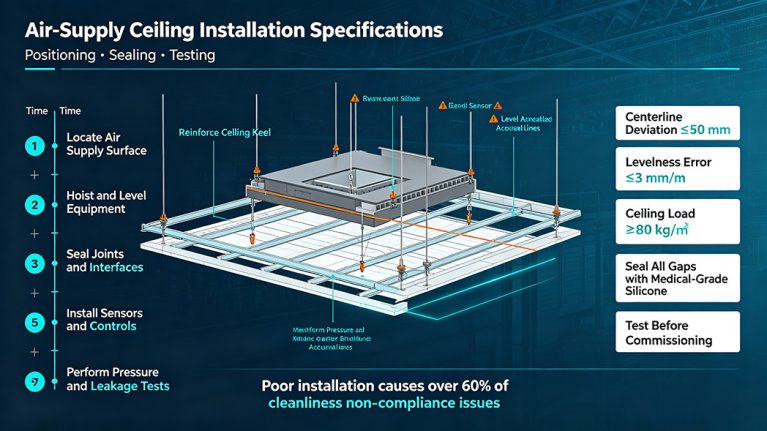
In the installation and construction phase, three core principles shall be strictly followed: accurate positioning, reliable sealing and standardized connection. During equipment positioning, the deviation between the centerline of air‑supply surface and the centerline of working‑zone equipment shall be ≤ 50 mm to prevent airflow misalignment and subsequent clean dead corners. For hoisting installation, the levelness error shall be ≤ 3 mm/m, so as to avoid uneven stress on the plenum chamber and airflow deflection. Ceiling keels shall be reinforced in advance to meet the load‑bearing requirement of ≥ 80 kg/㎡. Hoisting spacing shall be set in strict accordance with equipment specifications to eliminate potential deformation and loosening in later service.
Equipment connection and sealing constitute the core key points of installation. When connecting with surgical shadowless lamps and other ceiling‑mounted devices, special mounting steel plates and sealing rubber rings shall be reserved to fill sealing gaps and prevent air leakage and dust accumulation. Pipeline interfaces and cabinet splicing gaps shall be fully sealed with food‑grade and medical‑grade sealing silicone to guarantee the tightness of the plenum chamber. For electrical and control system installation, interfaces for differential‑pressure sensors and resistance monitoring shall be reserved to realize real‑time monitoring of filter operating conditions. Meanwhile, circuits shall be treated with waterproof and dust‑proof measures to avoid electrical failures. Upon completion of installation, air pressure test, airflow uniformity inspection and tightness leak test shall be carried out. The equipment can be put into service only after all parameters meet requirements.
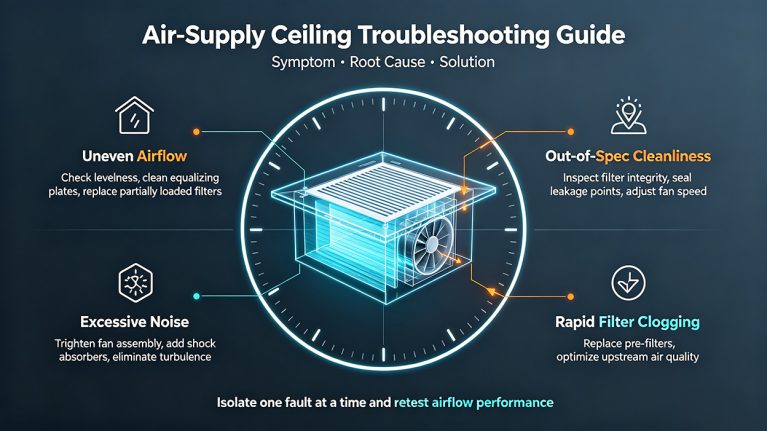
During long‑term operation, air‑supply ceilings are prone to four typical faults: uneven air supply, excessive cleanliness index value, excessive operating noise and rapid filter clogging. Precise investigation and targeted solutions are required. First, uneven air supply and local clean dead corners are mostly caused by tilted installation, blocked flow‑equalizing plates or partial dust accumulation on filters. Countermeasures include calibrating equipment levelness, cleaning flow‑equalizing components and replacing failed filter elements. Second, continuously out‑of‑spec cleanliness mainly results from damaged filters, sealing air leakage or insufficient air‑change rate. Inspect sealing points one‑by‑one, perform filter integrity test and adjust fan rotating speed. Third, excessive operating noise is generally induced by loose fan assembly, plenum‑chamber resonance or airflow turbulence. Fasten fan components, install shock‑absorbing devices and trace the root cause of airflow disorder. Fourth, short‑term filter clogging is mainly attributed to invalid pre‑filtration or excessively high dust concentration in workshops. Replace pre‑filters and optimize the pre‑purification system of the workshop.
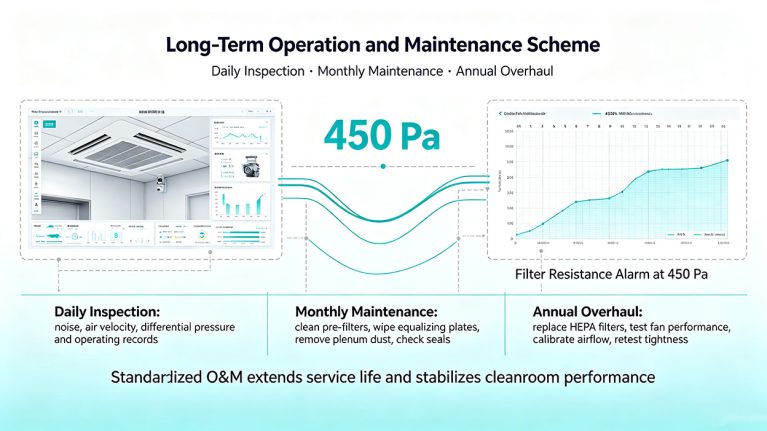
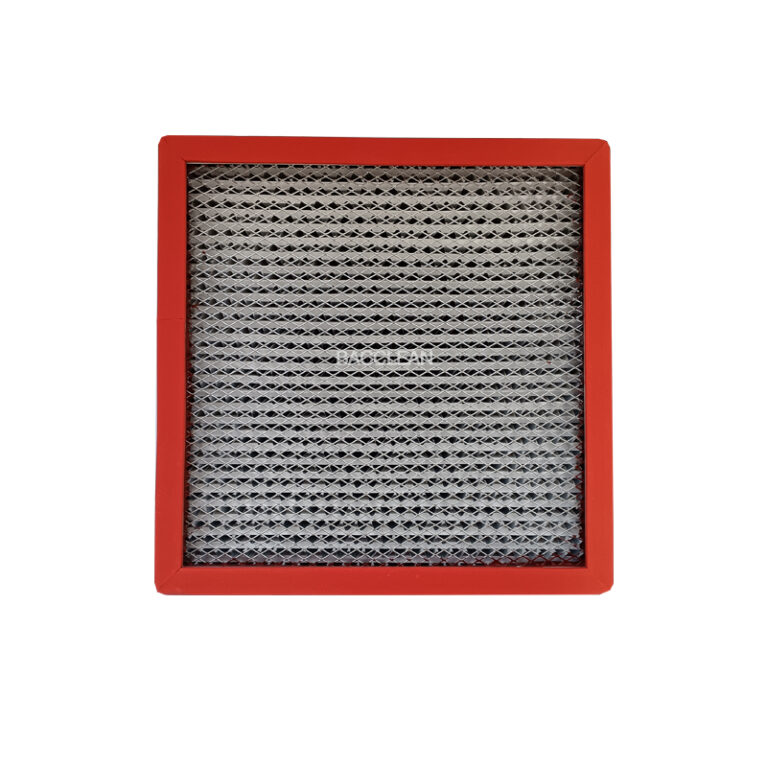
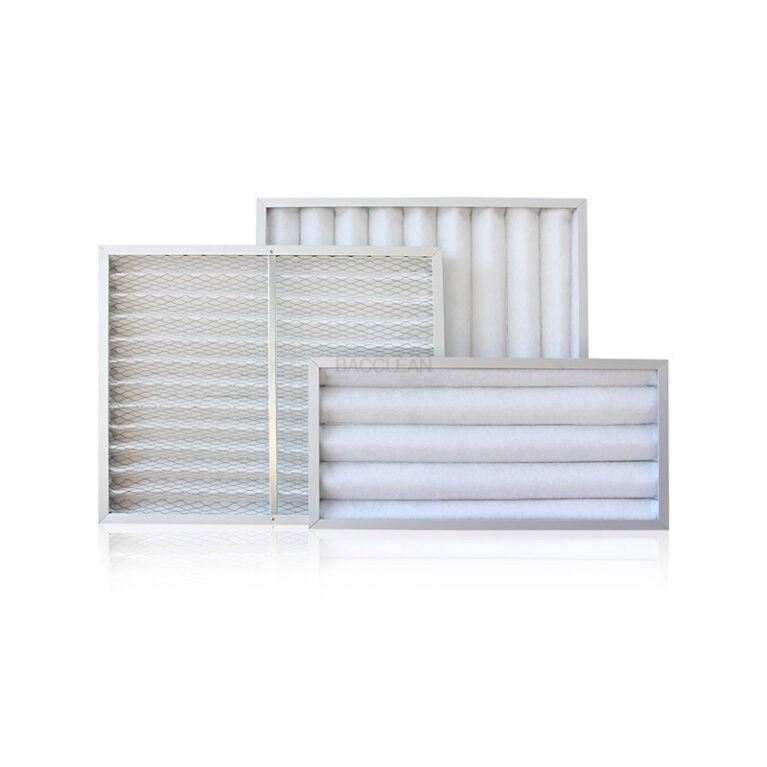
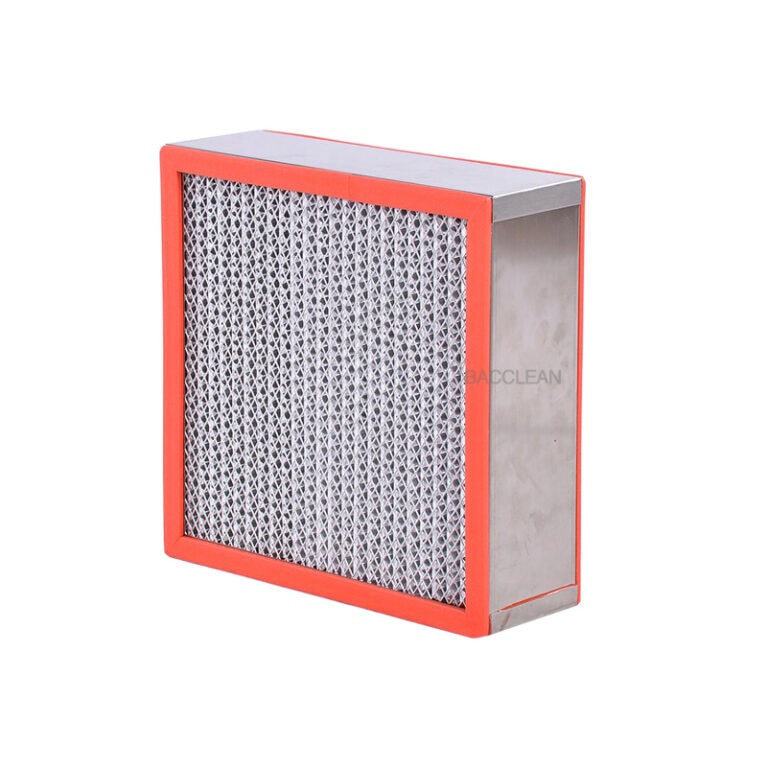
Long‑term operation and maintenance shall establish a periodic standardized management system implemented in three dimensions: daily inspection, monthly maintenance and annual overhaul. Daily inspection focuses on monitoring operating noise, air‑supply velocity and differential‑pressure data, and recording changes of working conditions. Monthly maintenance covers cleaning primary‑efficiency filters, wiping flow‑equalizing plates and equipment housing, removing dust deposits inside the plenum chamber, and checking the integrity of sealing rubber strips. Annual overhaul includes full replacement of HEPA filters, fan‑performance testing, airflow‑parameter calibration and re‑inspection of equipment tightness. Meanwhile, a filter‑resistance early‑warning mechanism shall be established. Filter elements shall be replaced promptly when resistance reaches the threshold of 450 Pa to avoid purification failure caused by over‑service use.
Strict implementation of installation specifications and O&M standards can effectively extend the service life of air‑supply ceilings, ensure stable airflow and qualified purification performance in clean spaces, and greatly reduce later‑stage fault‑repair costs. It provides long‑term and reliable terminal‑purification guarantee for scenarios such as clean workshops and medical operating rooms.
