
Both the negative pressure weighing chamber and the laminar flow hood are core equipment in the purification field, but their core functions, airflow principles, and application scenarios are significantly different. The following is a professional analysis from three aspects: core definition, key differences, and applicable scenarios, which is suitable for formal scenarios such as the promotion of Bailun Purification business and technical communication. The content is precise and easy to be applied in practice
I. Core Definition (Precise Refinement, Suitable for Professional Communication)
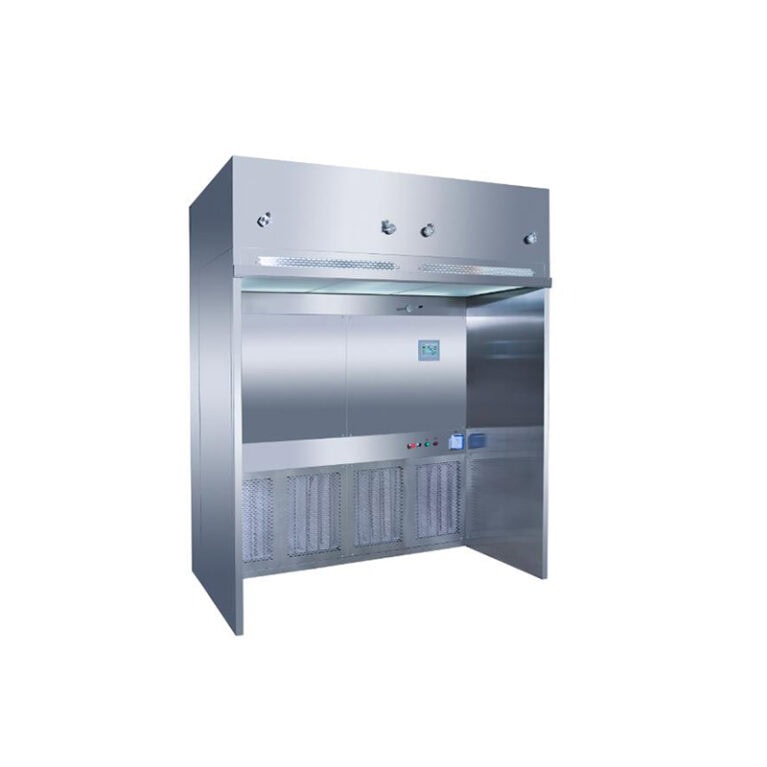
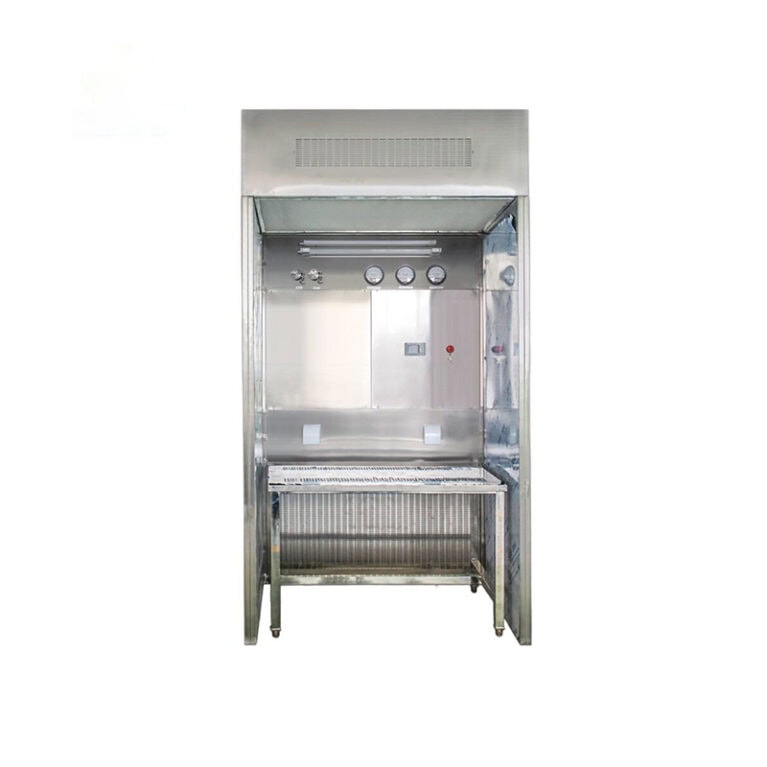
Negative pressure weighing chamber: Also known as weighing hood, it is a local negative pressure purification device. Through directional airflow design, it “locks” dust, harmful gases and other pollutants in the operation area inside, preventing them from spreading to the external environment. At the same time, it provides a clean operation space inside, meeting the dual demands of “pollution control” and “local cleanliness”.
Laminar flow hood: The full name is “vertical/horizontal laminar flow clean hood”, which is a local positive pressure purification device. It generates uniform clean air flow through high-efficiency filtration (HEPA/ULPA) to cover the target area and prevent dust, microorganisms and other pollutants from the external environment from entering. Its core function is to “create a local high-cleanliness environment”.
Ii. Key Differences (6 Dimensions of Comparison, Clear and Intuitive
| Comparison dimension | Negative pressure weighing chamber | Laminar flow hood |
| Core flow direction | Vertically downward (top supply air → operation area → bottom return air), a negative pressure is formed inside (relative to the outside), and the airflow does not escape outward | Blow vertically downward or horizontally (top/side air supply → cover area → natural diffusion), creating a positive pressure inside (relative to the outside), and the clean air flow covers outward |
| Core function | 1. Control the spread of internal pollutants (such as dust and toxic reagents); 2. Provide a clean environment for weighing/sampling | 1. Provide high clean air flow to the target area; 2. It can prevent external pollutants from entering and does not have the function of collecting pollutants |
| Pressure state | The operation area is under negative pressure relative to the outside (the negative pressure value is usually -5 to -15Pa), and an exhaust system should be equipped to remove pollutants | The inside of the hood is under positive pressure relative to the outside (the positive pressure value is usually 5 to 15Pa), and there is no need for forced exhaust. The airflow will naturally escape |
| Applicable medium | Materials that are prone to generating dust, odors, and toxic or harmful substances (such as pharmaceutical powders, chemical raw materials, and metal powders) | Items/areas with high cleanliness requirements but no risk of pollutant diffusion (such as precision instruments, sterile products, operating tables) |
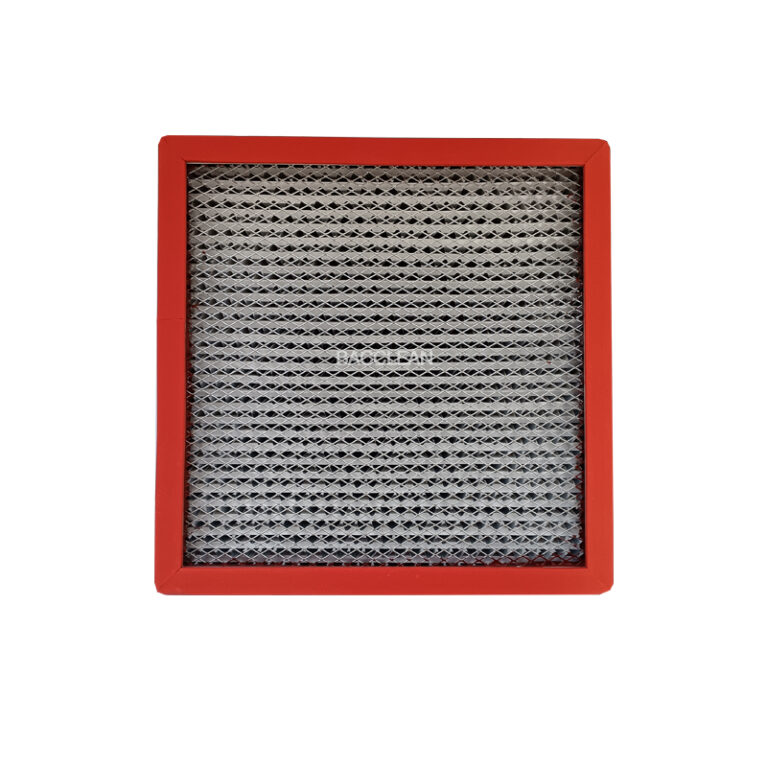
| Structural configuration | Must be equipped with: high-efficiency filter (supply air), medium-efficiency filter (return air), exhaust system, differential pressure gauge, air volume regulating device, some with interlock function (such as automatic air volume adjustment when the door is opened) | Core configuration: High-efficiency/ultra-high-efficiency filters, fans, static pressure boxes, differential pressure gauges. Simple structure, can be wall-mounted or suspended, and does not need to be linked with the exhaust system |
| Compliance requirements | It must comply with the requirements of “dust control” and “cross-contamination prevention” in GMP (Good Manufacturing Practice for Pharmaceuticals), and is applicable to strongly regulated industries such as pharmaceuticals and chemicals | It needs to comply with the cleanroom grade standards (such as ISO 14644), with an emphasis on ensuring cleanliness, and is suitable for general purification scenarios such as electronics, food, and medical care |
Iii. Applicable Scenarios (Combined with Bacclean business, precisely matching Industry demands)
1. Applicable scenarios of negative pressure weighing chambers
Pharmaceutical industry: Weighing of raw materials for drugs, sampling of powder, and proportioning of excipients (to prevent dust diffusion and cross-contamination, in compliance with GMP Appendix 1 requirements);
Chemical industry: Weighing of flammable, explosive and toxic powders, catalyst proportioning (controlling the leakage of harmful dust and ensuring personnel safety);
Food industry: Weighing of powdered raw materials (such as flour, milk powder, additives) to prevent dust from polluting the workshop environment and other materials.
2. Application scenarios of laminar flow hoods
Electronics industry: Assembly of semiconductor chips and precision components (providing ISO Level 5 clean environment to prevent dust adhesion);
Pharmaceutical industry: Sterile drug repackaging, biological preparation culture (isolating environmental microorganisms from invading to ensure product sterility);
Medical industry: Local purification in operating rooms, protection of precision laboratory instruments (such as microscopes, chromatographs);
Food industry: Aseptic food packaging area, high-end baking raw material display area (to prevent environmental dust from contaminating products).
Iv. Core Summary (Distinguished in one Sentence for Quick Memory
Negative pressure weighing chamber: “Shut for purification” – Locking contaminants inside, ensuring cleanliness while preventing their spread.
Laminar flow hood: “Cover for purification” – It covers the outside with clean air flow, only maintaining cleanliness without controlling contamination.
As a professional supplier of purification equipment, Bacclean can customize negative pressure weighing chambers (including explosion-proof and anti-corrosion models) and laminar flow hoods (including ULPA ultra-efficient models) based on the medium characteristics, cleanliness requirements and compliance standards of customers. It takes into account both technical compliance and scene adaptation, helping various industries achieve precise purification control.
