
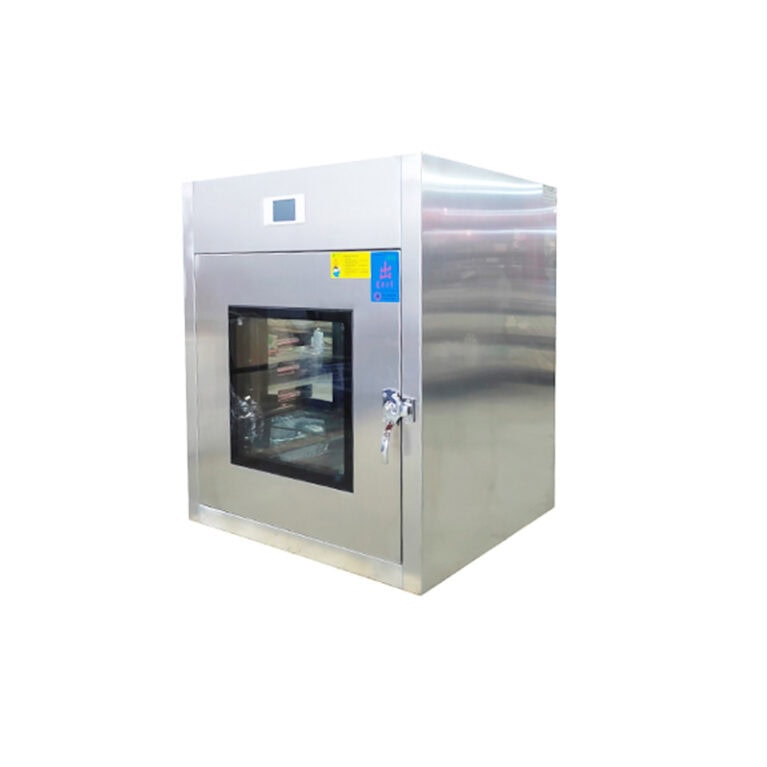
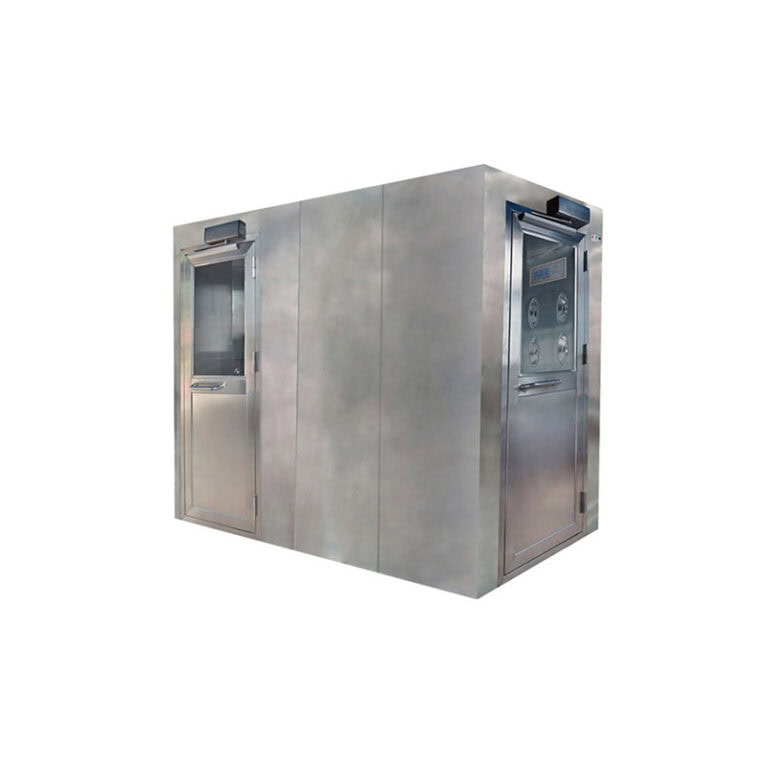

During frequent long-term operation, common faults include stuck doors, failure to open or close, door jamming, simultaneous opening of both doors, and abnormal interlock indicator lights. Many maintenance personnel blindly disassemble or force the door body when troubleshooting. This not only fails to resolve the fault but may also deform the lock body and damage the circuit, triggering more serious cleanroom contamination hazards. Combining two mainstream configurations: mechanical interlock and electronic interlock, this article sorts out four common faults, rapid troubleshooting workflows, standardized repair methods and long-term maintenance plans to help maintenance technicians quickly resolve interlock abnormalities.
1. Basic Structure & Working Principle of Laminar Flow Pass Box Interlock Devices
Two main interlock types are widely adopted for laminar flow pass boxes in the industry. Their structural differences lead to distinct fault causes and troubleshooting priorities.
- Mechanical Interlock: Operates through linkage rods, hooks and spring mechanical structures. It is purely physically actuated without power supply, stable with low failure rates, commonly used for pass boxes in Class C/D conventional clean zones. When one door is opened, the linkage rod pushes out the locking structure to physically lock the opposite door, enabling one-way opening.
- Electronic Interlock: Composed of door magnetic sensors, electromagnetic locks, control circuit boards and indicator lights. It achieves linked locking through signal induction after power-on, with fast response and visual status display. It is widely deployed in Class A/B high-grade sterile pharmaceutical workshops and precision semiconductor cleanrooms. Under normal operating conditions, the opposite door lock cuts off power and locks instantly once one door opens, prohibiting simultaneous opening of both doors.
For either interlock type, interlock faults will directly break cleanroom pressure balance, causing particle over-limit and reverse contamination. Such faults require immediate shutdown and repair, classified as high-priority cleanroom defects.
2. Four Common Interlock Faults, Root Causes & Step-by-Step Solutions
Fault 1: Single door cannot be opened, fully stuck
Symptom: The opposite door is fully closed with no gaps, indicator status is normal, yet the door cannot be pulled open. Rebooting power does not resolve the issue, the most frequent daily fault. Root Causes:
- Mechanical version: deformed hooks, stuck springs, linkage rods jammed by accumulated dust.
- Electronic version: excessively small electromagnetic lock air gap, stuck lock core, misjudged door magnetic signal, system identifies door incompletely closed and keeps locked. External force pulling over time may displace the lock body and misalign the buckles, resulting in jamming.
Step-by-step Solutions
- Pre-check: Confirm the opposite door is tightly closed with no gaps, rule out interlock protection lock caused by incompletely latched door.
- Mechanical structure repair: Clean dust and debris on lock bodies, linkage rods and hooks; calibrate deformed hooks and reset offset linkage rods. Replace aged stuck springs. Light jamming can be lubricated with food-grade silicone oil, avoid oily lubricants that trap dust and contaminate clean space.
- Electronic structure commissioning: Power off and manually unlock for reset; adjust electromagnetic lock air gap to the standard range of 2–3 mm. Clean door magnetic sensing probes to eliminate signal interference.
- Function reset test: Open and close the door repeatedly for 3–5 times after commissioning to verify smooth movement and sensitive locking without jamming.
Fault 2: Door cannot fully close, rebounds when closed, loose after latching
Symptom: Door cannot fully seat, rebounds upon gentle push, gaps remain after closing, interlock indicator fails to light up, and the equipment cannot enter normal working status. Root Causes: Loose and offset door hinges misalign the door body; aged and bulging sealing gaskets push against the door; worn mechanical lock hooks with insufficient spring tension; stuck lock tongue of electronic lock that cannot fully engage.
Step-by-step Solutions
- Alignment calibration: Fine-tune hinge screws to calibrate door vertical and horizontal level, ensure door leaf fits tightly with door frame and eliminate offset.
- Component inspection: Trim or replace bulging, deformed sealing gaskets to prevent gasket pressure against the door. Inspect wear of lock tongue and hooks, replace severely worn components promptly.
- Lock body reset: Clean dust and foreign objects inside lock slots to ensure lock tongue and hooks fully engage without obstruction or rebound during closing.
- Function verification: Confirm interlock indicator lights up normally and locking function takes effect after full door closure.
Fault 3: Interlock failure, both doors can be opened simultaneously (High-risk compliance fault)
Symptom: Both doors can be opened at the same time with no locking restriction, directly enabling air exchange between clean zones of different grades. This constitutes a major hidden risk in GMP inspections and requires immediate shutdown and rectification. Root Causes:
- Mechanical version: fallen-off linkage rods, broken springs, failed locking structure with complete loss of linkage braking capacity.
- Electronic version: damaged door magnetic switches, circuit board failure, loose wiring, failed relays unable to transmit locking signals.
Step-by-step Solutions
- Emergency handling: Stop equipment operation immediately, post fault warning signs and prohibit material transfer to avoid large-area cleanroom contamination.
- Mechanical structure maintenance: Remove lock body cover plate, inspect linkage rod detachment and spring breakage. Re-fix linkage rods and replace broken springs to reset locking structure.
- Electronic circuit troubleshooting: Inspect door magnetic sensors, wire terminals and main control board status. Replace failed door magnetic sensors and faulty relays, fasten loose wiring.
- Dual verification: Alternately open and close both doors repeatedly to confirm the opposite door locks instantly upon opening one door, no failure or delayed response.
Fault 4: Abnormal interlock indicator light, functional normal / malfunction
Symptom: Doors open and close normally, while indicator lights remain off, always on or flashing; or indicator status mismatches actual locking status. Root Causes: Aged and damaged LED indicator lights, poor wiring contact; disordered door magnetic sensing signals, abnormal main control board parameters; unstable power supply voltage leading to abnormal signal transmission.
Step-by-step Solutions
- Priority function verification: First confirm whether interlock locking function works properly. Guarantee clean isolation function first, then repair lighting faults.
- Circuit and component maintenance: Inspect indicator wiring terminals, fasten loose wires and replace damaged indicator lights.
- Signal commissioning: Clean door magnetic sensing area, troubleshoot voltage fluctuation issues, reset main control board parameters if necessary to restore signal synchronization.
- Status calibration: Ensure indicator lights stay on when door is closed and turn off when door opens, fully synchronizing locking status with light prompts.
3. Priority of Interlock Fault Troubleshooting (Efficient Maintenance Workflow)
Avoid blind equipment disassembly during daily maintenance. Follow the simple-to-complex sequence to quickly locate faults and greatly improve maintenance efficiency:
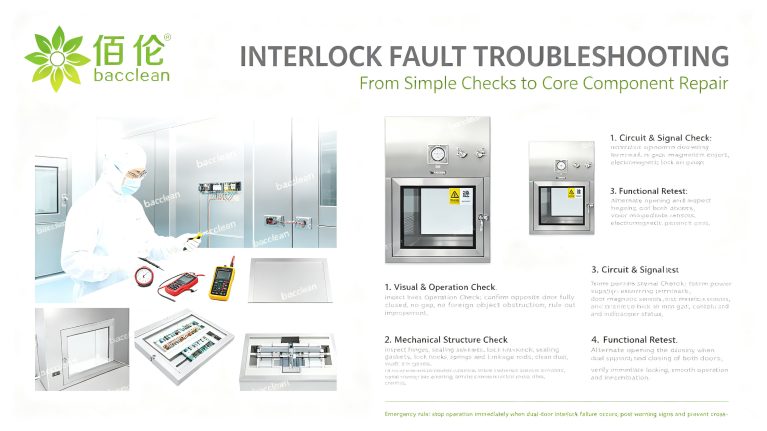
- Visual & operation check (1 min): Check incomplete door closure, offset and foreign object obstruction on door frame, eliminate improper manual operation and basic blockage issues.
- Mechanical structure check (3 min): Inspect hinges, sealing strips, lock hooks, springs and linkage rods for deformation, jamming or falling off, resolve physical opening/closing faults.
- Circuit & signal check (5 min): For electronic interlock units, check power supply, wiring, door magnetic switches, main control boards and indicator lights for abnormal power supply and signal faults.
- Functional re-testing: Alternately open and close dual doors to test lock response speed, opening/closing smoothness and indicator synchronization, ensuring complete fault repair.
4. Daily Maintenance Specifications (Prevent Interlock Faults at Source)
Over 90% of interlock faults arise from dust accumulation, component aging and improper external force operation. Regular maintenance can effectively reduce failure frequency:
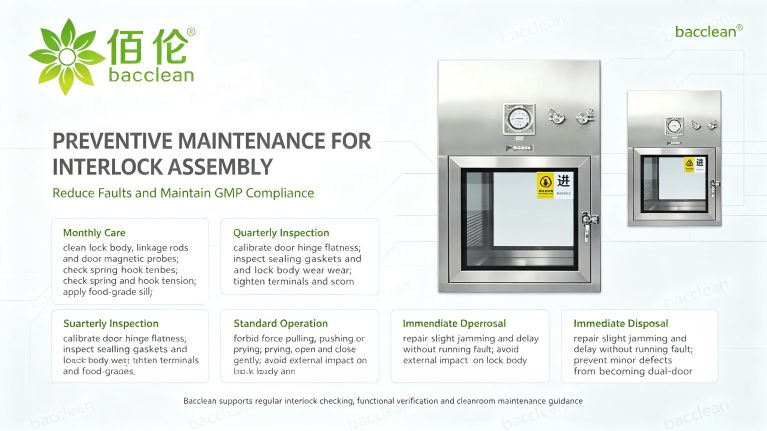
- Monthly basic maintenance: Clean surface dust on lock bodies, linkage rods and door magnetic probes. Check spring and hook elasticity. Use dedicated silicone lubricant for minor jamming. Never use oily lubricants that cause dust accumulation and cleanroom contamination.
- Quarterly special inspection: Calibrate door hinge flatness, inspect wear of sealing strips and lock bodies, fasten wire terminals and screws. Test dual-door interlock response speed, locking shall complete within 0.5 seconds.
- Standard operation requirements: Forbid force pulling, pushing or prying door bodies. Open and close doors gently during material transfer to prevent lock body displacement and deformation caused by external impact.
- Prompt fault disposal: Repair minor jamming and delayed response promptly. Never operate equipment with faults, to prevent small defects evolving into critical compliance hazards of dual-door interlock failure.
5. Summary
Interlock faults of laminar flow pass boxes fall into two main categories: mechanical structure jamming/deformation and electronic circuit signal anomalies. Door jamming and failure to open/close are mostly triggered by dust accumulation, wear and offset of mechanical components. Dual-door interlock failure and abnormal indicator lights are usually caused by circuit, sensor and main control component defects.
The interlock assembly is a critical component for compliant cleanroom operation, directly related to zone pressure stability and pollution prevention. During maintenance, follow the principle of “check simple issues first, then repair core components; guarantee functional compliance first, then optimize details”. Combined with monthly and quarterly routine maintenance, stable and reliable interlock operation can be maintained long-term, avoiding GMP inspection risks and cross-contamination hazards in clean workshops.
