
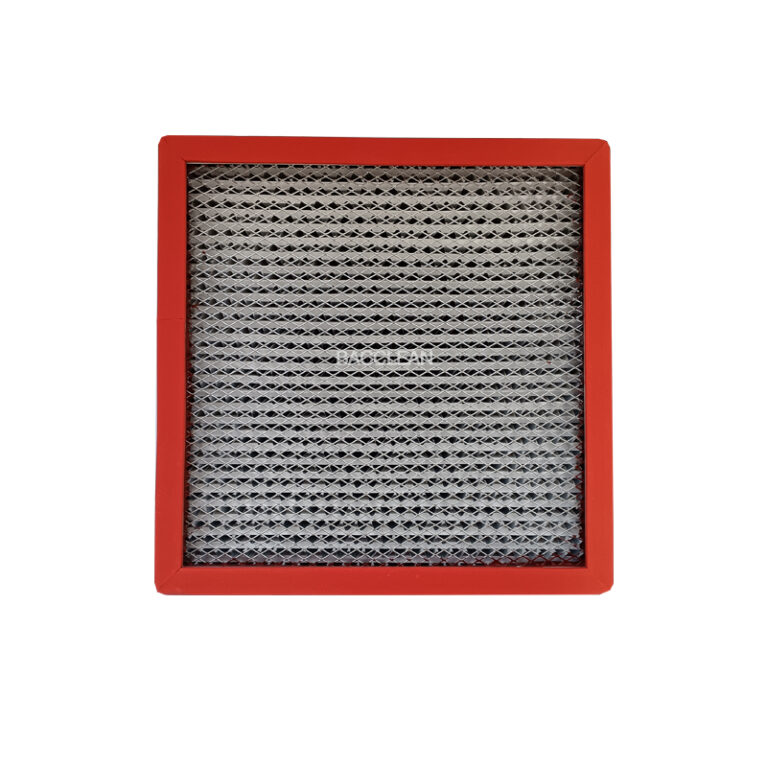
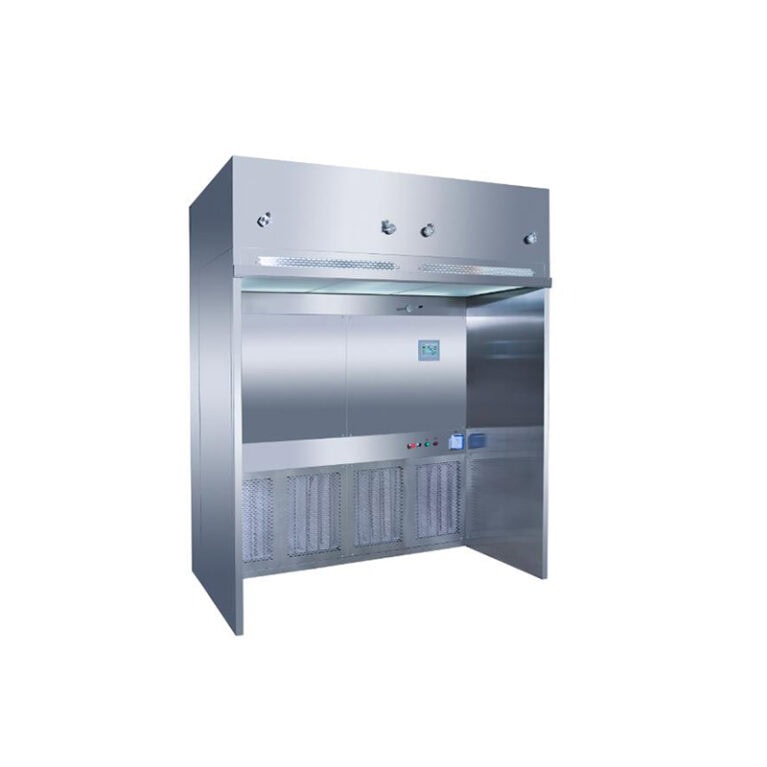
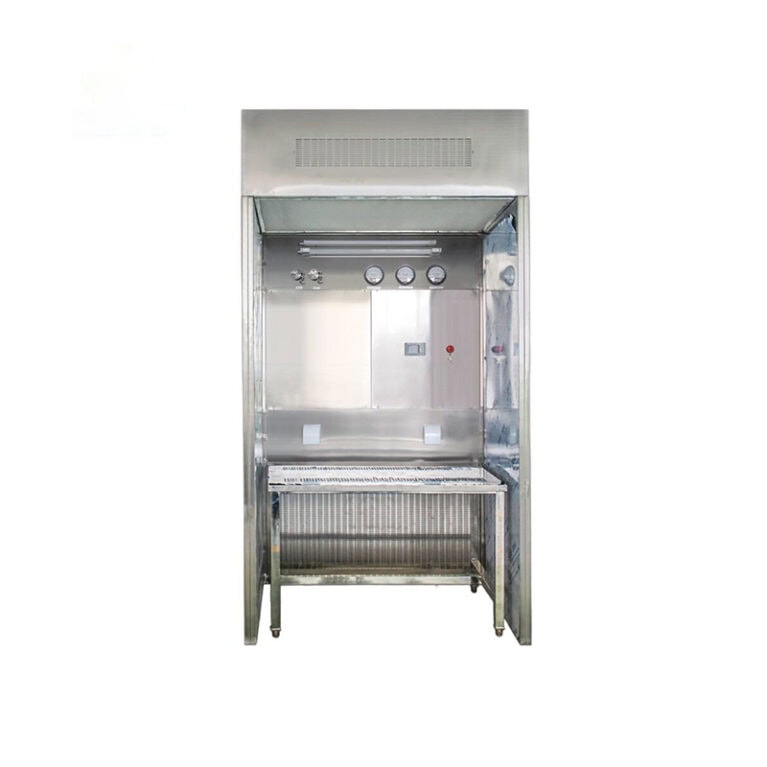
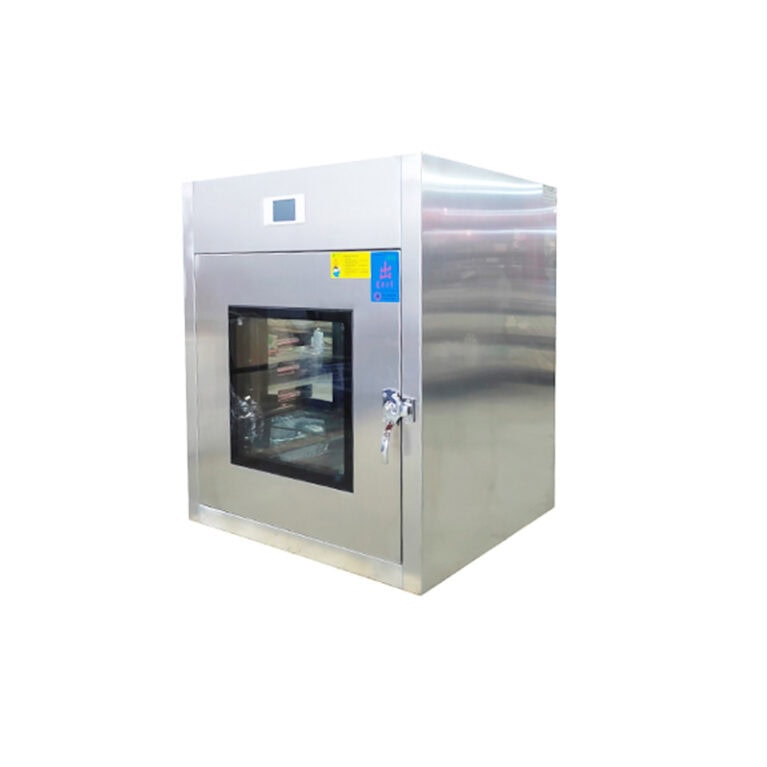
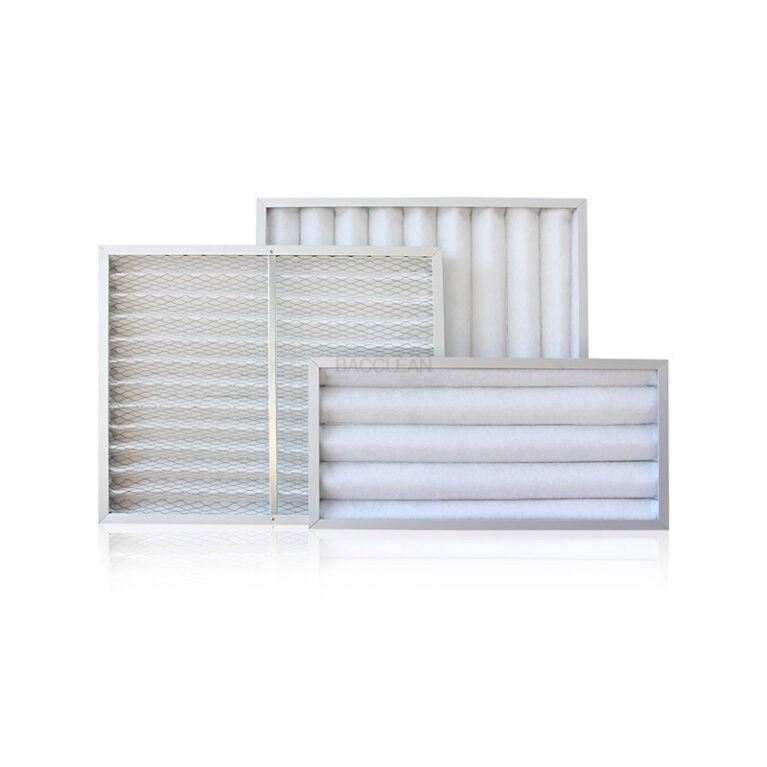
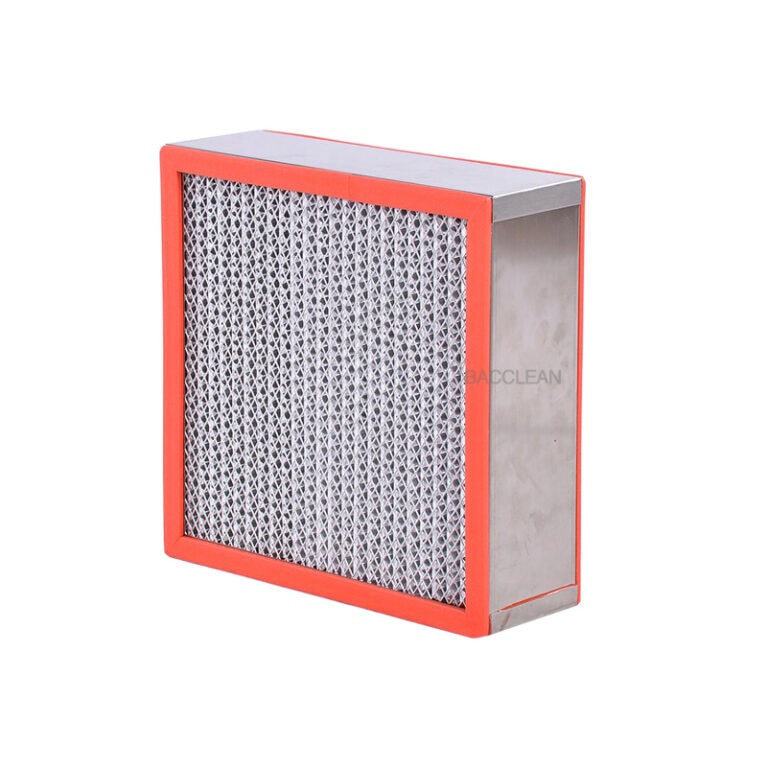
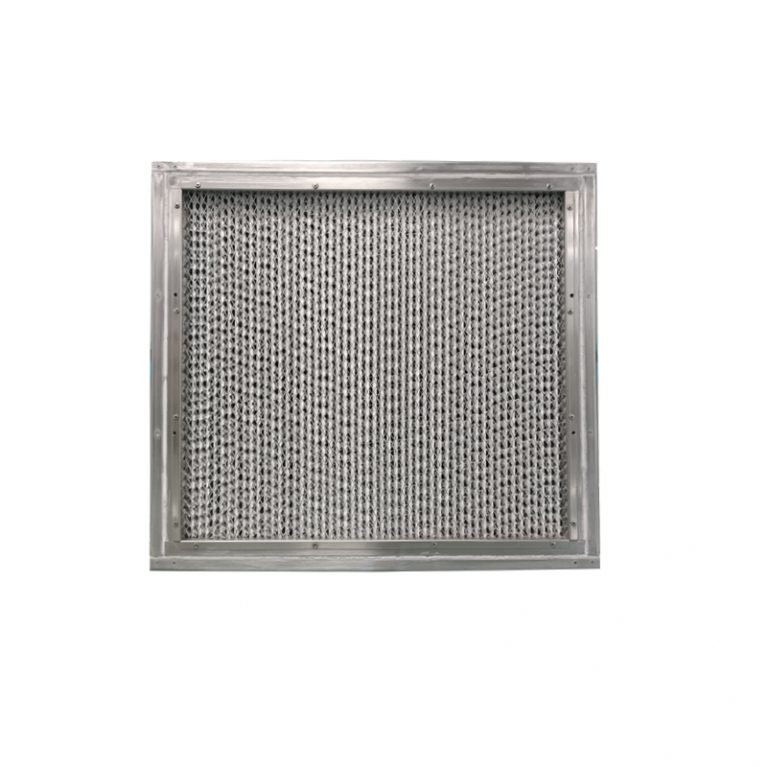
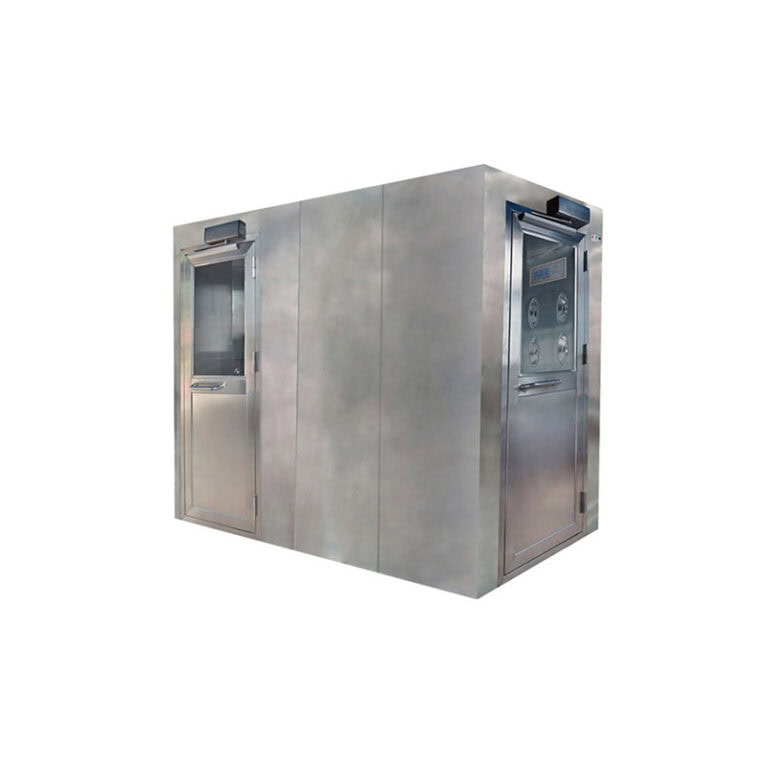
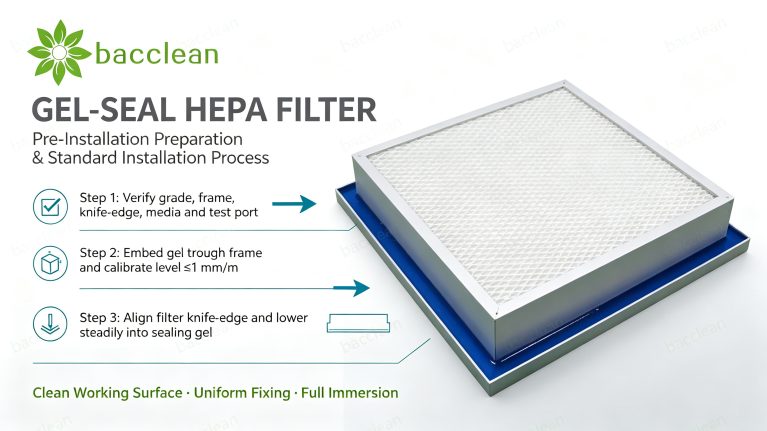
Precise detail control is required for pre-installation preparation. First, verify equipment specifications, filter grade and frame precision. Inspect that the gel trough is free of deformation, the knife-edge is not worn, filter media remains intact, and test ports are in good condition. Secondly, thoroughly clean the installation area. The interior of the clean ceiling and air outlet must be free of dust, debris and oil contamination to ensure an absolutely clean working surface and prevent impurities from interfering with sealing contact. Meanwhile, prepare special sealing silicone oil, precision gel filling tools, horizontal calibration instruments and PAO leak detection equipment. All construction tools shall be cleaned and disinfected in advance to avoid secondary pollution.
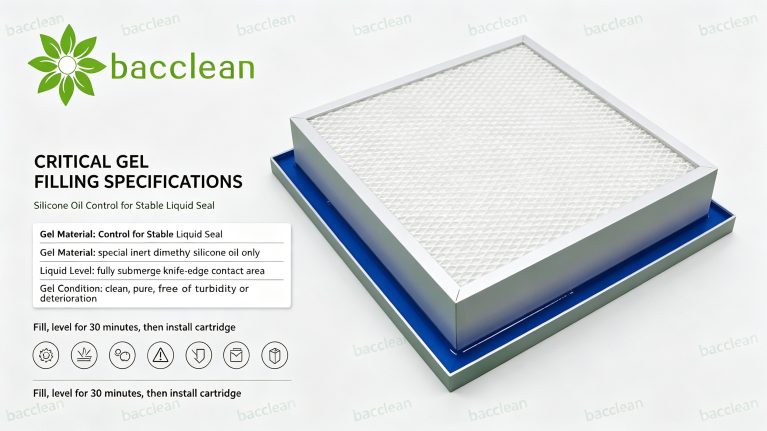
The standardized installation workflow consists of three steps: frame fixation, horizontal calibration and filter cartridge mounting. Step 1: Fix the outer frame. Embed the gel trough frame accurately into the installation position, fasten evenly with bolts, and perform real-time horizontal calibration during fixation. Ensure the frame levelness error ≤1 mm/m to prevent frame tilt or deformation, which serves as the foundation for uniform sealing. Step 2: Gel filling operation, the critical core process. Adopt special inert dimethyl silicone oil. Strictly control the gel volume to fully fill the trough, maintain a consistent liquid level, completely submerge the knife-edge contact zone without gaps, bubbles or overflow. Let the sealing liquid stand for 30 minutes after filling to allow natural levelling and form a uniform, stable sealing layer. Step 3: Install the filter cartridge. Align the filter knife-edge precisely with the gel sealing area, lower it steadily into the sealing liquid to achieve full immersion and uniform contact without offset or tilt, completing the flexible sealing connection.
Three key indicators must be strictly controlled for gel filling specifications:
- Gel material selection: Special sealing silicone oil matching working conditions must be used. Ordinary glue or inferior silicone oil is prohibited to avoid volatilization, deterioration and seal failure.
- Liquid level height: Match the depth of the filter knife-edge to guarantee full immersion. Insufficient liquid level causes air leakage while excessive liquid leads to overflow and waste.
- Gel condition: The gel must be pure and free of impurities before filling. Turbid or deteriorated gel is forbidden to maintain sealing performance. Under normal working conditions, the sealing gel can be recycled for 2-3 years. Only regular liquid level topping-up is required instead of frequent full replacement.
Professional PAO leak detection acceptance is mandatory after installation and gel filling, which is the universal industry acceptance standard for gel-seal filters. Connect the PAO aerosol generator to the built-in test port of the filter, feed uniform aerosol into the air supply system, and perform comprehensive scanning inspection on the filter surface, knife-edge sealing gaps and frame joints with a particle counter. The filter is deemed qualified with intact sealing and satisfactory filtration performance if no leak points or abnormal aerosol concentration spikes are detected. Meanwhile, test the initial air resistance and outlet air cleanliness of the equipment to confirm all parameters comply with design requirements, with no filtration dead zones or abnormal resistance. The equipment can only be officially commissioned after all acceptance indicators pass inspection.
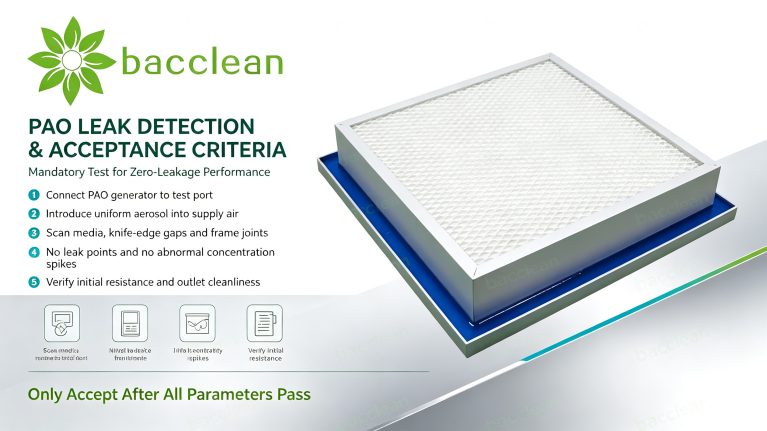
Accurate and standardized installation, gel filling and leak detection procedures form the core guarantee for gel-seal HEPA filters to achieve zero-leakage sealing. This thoroughly eliminates air leakage risks for high-end cleanrooms and ensures long-term stable operation of ultra-high-grade clean environments.
