
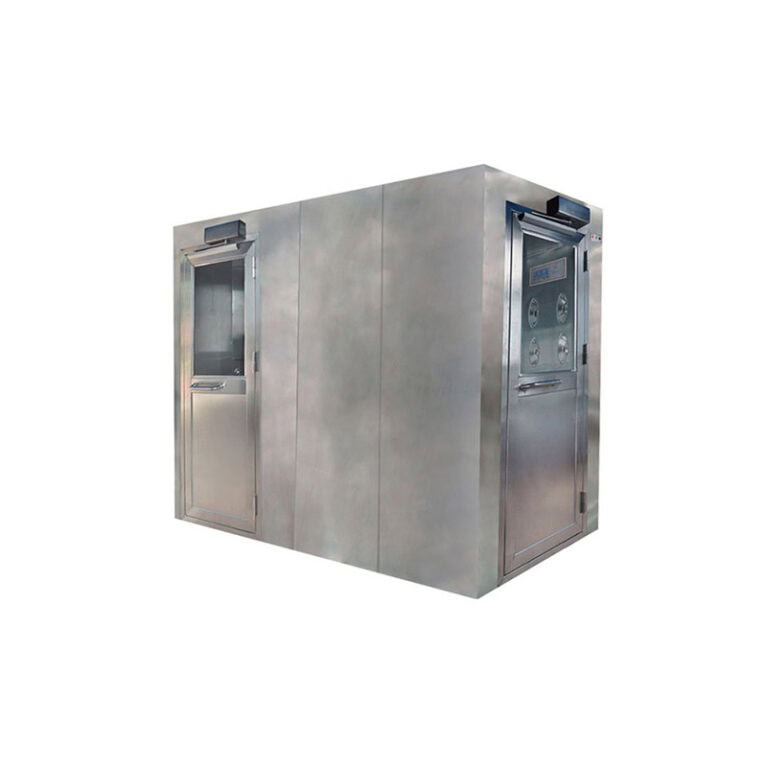
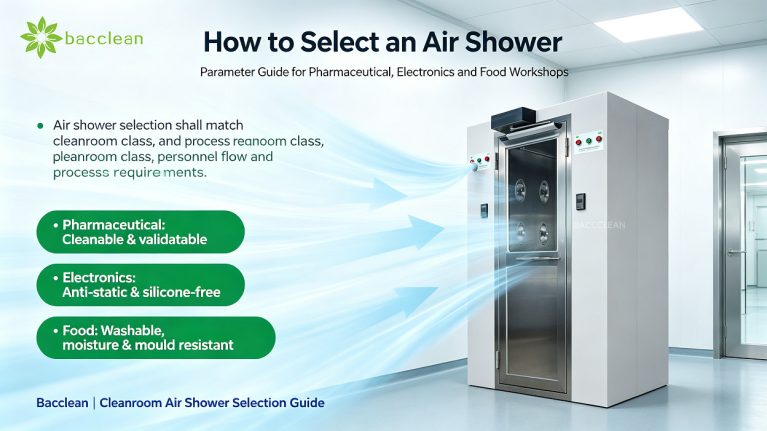
Air shower selection shall start with clarifying the cleanroom classification, personnel flow rate, process media and cleaning methods, before confirming the structure and parameters, rather than merely comparing prices and appearances. This guide sorts out specifications in the sequence of general assessment, industry-specific requirements, key parameters and frequently overlooked details.
1. Confirm Three Core Items Before Defining Configurations
First, cleanroom classification. Clean zones are graded per ISO 14644, while pharmaceutical facilities additionally follow GMP grades A/B/C/D. An air shower itself does not establish the cleanliness level of the room. Its function is to remove particles attached to personnel and work garments via high-velocity clean airflow, so as to reduce particle ingress. It is necessary to clarify which clean zone the air shower serves. The requirements for air showers leading to Grade C/D zones differ from those for airlocks for Grade B zones; the latter usually need integrated airlock design, pressure differential monitoring and interlock logic.
Second, personnel flow rate. Estimate based on the peak passing volume during shift change instead of average occupancy. A single-person air shower accommodates one user per cycle; double-side-by-side models allow two persons to pass simultaneously. Tunnel-type continuous air showers apply to high-traffic scenarios where queuing is unacceptable. Undersized units cause congestion during shift handover. Operators tend to rush through, triggering frequent interlock actions and compromising management.
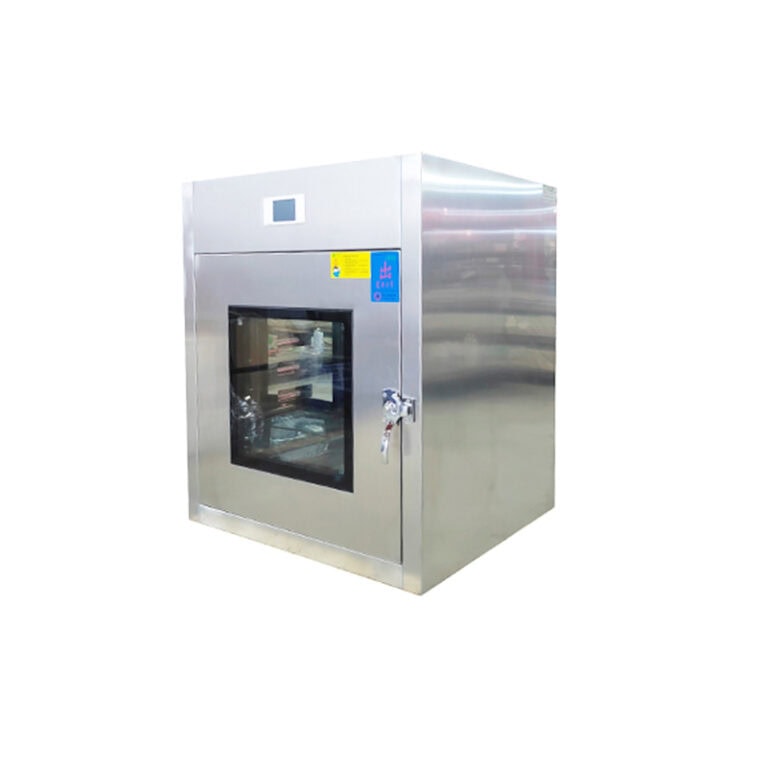
Third, installation conditions. Confirm doorway dimensions, ceiling height, floor load capacity, return air space, and whether the air shower will be connected in series with pass boxes or cargo air showers before finalizing the model. Many procurement orders are placed after civil construction is completed, resulting in mismatched door openings, insufficient headroom and failure to hoist the equipment, which forces structural modifications.
2. Pharmaceutical Workshops: Cleanability and Validatability as Priorities
For pharmaceutical facilities, compliance and validatability come before appearance. EU GMP Annex 1 specifies requirements for airlocks, pressure differential monitoring and environmental monitoring, which are aligned with domestic cleanroom design codes and GMP clauses. Four key points shall be implemented for air showers:
- Material and inner surface. Inner walls preferably adopt stainless steel. Grade 304 satisfies most scenarios; Grade 316L is suitable for areas exposed to corrosive disinfectants or high humidity. Inner surfaces shall be smooth with rounded transitions to minimize seams and exposed fasteners. Positions prone to dust accumulation, such as door frames, sills and nozzle bases, shall be wipeable and free of dead corners.
- Sealing and interlock. The two doors must feature reliable interlock. One door stays locked while the other opens, to prevent direct communication between clean zones of different grades and disruption of pressure cascades. Sealing strips shall resist repeated disinfection and remain flexible without cracking, shedding or crumbling under long-term exposure to alcohol and quaternary ammonium disinfectants.
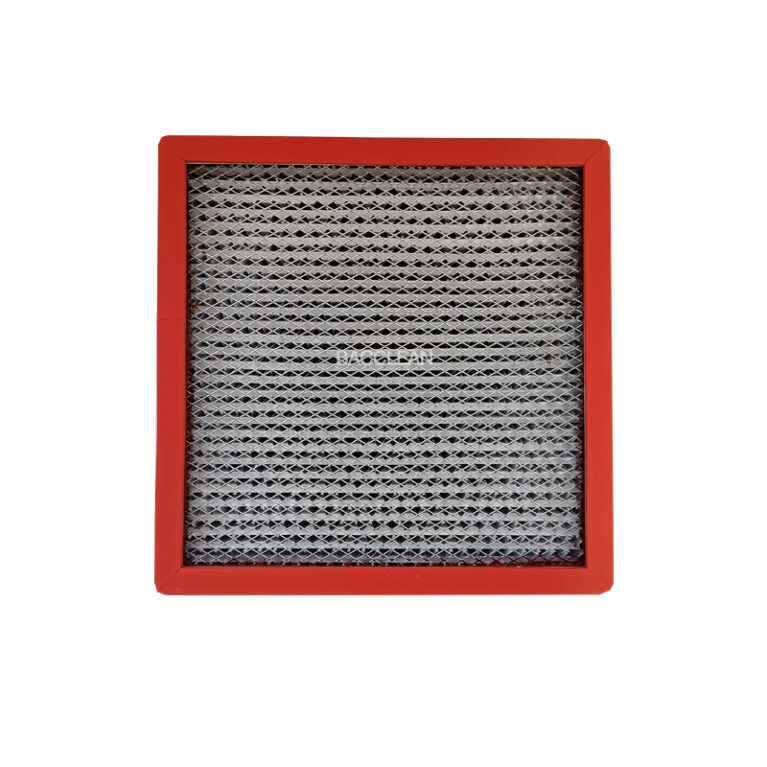
- Filtration and air velocity. The air supply terminal is equipped with HEPA filters of H13 / H14 class, protected by pre-filters. The airflow velocity at nozzle outlets shall be no less than 18 m/s. Measurements shall be taken at specified positions near nozzles instead of random sampling at the cabinet centre.
- Validation documentation. Pharmaceutical projects require support for DQ/IQ/OQ/PQ documentation, including material certificates, filter leak test reports, airflow uniformity records, pressure differential and interlock function test records. Confirm that the supplier can deliver these documents at the selection stage, instead of scrambling to supplement them after acceptance.
3. Electronics Workshops: Low Particle Emission, Anti-static and Silicone-free
Cleanliness requirements for electronics, semiconductor and display panel workshops differ from pharmaceutical scenarios. Greater attention is paid to whether the equipment itself acts as a contamination source, along with electrostatic and molecular pollution risks.
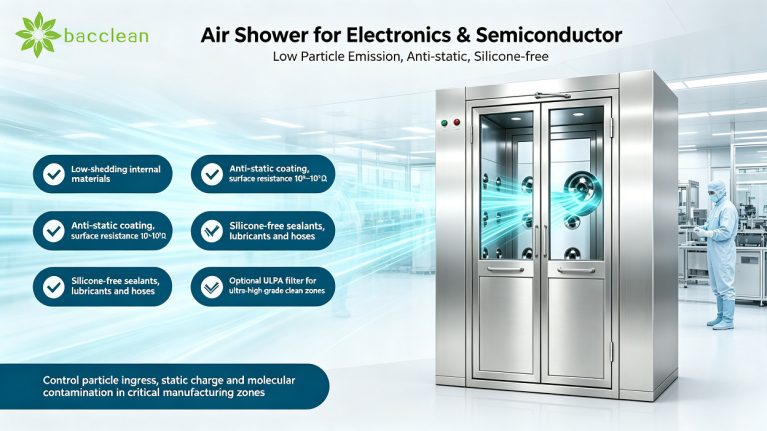
- Low particle emission. Cabinet coatings, sealants, insulation materials and lubricants may continuously release particulates and volatile organic compounds. Request suppliers to specify material grades. Inner surfaces preferably use stainless steel or treated steel plates, avoiding easily powdered or peeling liners.
- Anti-static performance. Static electricity generated by personnel movement and airflow friction poses risks to wafers and electronic components. Anti-static coating or anti-static flooring is optional, with surface resistance controlled within 10⁶–10⁹ Ω and reliable connection to the site earthing system. Ionizing bars can be installed for static-sensitive processes to neutralize charges.
- Silicone-free requirement. Siloxane contamination is an inconspicuous hazard in electronics workshops, forming stubborn films on lenses and wafer surfaces. Sealants, lubricants and hoses shall adopt silicone-free formulations. Ordinary air shower suppliers may not voluntarily mention this point, so it must be stated clearly in the technical agreement.
- Filtration grade. ULPA filters can replace HEPA for entrances of high-grade clean zones, with stricter cabinet tightness requirements. Poor sealing will cause bypass leakage even with premium filters.
4. Food Workshops: Moisture Resistance, Washability, Mould and Pest Prevention
Food workshops comply with GB 14881, emphasizing washability, disinfection performance, rust resistance and zero dirt accumulation. Air showers in this environment are frequently rinsed and exposed to high humidity, with distinct selection criteria.
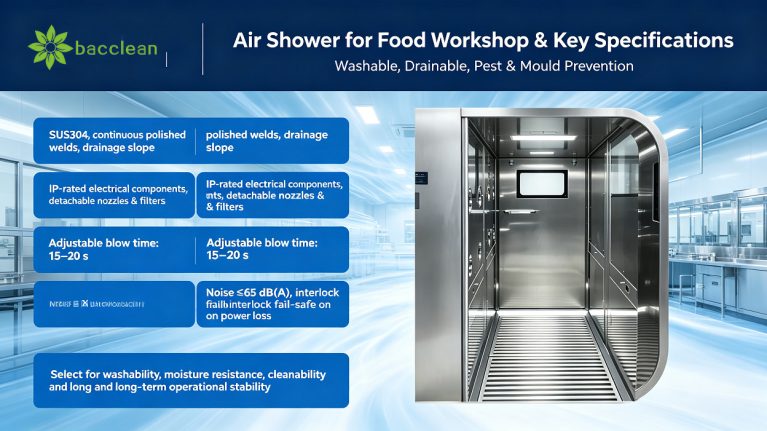
- Material and welding. Grade 304 stainless steel is preferred. Welds shall be continuous and smoothly polished to avoid concave pits left by spot welding that trap standing water. The cabinet base shall feature drainage slopes or outlets to eliminate pooled water.
- Detachable structure. Pre-filters, nozzles and sealing strips should be removable for cleaning with simple tools. Seals shall be mould-resistant and replaceable without water absorption and swelling. Wooden structures and ordinary painted cold-rolled steel have short service life in humid environments and are not recommended.
- Electrical protection. Electrical enclosures for rinse-prone areas shall reach appropriate IP ratings. Control panels are arranged away from direct water splash, while emergency stop and door switches are moisture-proof.
- Pest and rodent control. Seals shall be applied at joints between the cabinet, floor and wall to eliminate gaps. Door opening directions and people flow routes shall coordinate with pest control facilities to prevent the air shower from becoming a pest access channel.
5. Mandatory Key Parameters for All Industries
The following parameters shall be defined in technical agreements regardless of application scenarios:
- Nozzle airflow velocity (typically ≥18 m/s) and test method
- HEPA filter class and leak detection method
- Pre-filter replacement cycle and pressure differential alarm
- Interlock logic and fail-safe mode upon power loss
- Operating noise (generally controlled within 65 dB(A), measured at operator positions)
- Cabinet material, plate thickness and inner surface finish
- Door operation type: manual, automatic sliding or sensor-triggered
- Adjustable blow time (commonly 15–20 seconds)
- Power supply and control scheme
- Floor load capacity and adjustable levelling range
6. Easily Overlooked Details
- Return air and makeup air. Air showers are not fully closed recirculation units. Cabinet pressure differentials and return air paths must be coordinated with the room airflow pattern, otherwise blow-off efficiency and room pressure cascade will be disturbed.
- Installation and maintenance clearance. Space shall be reserved for filter replacement and fan servicing. Units mounted flush against walls cannot be maintained without cabinet disassembly.
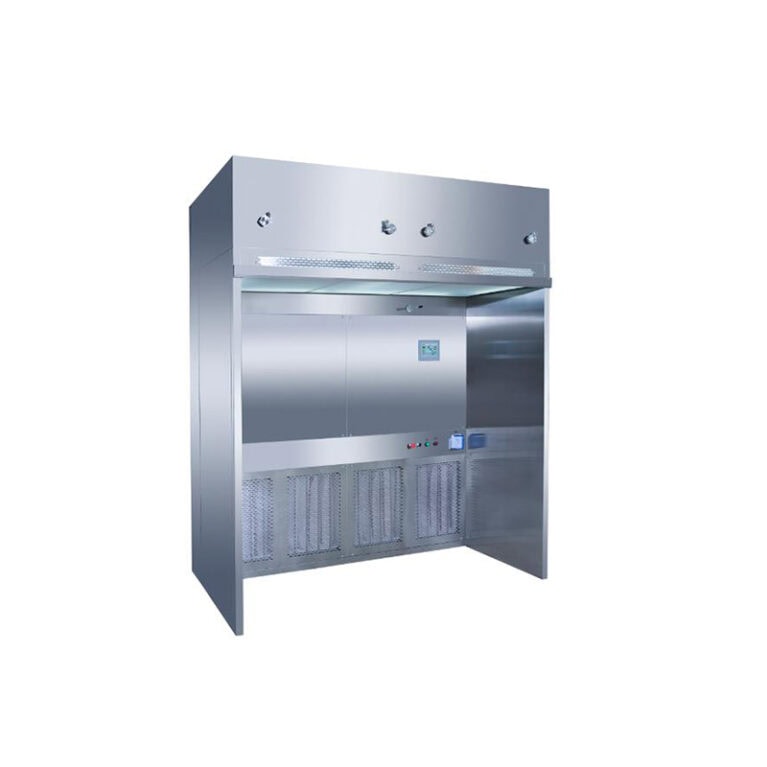
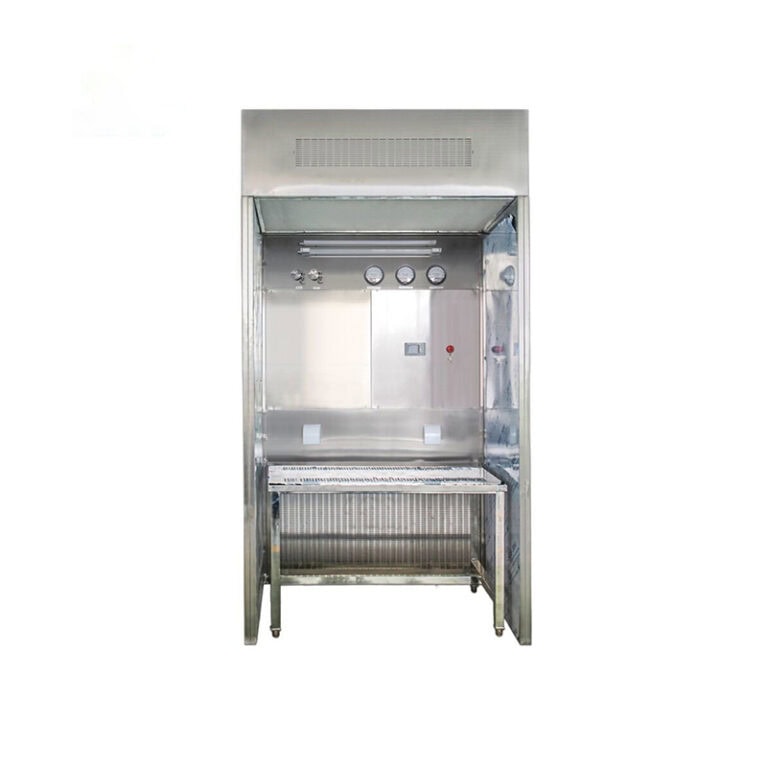
- Separation of personnel and material flow. Personnel air showers and cargo air showers shall not be shared. Cargo transport introduces massive particulates and accelerates equipment wear.
- Supporting management. Air showers work effectively only when matched with standardized gowning, hand hygiene and regular monitoring. Even well-selected units fail to protect clean zones with loose management procedures.
Conclusion
Air shower selection essentially translates process requirements into structural parameters: pharmaceutical projects focus on compliance and cleanability; electronics workshops target particle emission, static control and silicone-free construction; food facilities prioritize moisture resistance, washability and mould inhibition. Define the general model by cleanroom grade, personnel flow and installation conditions first, then specify materials, sealing, filtration and control modes according to industry characteristics. Finally, include verifiable indicators such as airflow velocity, leak testing and interlock performance in the technical agreement. Price comparison is acceptable, but compromises on these parameters often lead to costly rework and validation failure later.
