
1. Basis for Cleanliness Classification
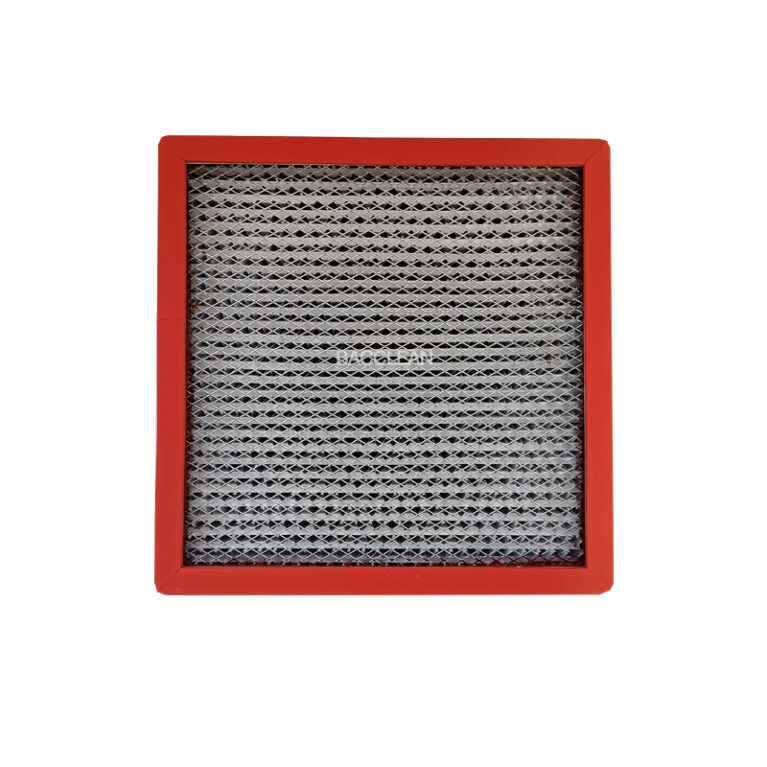
The cleanliness class of a clean bench refers to the stable cleanliness level achievable inside its operation zone, mainly governed by ISO14644-1. The traditional industry terms are Class 100, Class 1000 and Class 10000. HEPA filter grades follow EN1822, among which H13 and H14 are the most common options for clean benches.
Important note: The clean bench only provides local purification. The cleanliness of the surrounding room does not represent the class inside the bench. Heavy dust and strong air disturbance in the environment will cause particle overrun even for a Class 100 bench. Stable performance depends on filters, airflow organization, surrounding environment and operation practice.
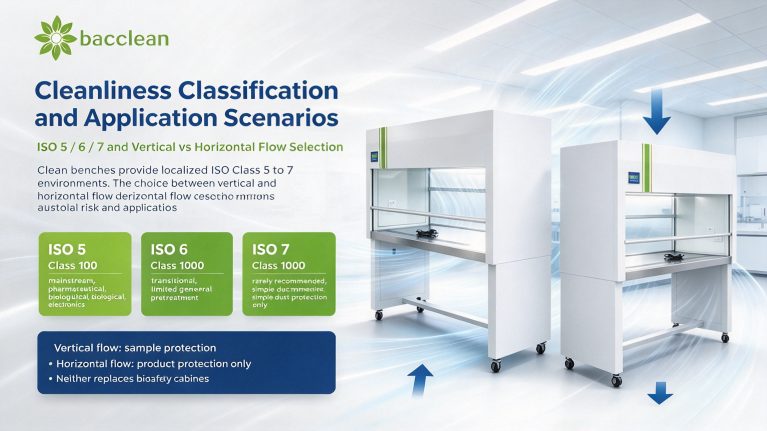
Three mainstream grades are widely used: ISO5 (Class 100), ISO6 (Class 1000), ISO7 (Class 10000). Most standard models are factory-set as ISO5 (Class 100). Static particle limit (pc/m³):
- ISO5 (Class 100): ≥0.5μm ≤3520;≥5μm ≤29
- ISO6 (Class 1000): ≥0.5μm ≤35200;≥5μm ≤293
- ISO7 (Class 10000): ≥0.5μm ≤352000;≥5μm ≤2930
Supplement: ISO8 (Class 100000) clean benches are rarely supplied separately. Such cleanliness requirements are generally realized in clean rooms directly.
2. Relationship Between Cleanliness Class and Filter Configuration
The cleanliness class is determined by HEPA efficiency, airflow uniformity and wind speed.
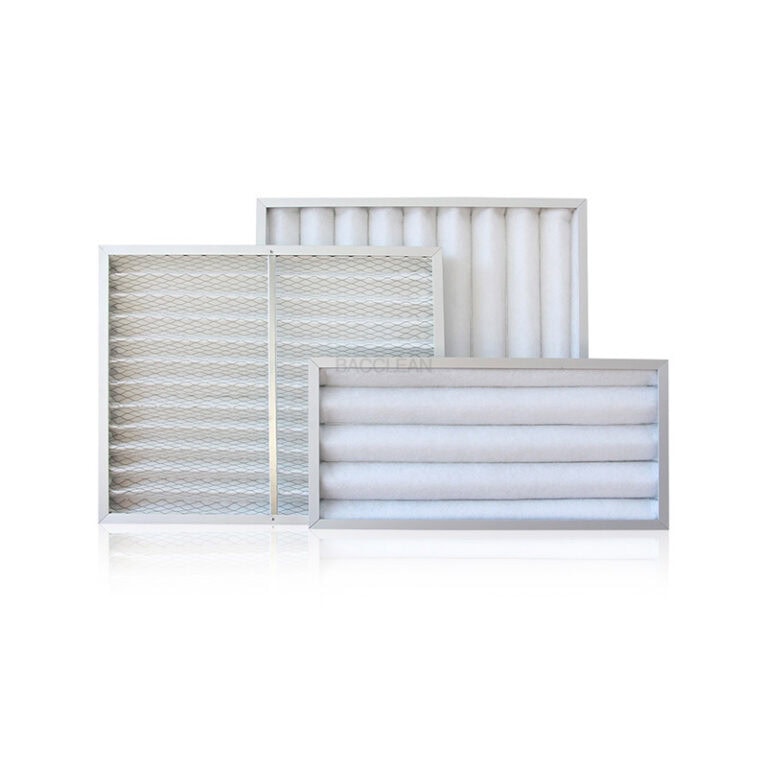
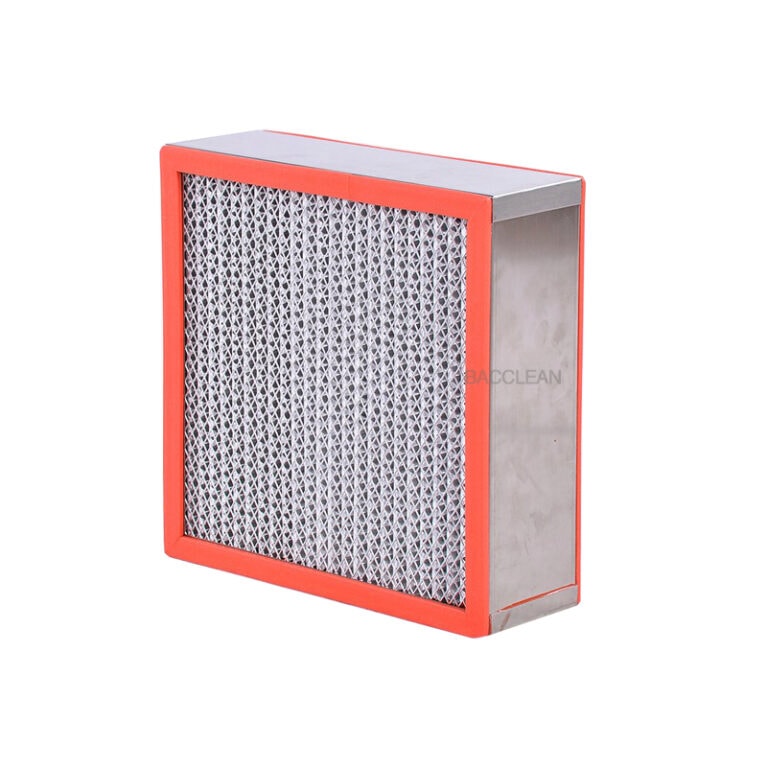
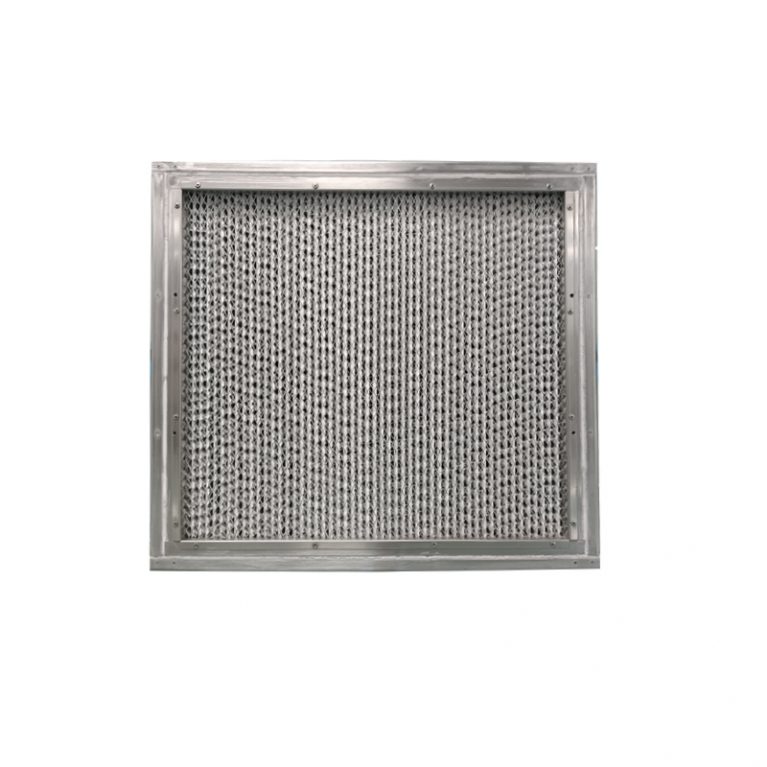
- ISO5 (Class 100): Standard equipped with H13 HEPA. H14 HEPA is selected for high-end GMP projects. H13 captures ≥99.95% of 0.3μm particles; H14 reaches ≥99.995% with stricter leak test requirements for high-risk aseptic operations. Both vertical and horizontal Class 100 benches belong to this category, which is the default configuration of Bacclean standard models.
- ISO6 (Class 1000): Usually equipped with H12 HEPA or H13 with reduced air volume. Low market demand, only for simple sample pretreatment with limited budget.
- ISO7 (Class 10000): Some simple purification benches use H11 filters with low air flow. Formal manufacturers are phasing out this type, not recommended for aseptic or precision processes.
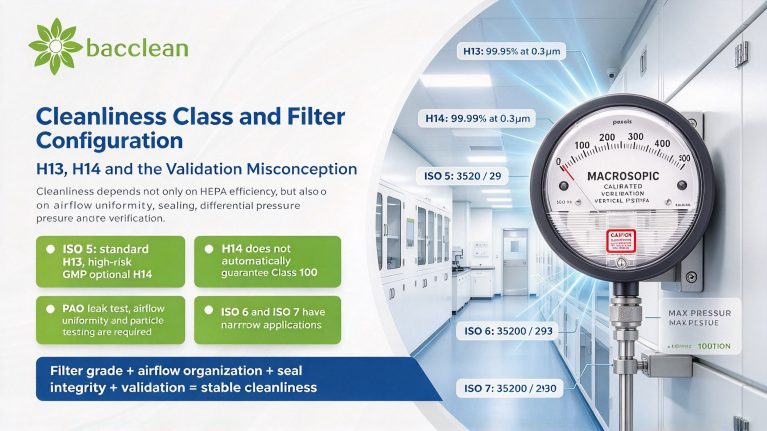
⚠️ Common misunderstanding: Installing H14 filter does not guarantee Class 100. Poor duct design, uneven wind speed, turbulence and air leakage will still result in failed particle testing. PAO leak test, airflow uniformity test and particle sampling must be verified together.
3. Applicable Scenarios for Each Cleanliness Grade
ISO5 Class 100 (Most Popular)
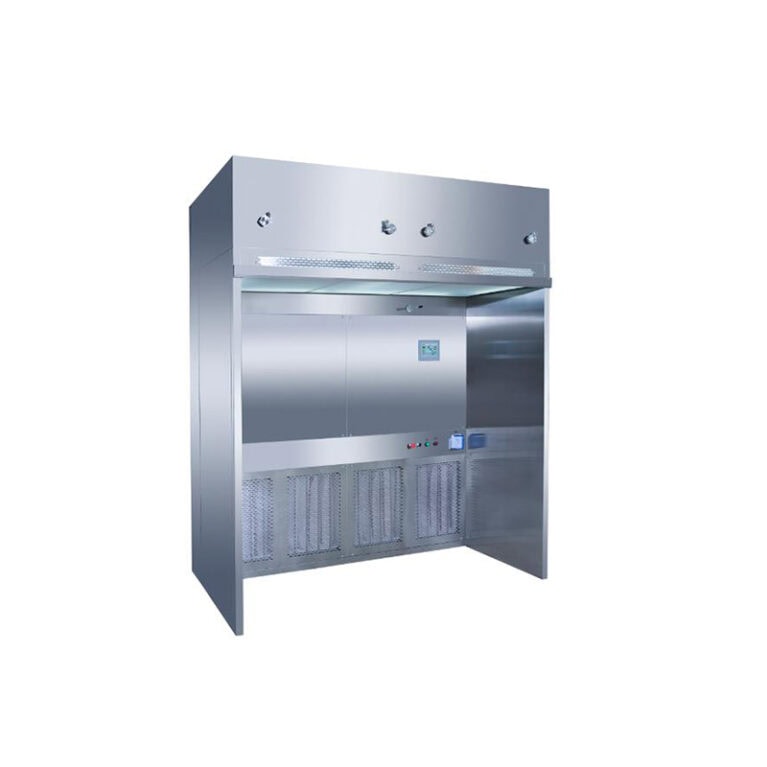
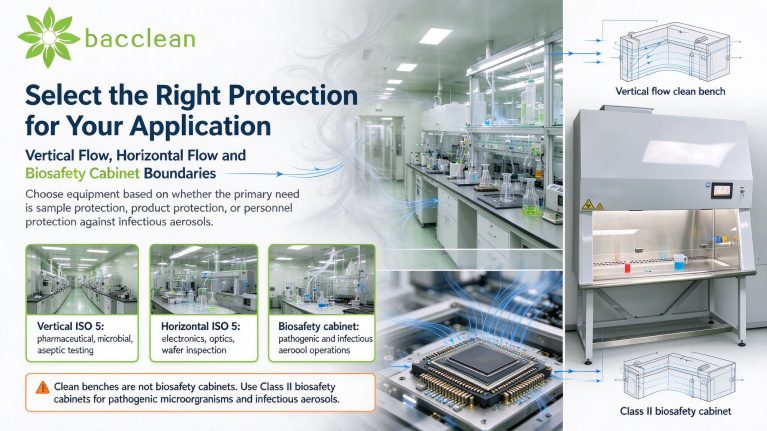
Class 100 clean benches include vertical flow and horizontal flow types, with different protection targets and non-interchangeable scenarios. ✅ Vertical Flow Class 100 Bench (Protects samples first) Air flows downwards, contaminants are exhausted downward along the airflow, and aerosols are less likely to blow toward operators. Preferred for pharmaceutical and biological applications. Application:
- Pharmaceutical: GMP sterility test, strain transfer, sample dispensing, medium preparation, local Class A auxiliary operation
- Hospital pharmacy and lab: Compounding, microbial testing, cell culture, pathological sample handling
- Research lab: Tissue isolation, plant tissue culture, strain preservation
- Cosmetic & Food QC: Sterility test, microbial limit test
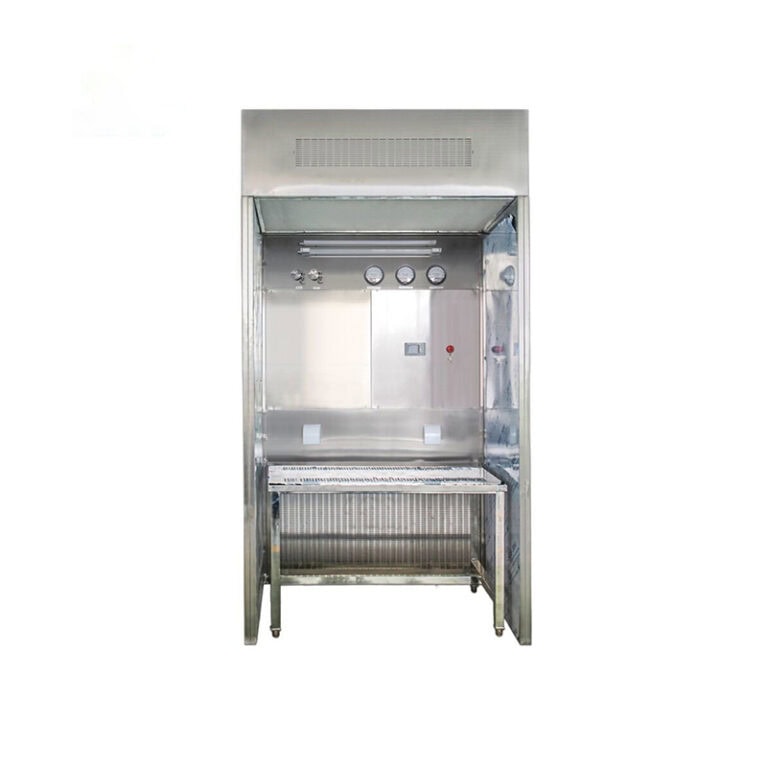
✅ Horizontal Flow Class 100 Bench (Protects products, no personnel protection) Clean air blows forward horizontally from the rear, directly flushing the workpiece. Suitable for scenarios focusing on component protection, where operator exposure to aerosol is acceptable. Forbidden for pathogenic microorganism operations. Application:
- Electronics: PCB, chip, optical lens, sensor assembly, wafer inspection
- Precision components: Laser modules, optical component packaging
- Sample encapsulation, dust-free assembly, dispensing work
ISO6 Class 1000
Low shipment volume, transitional grade with limited cost advantage. Application: General physical and chemical sample pretreatment, non-sterile sample splitting, teaching demonstration. Recommendation: Choose Class 100 if budget allows, to avoid acceptance failure.
ISO7 Class 10000
Gradually phased out. Only for simple dust prevention, not suitable for aseptic tests or precision electronics assembly. Application: Simple unpacking and temporary dust storage of raw materials. Alternative solutions are preferred.
4. Vertical Flow VS Horizontal Flow: Selection Tips for Class 100
- Vertical Flow Class 100: Protect samples; for microbiology, aseptic, pharmaceutical and hospital use; aerosol not blowing toward operators, first choice for biological work.
- Horizontal Flow Class 100: Protect workpieces; for electronics and optics; airflow blows to operators, cannot handle infectious or toxic aerosols.
Important reminder: Neither vertical nor horizontal clean bench is a biosafety cabinet. Operations with pathogenic or infectious aerosols must use Class II biosafety cabinet with negative pressure exhaust for personnel protection. They work on different principles and cannot replace each other.
5. Selection & Operation Notes
- Bench class ≠ room class An ISO5 local bench can be placed inside Class C / D clean rooms. If placed in ordinary non-clean areas, frequent personnel movement and heavy ambient dust may entrain dirty air and cause particle overrun and validation failure.
- H13 vs H14 selection H13 is sufficient for routine QC and common sterility test. H14 with gel seal is recommended for aseptic preparation, EU GMP high-risk processes and strict third-party validation for higher PAO pass rate.
- Grade maintenance requires standard operation & periodic validation Even Class 100 equipment may fail to reach ISO5 if air outlet is blocked, pre-purge time is insufficient, sash opening exceeds limit or pre-filter is overdue. Regular particle monitoring, pressure record and PAO leak test are required.
- Customized grade solution Bacclean supports non-standard customization per URS. ISO5 Class 100 is default. Air volume and filter configuration can be adjusted to provide corresponding validation reports for special requirements.
6. Summary
ISO5 (Class 100) is the mainstream grade for clean benches, covering most demands from pharmaceutical, laboratory and precision electronics industries. ISO6 and ISO7 have narrow application and low market share, and are not recommended unless specially required. When selecting, confirm vertical or horizontal flow first, then choose H13 / H14 filter, and comprehensively evaluate the surrounding environment and validation requirements to avoid quality risks caused by mismatched grade.
