
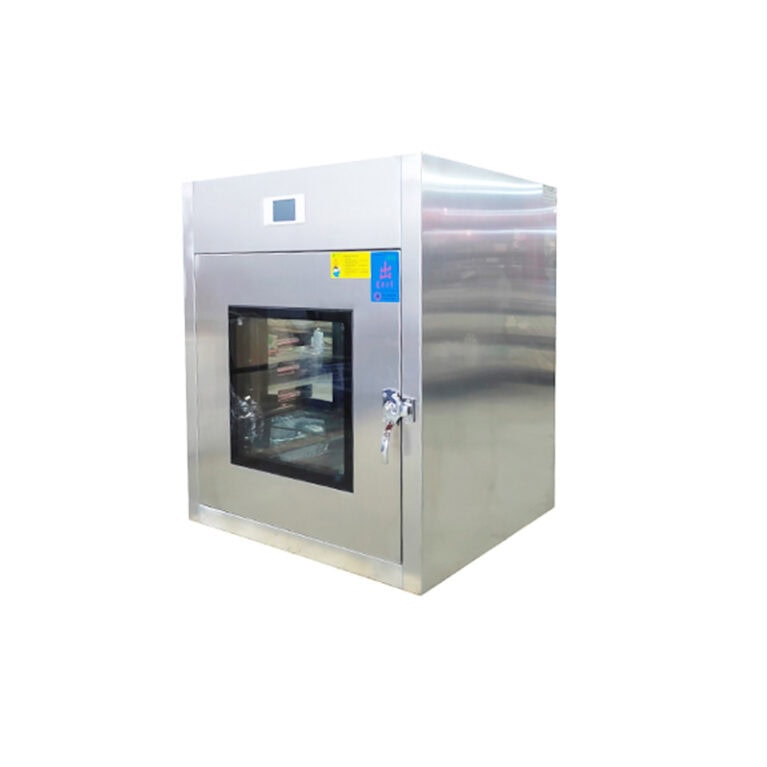
VHP (Vaporized Hydrogen Peroxide) transfer windows have emerged as the mainstream standard equipment for material transfer in high-cleanliness settings, thanks to their core advantages: dry, full-area sterilization, seamless disinfection without dead zones, and strong compatibility. This article provides an in-depth analysis of the sterilization principle, operational workflow, and technical benefits of VHP transfer windows, clarifying their key differences from conventional transfer devices.
The full name of the VHP transfer window is “Vaporized Hydrogen Peroxide Sterilizing Transfer Window.” Its core principle leverages the strong oxidizing properties of dry vaporized hydrogen peroxide at room temperature to achieve biological deactivation. The unit is equipped with a dedicated VHP generation system that rapidly atomizes food-grade liquid hydrogen peroxide into micron-sized dry mist particles, which then evenly disperse throughout the enclosed chamber. Gaseous hydrogen peroxide has exceptional permeability, penetrating hard-to-reach areas such as corners, sealed gaps, and uneven surfaces of materials—regions typically inaccessible to conventional disinfection methods. By disrupting microbial nucleic acid structures, enzyme systems, and cell membranes, it effectively eliminates bacteria, fungi, viruses, and even highly resistant spores, achieving a 6-log reduction in microbial load and meeting sterile transfer standards.
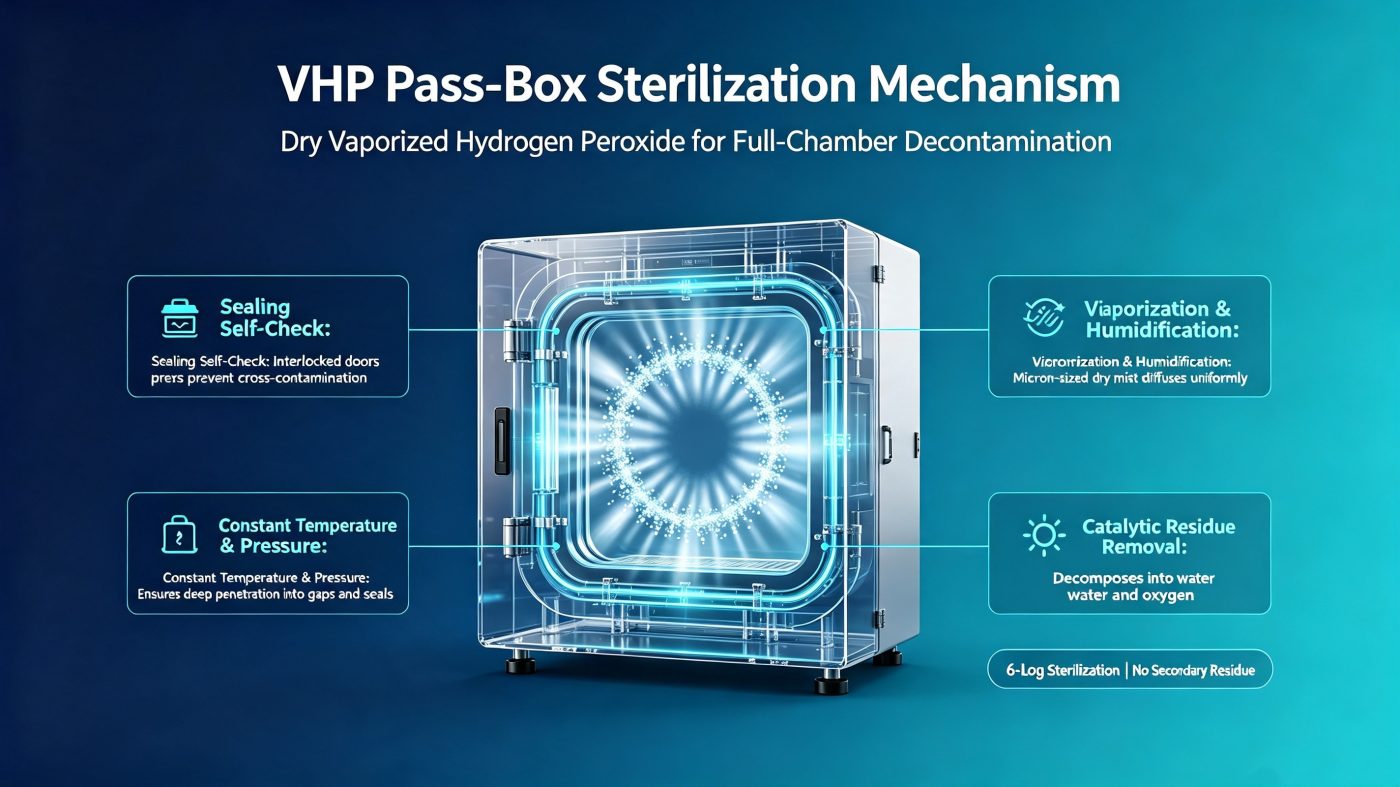
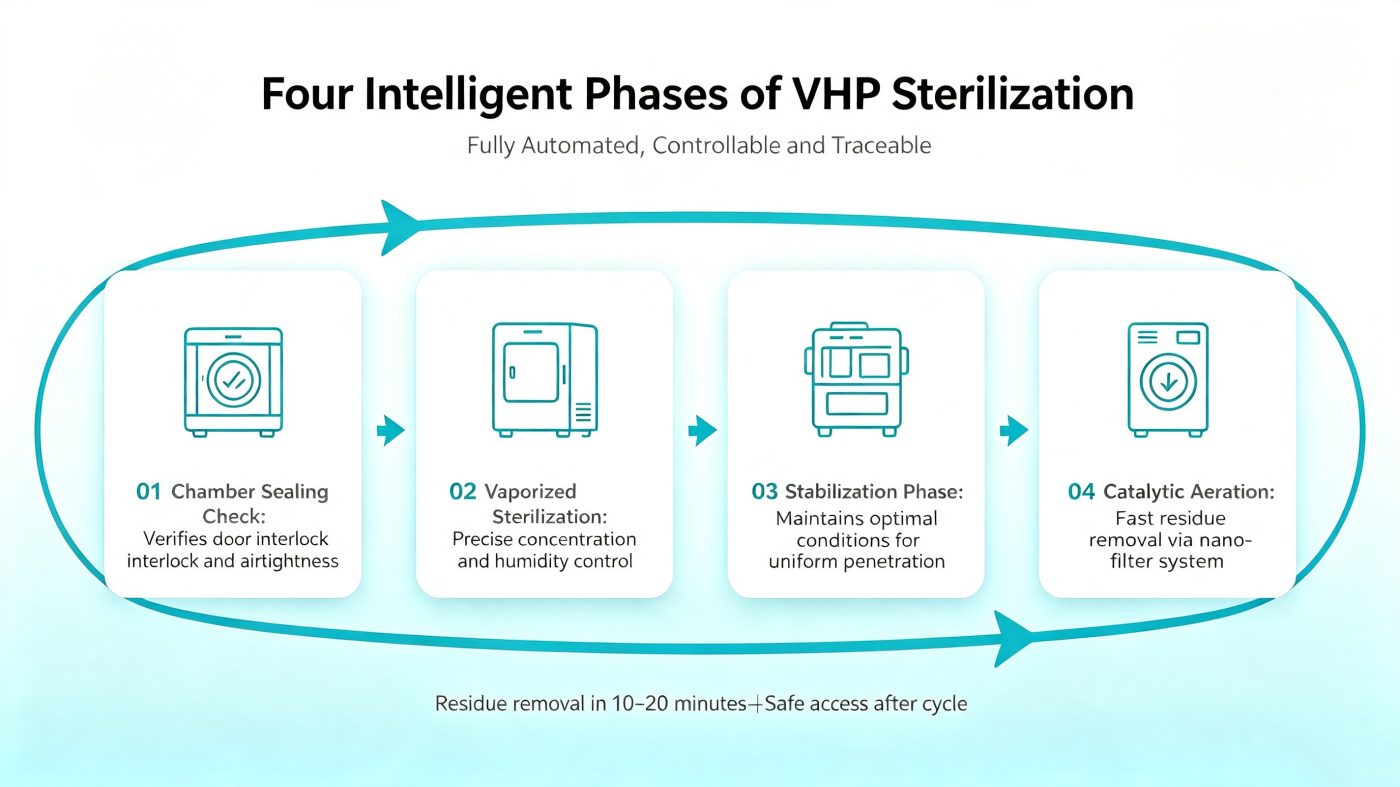
The complete VHP sterilization transfer process consists of four intelligent closed-loop stages, fully automated, controllable, and traceable. The first stage involves chamber sealing self-check: upon startup, the system automatically verifies the integrity of dual-door interlocking seals to prevent gas leakage, ensuring effective sterilization and avoiding airflow cross-contamination between clean and non-clean zones. The second stage is vaporization and humidification sterilization, during which hydrogen peroxide concentration, chamber temperature, and humidity are precisely controlled to maintain optimal sterilization conditions, preventing material corrosion or residue exceedance caused by liquid condensation. The third stage is sealed constant-temperature pressure maintenance, stabilizing internal environmental parameters to ensure thorough penetration of sterilizing gas and uniform sterilization across the entire chamber. The fourth stage is catalytic residual purification, utilizing a specialized nano-decomposition filtration system to rapidly break down residual hydrogen peroxide into water and oxygen, completing the purging process within 10–20 minutes—without secondary contamination—allowing safe access and retrieval of materials immediately after opening the door.
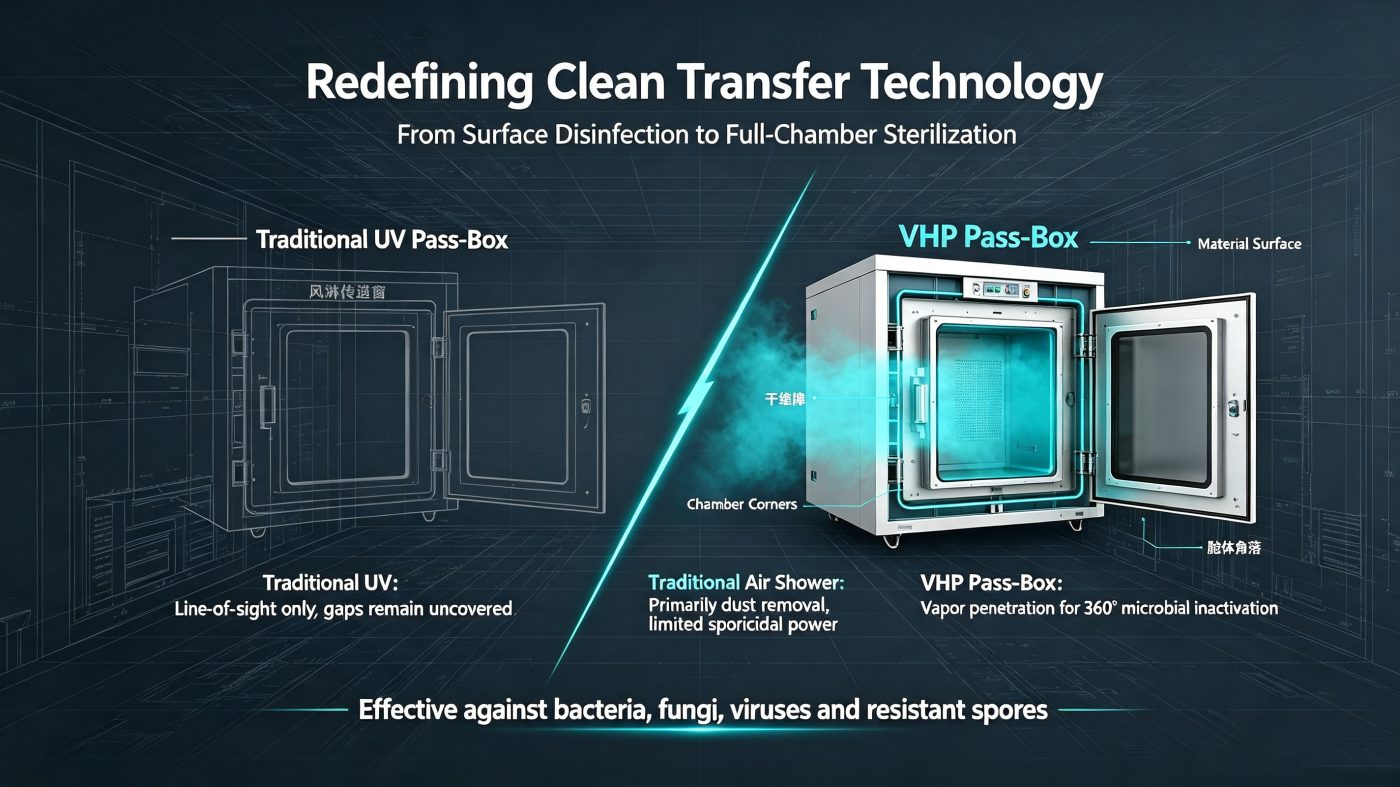
Compared to traditional transfer devices, VHP transfer windows offer significant technological advantages. First, they provide thorough, blind-spot-free sterilization. Unlike ultraviolet light, which only disinfects directly exposed surfaces and cannot reach crevices or hidden areas, gaseous hydrogen peroxide enables 360-degree, comprehensive sterilization with a spore kill rate exceeding 99.9999%. Second, the dry sterilization process causes no damage. Operating entirely at ambient temperature without liquid condensation, it avoids corrosion or moisture-related damage to precision electronic components, biological samples, sterile packaging, and delicate instruments, making it ideal for transferring high-value materials. Third, the system is intelligent, controllable, and traceable. Equipped with a PLC-based smart control system, users can precisely set sterilization concentration, duration, temperature, and humidity parameters, with automatic generation of sterilization data reports to satisfy GMP audits and biosafety laboratory traceability requirements. Fourth, it offers broad adaptability to various operating conditions, suitable for BSL-2/3 biosafety laboratories, sterile pharmaceutical manufacturing, cell culture, and IVD reagent production—meeting diverse high-level cleanliness demands.
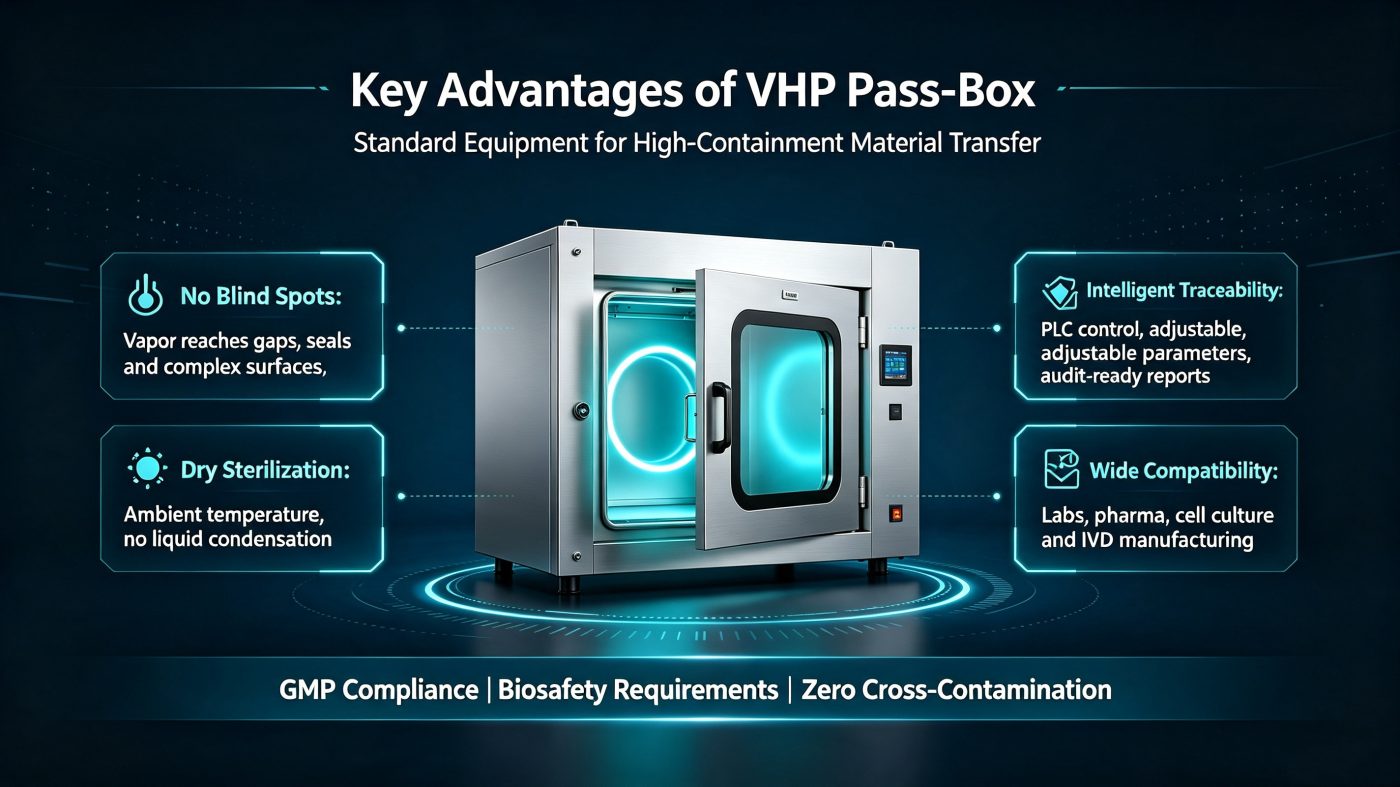
Today, the core requirement in the cleanroom industry has evolved from “simple dust removal” to “extreme sterility, full-process control, and zero cross-contamination.” Through its revolutionary gaseous sterilization technology, the VHP transfer window has fundamentally resolved the processing challenges associated with traditional transfer equipment. It has become an essential component in high-cleanliness production and biosafety protection systems, marking a pivotal advancement in the evolution of cleanroom technology.
