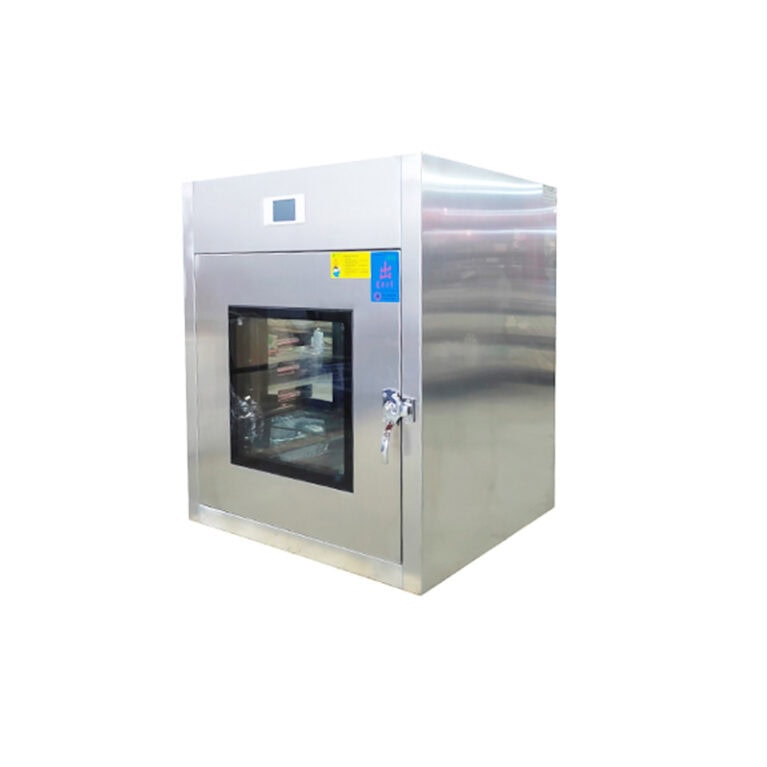
Common disinfection methods, applicable scenarios and operation points of transfer windows
They are divided into three categories: daily physical disinfection, chemical wiping disinfection, and space fumigation sterilization. They are used separately in ordinary clean workshops and sterile/biological workshops.
1. Ultraviolet disinfection (standard equipment, most transfer windows are equipped with it)
Applicable: Daily disinfection of material surfaces and interior of the box, standard for electronic interlock transfer windows
Principle: Short-wave UV-C damages the DNA of microorganisms, killing bacteria, molds and viruses
Operation guidelines
Do not block the lamp tube when placing materials, turn on the ultraviolet lamp after closing the door;
In the ordinary clean area, the irradiation time is ≥ 15 minutes, in the sterile workshop ≥ 30 minutes;
After the irradiation is completed, turn off the ultraviolet lamp, and wait for 2-3 minutes before opening the door. Notes for Attention
When the ultraviolet light is on, do not touch or look directly at the lamp tube;
If the lamp tube accumulates dust, it will significantly reduce the sterilization effect. Clean it weekly;
After a cumulative usage of 800 hours, the lamp tube must be replaced. The irradiation intensity must be lower than 50μW/cm² for failure.
Limitations: There are shadow dead zones that cannot penetrate the packaging. It only provides surface sterilization.
II. Chemical wiping disinfection (pre-treatment of incoming and outgoing materials, daily cleaning of the box)
The most basic and daily routine in the workshop, there are two commonly used disinfectants
1. 75% medical ethanol (alcohol)
Usage: Rapid disinfection of plastics, stainless steel, glass, and outer packaging surfaces;
Advantages: Fast evaporation, no residue, does not damage stainless steel;
Precautions: Do not spray in large areas for a long time, and there is a risk of fire when exposed to ultraviolet or electric sparks.
2. 0.2% – 0.5% peracetic acid
Usage: High-level disinfection in sterile workshops, biological laboratories, etc., with stronger sterilization power;
Note: It has a slight corrosive property, wipe it with a cloth, let it stand for 5 minutes before wiping clean with pure water, to avoid long-term corrosion of the sealing strip.
Operation process
Remove the outer packaging of the materials in the outer area → Dip the dust-free cloth in the disinfectant and wipe all six sides of the materials → Dry and put them in the transfer window; At the end of each shift, wipe the inner wall, door frame, sealing strip, and glass of the box.
III. Hydrogen peroxide vaporization / atomization disinfection (VHP, dedicated for high-clean and sterile areas)
Applicable: Sterile pharmaceuticals, cell rooms, biological safety supporting transfer windows, regular thorough sterilization
Advantages: No dead zones, better penetration than ultraviolet, can kill spores;
Usage scenarios: Deep sterilization every week/month, after major equipment maintenance, or after contamination risk;
Operation: Close the double doors, start the atomization device, maintain a certain concentration for 30-60 minutes, complete ventilation replacement before use;
Supplementary: Some laminar transfer windows can be equipped with an atomization interface for batch space sterilization.
IV. Ozone disinfection (used in old-fashioned / simple clean rooms, gradually being phased out)
Principle: Strong oxidation to kill microorganisms;
Disadvantages: Corrodes rubber sealing strips, stainless steel turns yellow over time, has a strong irritant, requires long ventilation time;
Usage: Only for emergency deep disinfection, close for 20 minutes, open the door for at least 30 minutes for ventilation before operation;
Current situation: Sterile workshops are not recommended, VHP is preferred as a replacement.
V. Self-cleaning air blow-off disinfection (exclusive for laminar transfer windows)
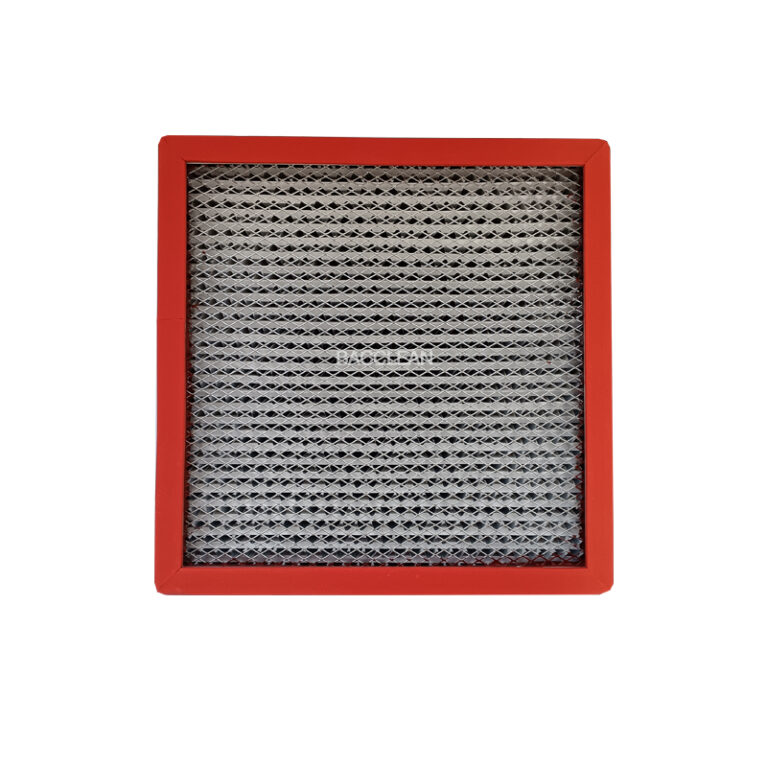
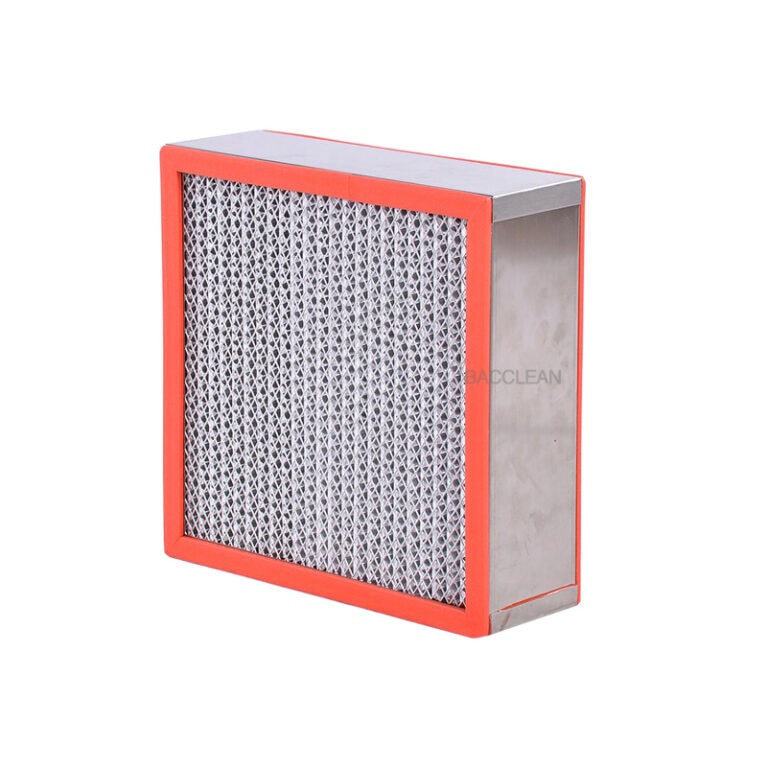
Self-cleaning transfer window with FFU high-efficiency filtration as a supporting means:
Close the door, turn on the fan, and perform one-way laminar air blowing for 10-20 minutes;
Continuous removal of dust and floating bacteria through the high-efficiency filter;
Usually used in combination with ultraviolet, first blow off and then ultraviolet sterilization for double protection.
VI. High-temperature disinfection (rarely used, only for heat-resistant metal tools)
Only stainless steel tools and molds can be heated for a short time; Plastic, rubber sealing strips, and lamp tubes are strictly prohibited from high temperatures, as they will accelerate aging and deformation.
Disinfection combination schemes for different scenarios
Electronic cleanroom (10,000-level / 100,000-level)
Every day: 75% alcohol wipe of materials + ultraviolet irradiation for 15 minutes; Weekly overall alcohol wipe of the box.
Sterile pharmaceutical, medical device clean area
Material pre-treatment alcohol wipe → Ultraviolet for 30 minutes; Once a week, deep hydrogen peroxide vaporization sterilization.
Biological laboratory, positive control area
Outer layer disinfection + VHP space sterilization regularly, ultraviolet as auxiliary daily.
Disinfection key points
Disinfection must be carried out in a state where the double doors are completely closed, and opening for disinfection is prohibited;
Disinfectants should avoid high-concentration strong acids and strong alkalis to prevent corrosion of the box and sealing strips;
Ultraviolet is only for surface disinfection, gaps, folds, and shaded areas need to be wiped together;
After vaporization / fumigation, sufficient ventilation is required, as residual disinfectants will be brought into the clean area and cause pollution.