The review of the daily maintenance records of the air supply ceiling focuses on verifying the authenticity, completeness, logic, and compliance of the records, ensuring that they can truly reflect the maintenance status of the equipment and support the subsequent problem traceability. The specific review points can be divided into six core modules as follows:
1. Basic Information Module Review Points
– Consistency of equipment information
– Verify whether the equipment model, factory serial number, installation location (such as XX workshop XX grade clean area) in the ledger is consistent with the information on the on-site equipment nameplate, and prevent “account and reality mismatch”.
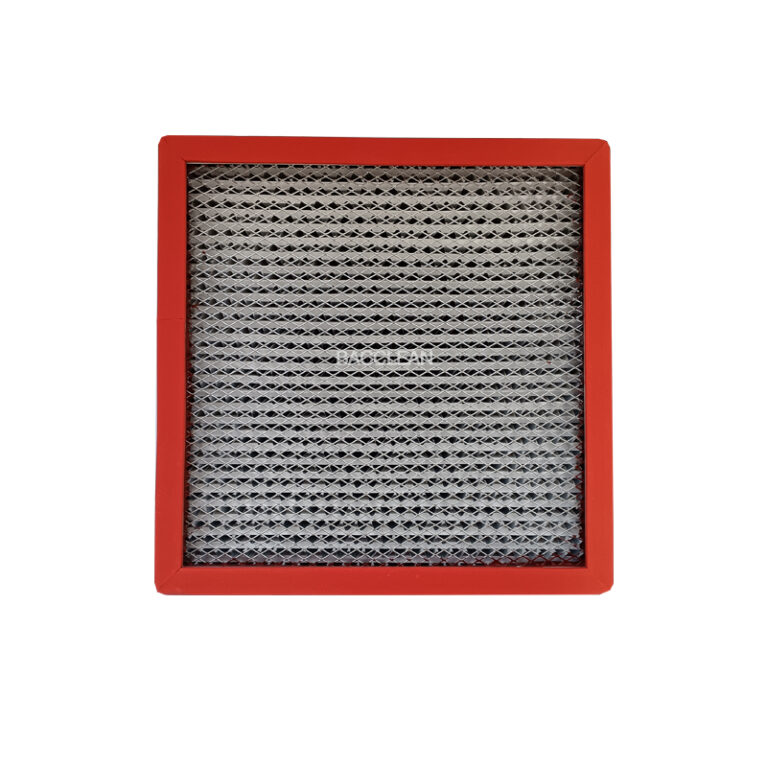
– Confirm the specifications of the matching filters (initial efficiency / medium efficiency / high efficiency models, filtration efficiency, initial resistance), and check if they match the design parameters of the equipment, without any records of randomly replacing non-standard components.
– Coding standardization of the ledger
– Check whether the ledger number is compiled in accordance with the unified rules (such as year – area – equipment number), the coding is unique and searchable, and there are no duplicate or chaotic numbering situations.
2. Maintenance Execution Record Review Points
– Compliance of maintenance frequency and time
– Verify the execution time of maintenance types (daily inspection / deep maintenance every week / special maintenance every month / quarterly sealing inspection), whether it conforms to the established maintenance plan, and there are no omissions or unauthorized reduction of maintenance times.
– Check whether the record time is precise to “hour / minute”, and whether the maintenance operation time avoids the peak production hours of the clean room, in line with the on-site management requirements.
– Authenticity of maintenance content and results
– Verify the daily inspection records: the operating status of the fan (noise, vibration description), the sealing condition of the diffuser plate, whether the cleaning tools (dust-free cloth + purified water) are filled in correctly, and there are no vague expressions such as “normal” or “no abnormality”.
– Verify the weekly/monthly maintenance records: the details of the disassembly and cleaning of the diffuser plate (such as whether the internal channels are cleaned, the status of the sealing strip), whether the pressure difference value is truthfully filled in, and there is no deliberate concealment of excessive data.
– Confirm that the signatures of the maintenance personnel are complete, without proxy signatures or supplementary signatures, and ensure that “who operates, who records, who signs” is implemented.
3. Filter Full Life Cycle Record Review Points
– Logicality of pressure difference data
– Compare the pressure difference values recorded each time to check if the pressure difference change trend is reasonable (such as gradually increasing with usage time), and there are no “cliff-like fluctuations” or abnormal data that remain unchanged for a long time.
– Verify the accuracy of pressure difference exceeding judgment: whether the initial efficiency pressure difference exceeds 1.5 times the initial value, the medium efficiency exceeds 2 times, and the high efficiency exceeds 2-3 times, and whether there are corresponding handling measures (cleaning / replacement) after exceeding the limit.
– Completeness of replacement records
– Review whether the reasons for replacement (pressure difference exceeding / filter damage / cleanliness not meeting standards) have clear basis, and whether the replacement date, new filter batch number, and supplier information are complete.
– Check whether the sealing verification results after replacement (such as whether the pressure difference returns to normal after installation) are recorded, and whether the disposal method of the discarded filter (sealing packaging / hazardous waste transfer number) is compliant, and there are no random discarding records.
4. Fault Handling and Abnormal Record Review Points
– Precision of abnormal description
– Verify whether the fault phenomenon is specific (such as “wind volume in XX area of the air supply ceiling suddenly drops by 10%” “cleanliness exceeds XX particle count under the high-efficiency filter”), rather than a general description of “equipment failure”.
– Closed-loop of handling process
– Review whether the fault investigation process (such as cause analysis, used detection tools) is reasonable, and whether the handling measures are targeted (such as “replace aging sealing gasket” “clean the fan blade dust accumulation”).
– Confirm whether there are verification records after fault handling (such as pressure difference data after 15 minutes of startup, cleanliness sampling results), whether it is marked as “restored to normal”, and there is no “only handling without verification” situation. Check if preventive measures (such as “shortening the frequency of filter inspection in this area”) have been recorded, and form a closed loop of “identify problem – handle problem – prevent problem”.
V. Key points for verifying maintenance records
Verify the validity of the verification data
Check the stability data of pressure difference during the startup verification after maintenance, as well as the random inspection results of the dust particle counter, to see if they comply with the corresponding cleanroom grade standards, and there should be no records of “using the equipment despite non-compliant verification data”.
Confirm the completeness of the verification personnel’s qualifications and the inspection report numbers, and whether the verification time is within 10-15 minutes after the maintenance is completed, which is in line with the verification process requirements.
VI. Key points for account management and compliance verification
Completeness of multi-level review signatures
Check if there are self-inspection signatures from operators, secondary review signatures from the operation supervisor, and third-level audit signatures from the quality department. Are the review opinions clear (such as “accurate records” “need to supplement XX data”)?
Standardization of record modifications
If there are record modifications, check if there are signatures of the modifier and explanations of the modification reasons. There should be no large-scale smudging or data tampering; for electronic accounts, check if the modification traces are traceable.
Compliance of account preservation
Verify whether the preservation period of the account is in line with the requirements (generally no less than 1-3 years), whether there are records for moisture-proof and pest-proof storage of paper accounts, and whether there are records for dual backup of cloud and local for electronic accounts.
Additional review focus points
Logical consistency verification: For example, if there is a record of “excessive filter pressure difference”, it should correspond to the operation of “replacing the filter”, and the pressure difference after replacement should show “returning to normal”, without contradictory data.