
The retention period for the daily maintenance records of the air supply ceiling is mainly determined in accordance with industry regulations/standards, taking into account both the need for product traceability and the management of the equipment’s entire life cycle. Daily records and key verification/replace records can be set at different levels to ensure compliance and traceability. The following are clear, actionable standards and practical suggestions.
1. Core regulations and general benchmarks
The maintenance records of the air supply ceiling, as a core component of the HVAC system in a cleanroom, must first follow the mandatory industry norms. ISO14644 mainly emphasizes traceability and does not mandate a uniform retention period; the core constraints come from various industry-specific regulations:
Pharmaceutical GMP (2010 edition): Equipment maintenance records should be kept until one year after the expiration date of the drug; for drugs without an expiration date, at least five years should be kept; verification records (including PAO leak detection) are recommended to be kept until one year after the equipment is scrapped, with a minimum of five years.
Medical device GMP: General records should be kept for at least two years from the date of product release or the product’s lifespan (whichever is longer); records related to critical products such as sterile and implantable products should have a longer retention period.
Hospital hygiene norms (WS/T 368-2025): Air purification equipment maintenance records should be kept for at least three years.
Central air conditioning ventilation system hygiene management: Some local regulations require a retention period of at least four years.
2. Hierarchical setting: Daily records vs. Key records (more compliant and efficient)
It is recommended to set differently based on the importance of the records to avoid waste of resources, while ensuring the traceability of core information:
1. Daily inspection/cleaning records (basic frequency)
Content: Daily/weekly pressure difference, air velocity, diffuser cleaning, appearance inspection. Retention period: At least three years (compliant with GMP/medical basic requirements)
2. Core consumable operation records (related to high-efficiency filters)
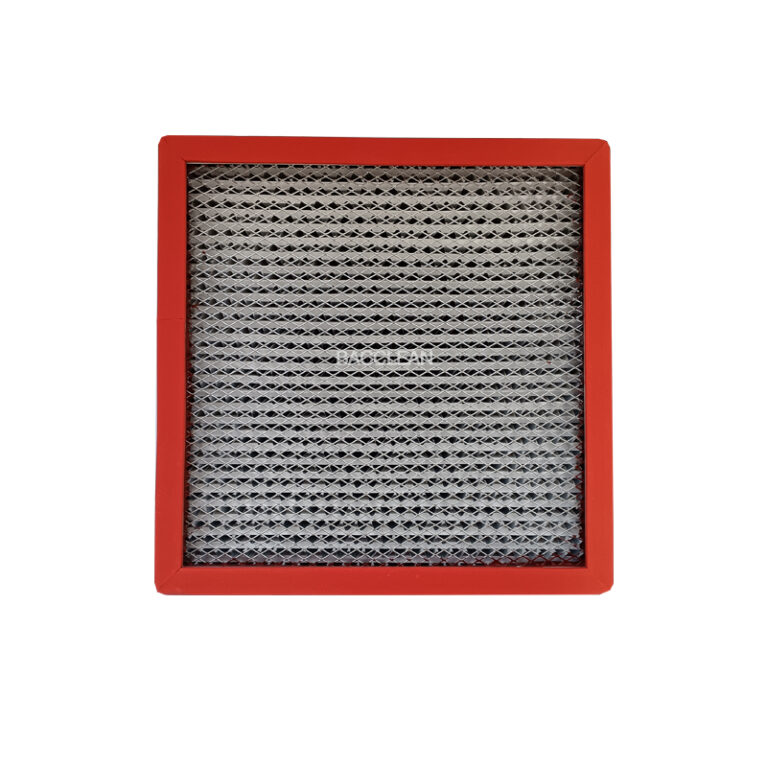
Content: Replacement date/cause, initial resistance/final resistance, model specification, manufacturer, certificate of conformity, PAO leak detection report. Retention period: One year after the expiration date of the drug, and no less than five years; or the entire life cycle of the equipment + one year (this is the core of compliance and is frequently audited)
3. System maintenance/renovation/verification records
Content: Static pressure box maintenance, seal replacement, air volume balance, annual re-verification, change assessment. Retention period: One year after the related equipment/system is scrapped, with a minimum of five years (this belongs to the key change evidence of the system, and requires long-term traceability)
4. Abnormal and deviation handling records
Content: Pressure difference sudden change, uneven air velocity, filter leakage, handling measures, re-measurement data. Retention period: The same as the core consumable records, one year after the expiration date of the drug, and no less than five years (directly related to product quality risks, must be fully closed-loop traced)
3. Supplementary requirements for special industries
1. Semiconductor/electronics industry
Follow SEMI standards, maintain and monitor cleanliness records for at least 5-7 years
2. Food industry
Generally follow the product’s shelf life after one year, and keep for no less than three years for products without a shelf life
4. Practical points: Ensure compliance and traceability in preservation
1. Dual-track backup (electronic + paper)
Electronic records: hierarchical access rights, operation traceability, non-modifiable, cloud + local dual backup
Paper records: classified binding, numbered archiving, moisture-proof and fireproof,专人 management
2. Record association and retrieval
Establish a unique equipment number, associate the maintenance records of the air supply ceiling with the corresponding room, high-efficiency filters, and verification reports throughout the life cycle, facilitating quick traceability
3. Standard for expiration disposal
Formulate SOP for record expiration disposal, which requires approval, double-person execution, and retention of destruction records to avoid illegal disposal
5. Summary: One-sentence implementation standard Daily maintenance record of the air supply ceiling, basic records should be kept for at least 3 years, filter / verification / abnormality records should be kept for at least 5 years and no less than 1 year after the product expiration date, system-level records should be kept until 1 year after the equipment is scrapped. This classification should be implemented accordingly, and it can simultaneously meet regulatory compliance and traceability requirements.
