
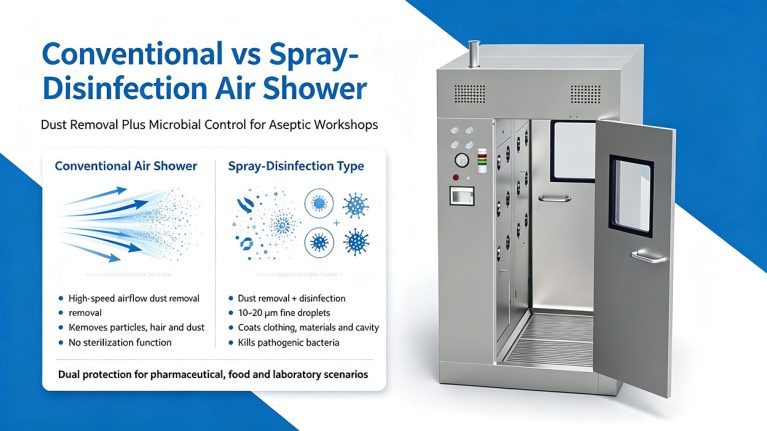
The core function of conventional air showers is high‑pressure airflow dust removal. High‑speed airflow above 25 m/s strips dust, hair and particulate contaminants from the surface of human bodies and materials, which can effectively prevent particulate pollution. Nevertheless, it has a critical drawback: it delivers no disinfection or sterilization capacity and cannot remove bacteria, moulds, viruses and other microorganisms carried by personnel. In high‑aseptic scenarios such as pharmaceutical aseptic production, fresh‑food processing and biological laboratories, personnel‑borne microorganisms constitute the major hidden risk for workshop contamination, product bacterial infection and excessive colony count. Conventional air showers cannot achieve comprehensive pollution prevention.
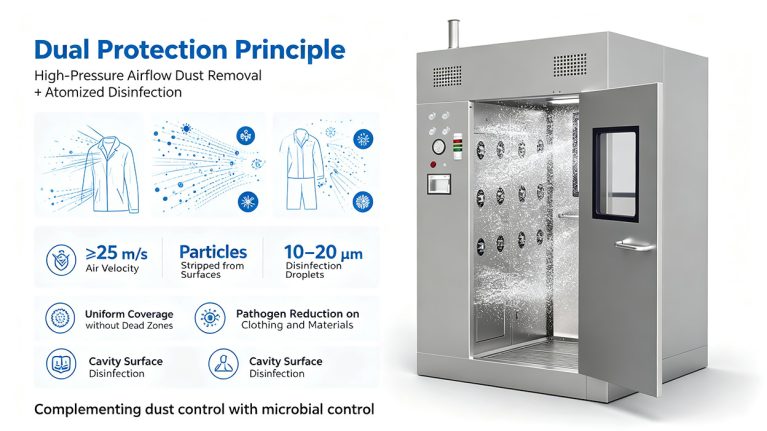
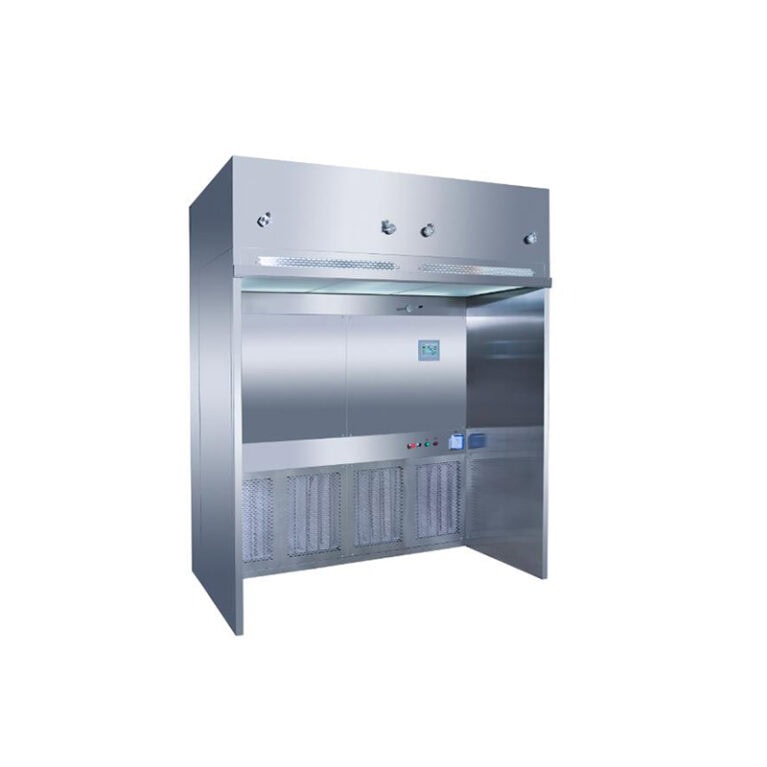
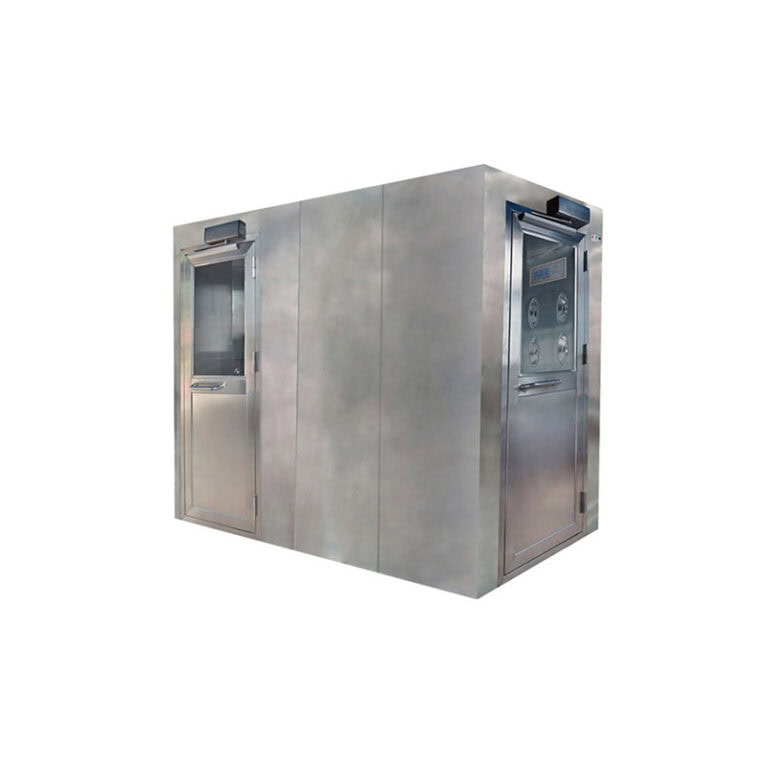
The spray‑disinfection air shower is a new‑generation integrated purification device. While retaining high‑efficiency dust‑removal capability, it is equipped with an additional high‑pressure atomizing disinfection system to realize dual protection of dust removal plus sterilization. The equipment atomizes qualified disinfectant into ultra‑fine droplets of 10‑20 μm, which evenly cover staff clothing, material surfaces and the inner cavity of the air shower, killing various pathogenic bacteria without dead zones, filling the gap of microbial prevention existing in conventional air showers.
Core differences fall into three dimensions. First, purification capacity: conventional air showers only remove particulates, while the new‑generation units perform both dust removal and sterilization. Second, pollution‑control logic: conventional air showers only block particulate contamination, whereas new‑type units block particulate and microbial pollution simultaneously. Third, compliance adaptability: conventional air showers are only suitable for general clean workshops; spray‑disinfection air showers are fully compliant with high‑grade scenarios including GMP‑regulated aseptic workshops and biosafety laboratories.
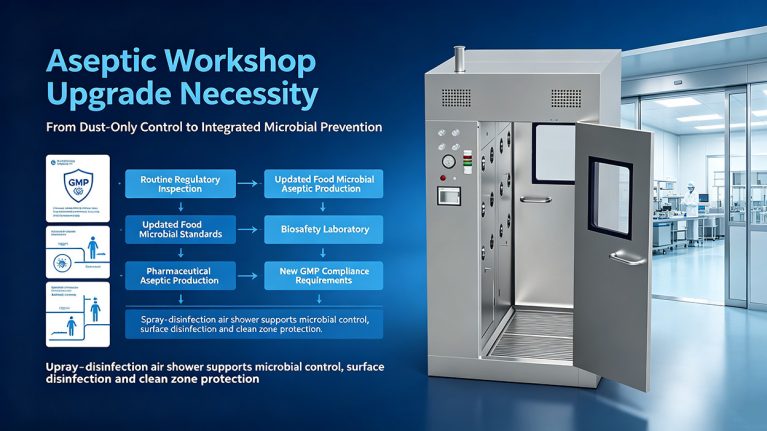
Against the industry background of routine regulatory inspections and upgraded food microbial standards, conventional air showers with dust‑removal‑only functions fail to satisfy production requirements for high‑aseptic environments. Replacing old‑style units with spray‑disinfection air showers for workshop renovation and new aseptic‑workshop construction represents an inevitable trend for industry compliance upgrading.
