
Fault 1: Persistently excessive particle concentration in cleanroom, PAO leak test passes for filter media
Symptom: Particle concentration remains high in clean zone during system operation; no leakage point is detected when scanning filter media with PAO aerosol.
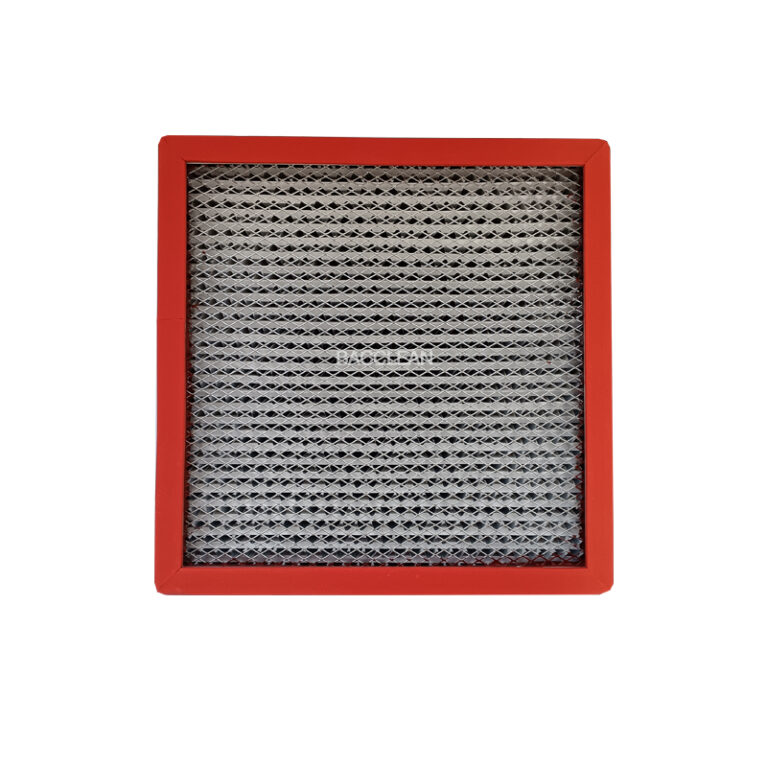
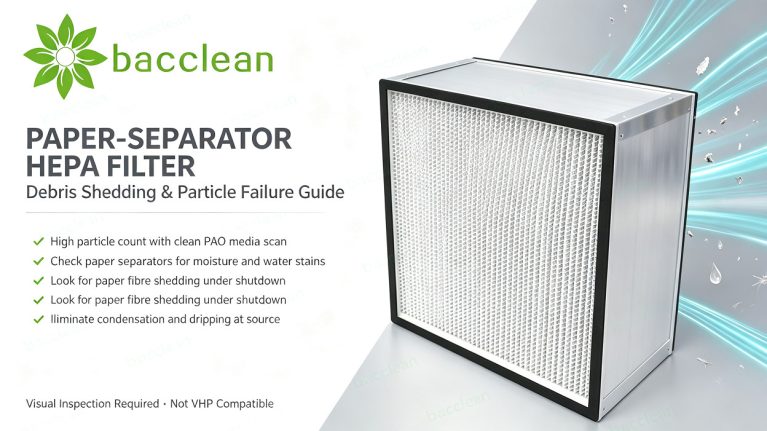
Root Causes ① Paper separators absorb moisture, cardboard structure degrades under humid conditions and continuously releases paper‑based debris. ② Low‑grade corrugated paper separators with insufficient impregnation; paper fibres peel off under high‑velocity airflow erosion even under dry operating conditions.
Troubleshooting Steps
- Review HVAC operation logs, check historical room humidity data and verify risks of condensation or water dripping inside the air handling unit.
- Shut down and cool down the system, open access panel, perform visual inspection on paper separators. Check for water stains, softening and deformation; observe whether paper debris falls off.
- If debris shedding or moisture damage is confirmed, replace the complete filter assembly. Meanwhile, eliminate the root cause of condensation and water dripping inside the cabinet.
Note: Filter media remains intact for this failure. Conventional PAO leak scanning over filter surface cannot identify debris shedding from separators. Visual inspection under shutdown condition is mandatory.
Fault 2: Sudden sharp increase of filter resistance
Root Causes
- Failure of upstream pre‑filtration stages; massive dust particles reach HEPA media and cause rapid dust accumulation and clogging.
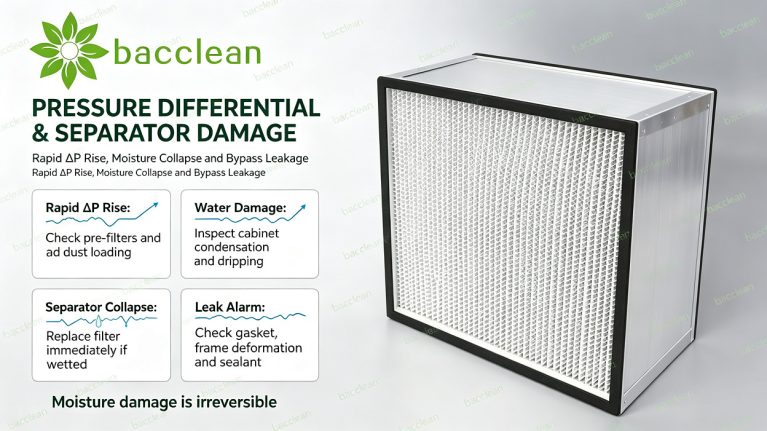
- Condensate water drips onto the filter inside the cabinet. Paper separators absorb water and collapse, filter media folds and compresses, airflow passages get blocked and resistance rises drastically.
Troubleshooting & Solution: Check operating status of pre‑filters and medium‑efficiency filters. Shut down equipment and open chamber to inspect separators for water stains and collapse. Replace filter immediately if moisture‑damaged. Rectify cabinet thermal insulation to prevent condensation.
Fault 3: PAO leak alarm occurs on filter body or sealing interface
Root Causes
- Uneven compression during installation, distorted gasket leading to bypass air leakage.
- Frame deformation caused by squeezing during transportation and handling.
- Manufacturing defects in sealant application, gaps or air bubbles exist in sealing adhesive.
الحل: Readjust gaskets, tighten bolts diagonally and evenly, then retake leak test. If leakage persists after retest, remove filter and inspect sealing adhesive. Replace complete filter for body‑related damages.
Fault 4: Collapse and deformation of paper separators shortly after commissioning
Root Causes
- Condensed water dripping onto filter from cabinet structure.
- Long‑term ambient humidity exceeding 85 % RH on site.
- Low‑quality separators with insufficient mechanical strength.
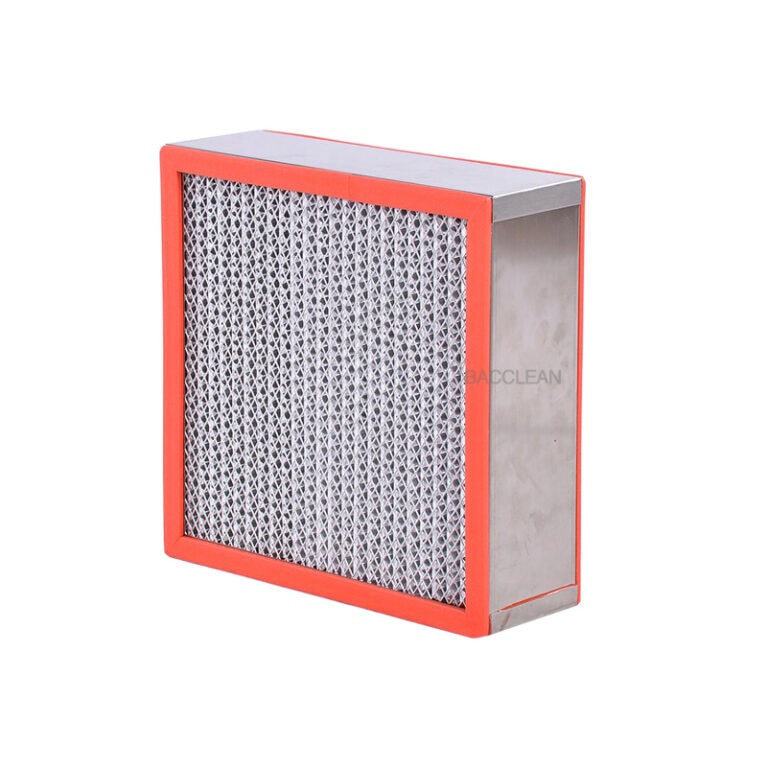
الحل: Moisture‑induced damage to paper separators is irreversible; discard and replace filter. Improve thermal insulation of HVAC cabinet, control system humidity. For future projects, switch to aluminium‑foil separator HEPA filters.
Fault 5: Corrosion on filter frame
Root Causes: Galvanized steel frame applied under high‑humidity conditions, condensation occurs inside air cabinet.
الحل: Filters with minor corrosion without sealing impairment may remain in service with periodic monitoring. Replace filter if severe corrosion creates perforation and air leakage. Select aluminium alloy frames for high‑humidity applications in subsequent procurement.
General Troubleshooting Principles
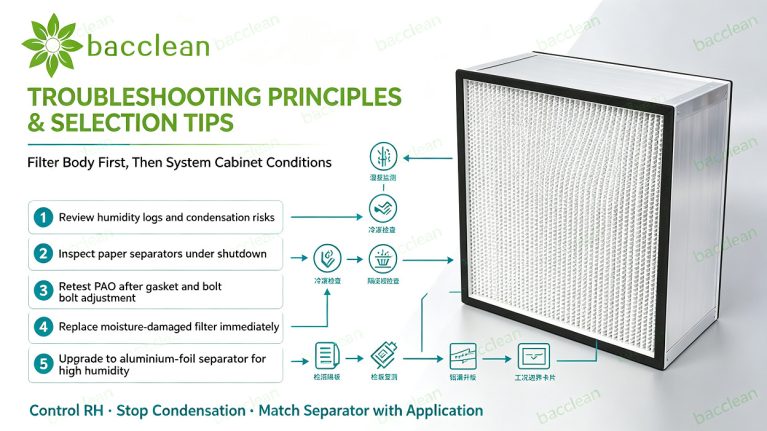
- When particle count exceeds specification while media PAO leak test shows no defect, prioritize suspicion of paper‑separator debris shedding or moisture damage. Carry out shutdown visual inspection of separators.
- Distinguish filter‑originated faults from air‑handling cabinet defects. Many failures stem from cabinet condensation and water dripping instead of filter manufacturing defects.
- Paper‑separator HEPA filters are not compatible with VHP fumigation. If abnormal particle levels appear after VHP exposure, inspect separators for moisture‑related damage first.
bacclean Reminder: Paper‑separator HEPA filters are cost‑effective products with clear application‑condition boundaries. Strict control of temperature & humidity and elimination of condensate dripping are required to achieve expected cost‑performance. Upgrade to aluminium‑foil separator HEPA filters for environments with humidity risks.
