
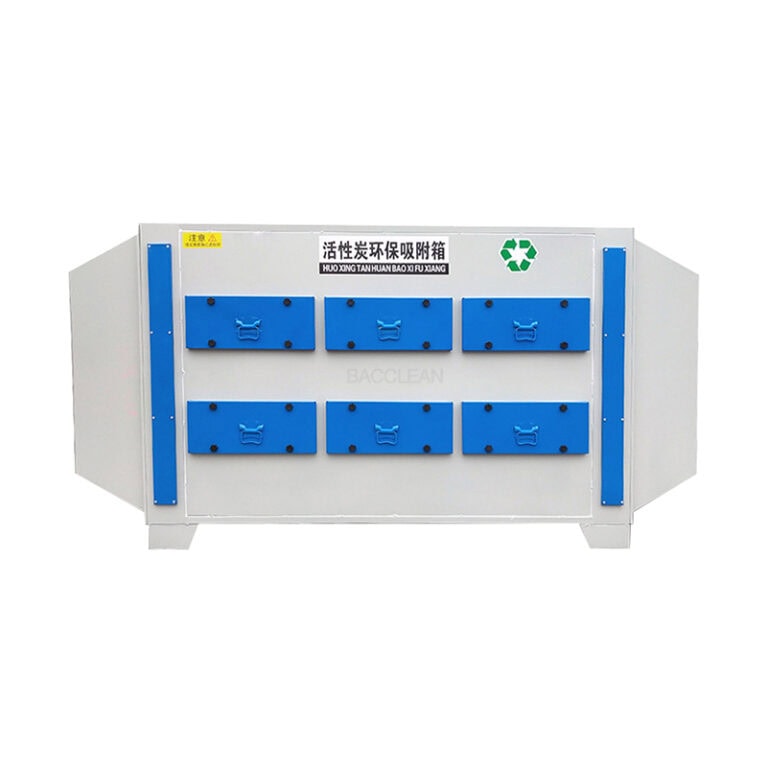
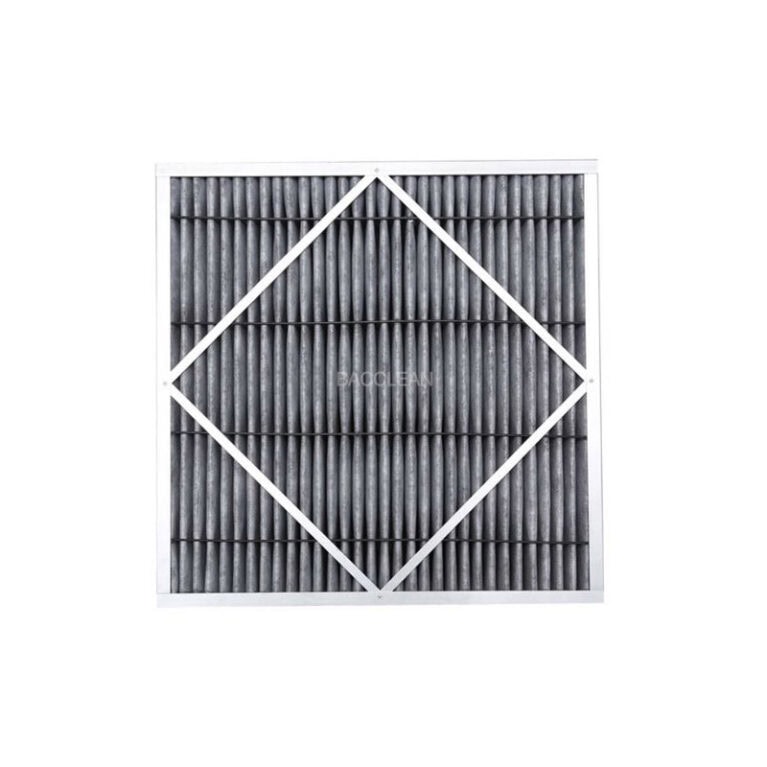
Guide for Daily Maintenance of Activated Carbon Adsorption Cabinet
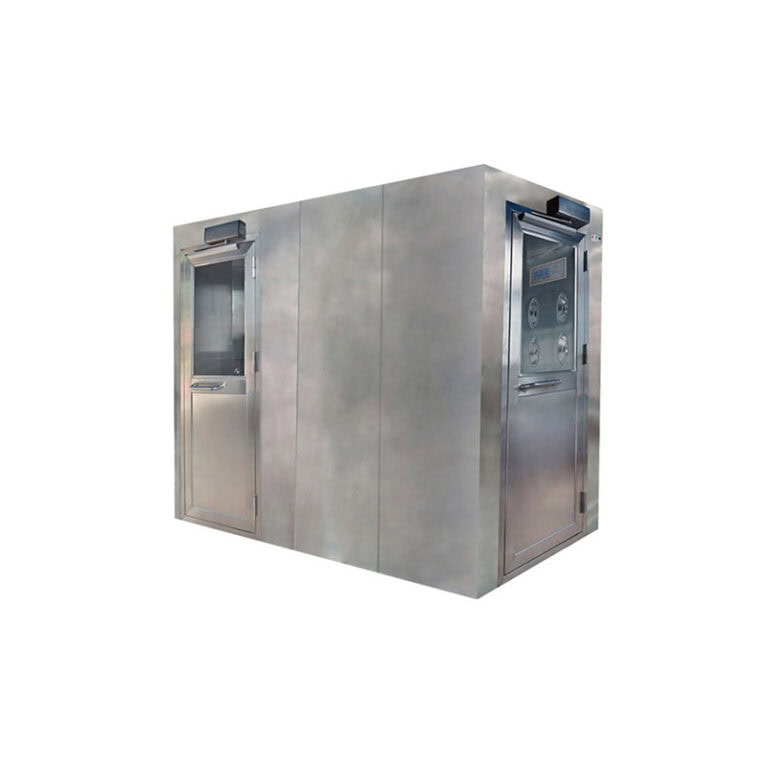
The activated carbon adsorption cabinet is a core equipment for treating VOCs (volatile organic compounds) and odors in waste gas. The core objective of daily maintenance is to ensure adsorption efficiency, extend the service life of activated carbon, and avoid safety hazards. The specific maintenance process can be divided into four modules: daily inspection, regular maintenance, consumable replacement, and fault prevention. It can be directly used for equipment management practice.
1. Daily Inspection (Must be done daily)
Operation status check
Confirm that the fan starts and stops normally, and there is no abnormal noise or vibration during operation. If there is noise or excessive vibration, immediately stop the machine to investigate (it is likely that the fan bearing is lacking oil or the impeller is clogged with dust).
Check whether the opening and closing of the inlet and outlet valves of the equipment comply with the process requirements, and ensure that the waste gas passage is unobstructed.
Check the indicator lights and instrument data (such as pressure difference, temperature) of the control cabinet to see if they are within the normal range. The normal value of the inlet and outlet pressure difference is generally 200–500 Pa. A sudden increase in pressure difference indicates that the activated carbon may be clogged, and a sudden decrease in pressure difference may be due to the presence of voids in the adsorption layer or equipment leakage.
Sealing and leakage check
Observe whether there is any exhaust gas leakage from the cabinet body, flange connection points, and maintenance door. You can detect it through smell or a portable VOC detector. If leakage is found, promptly tighten the sealing parts or replace the sealing strip.
Check for any cracks or detachment at the connection points of the ducts to avoid direct emission of untreated waste gas. Safety hazard inspection
Ensure that there are no flammable or explosive items around the equipment. Activated carbon is a flammable substance and should be kept away from open flames and high-temperature heat sources.
Check whether the equipment grounding is in good condition to prevent static electricity accumulation from causing safety accidents.
II. Regular Maintenance (Carried out according to the schedule)
| Maintenance cycle | Maintenance Content | Key operation points |
| Every week | Cleaning of the exterior of the cabinet | Wipe the surface of the cabinet with a damp cloth to remove dust and oil stains, to prevent dust from entering the adsorption layer and affecting efficiency; Clean the filter screen at the fan inlet to prevent debris from blocking the air duct. |
| Every month | Internal preliminary inspection | Open the maintenance door and check if the activated carbon layer is flat, and whether there are any lumps, collapses, or local cavities. If there are cavities, promptly add the same-sized activated carbon to ensure that the exhaust gas can fully contact with the activated carbon. |
| Every quarter | Performance testing + Component maintenance | 1. Use the VOC detector to measure the concentration of exhaust gas at the equipment outlet. If it is close to the emission standard limit, it indicates that the activated carbon is approaching saturation. 2. Add lubricating oil to the fan bearings, check the tightness of the belt (if any), and adjust it to the appropriate tension. 3. Check the accuracy of the temperature sensors and differential pressure gauges, and promptly calibrate or replace them if necessary. |
III. Core Consumables: Activated Carbon Replacement and Maintenance
Activated carbon is the key to the adsorption efficiency. The replacement should follow the principle of “replacement as needed”. The specific operation is as follows:
Replacement criteria
The pressure difference between the inlet and outlet exceeds 1.5 times the design value, and the ventilation volume significantly decreases.
The equipment outlet has obvious odor, and the VOC detection concentration is close to or exceeds the emission standard.
The usage time of the activated carbon reaches the design life (under normal operating conditions, the lifespan of honeycomb activated carbon is 6-12 months, and that of granular activated carbon is 3-6 months. The specific time depends on the concentration of the waste gas).
Replacement operation procedure
Stop the machine, cut off the power supply, close the inlet and outlet valves, and set up safety warning signs.
Operators should wear dust masks and gloves, open the maintenance door, clean the ineffective activated carbon (the ineffective activated carbon is a hazardous waste and needs to be disposed of by a qualified unit. It is strictly prohibited to discard it randomly).
Clean the accumulated dust and debris on the inner wall of the adsorption chamber, check if the chamber body is corroded or damaged, and if necessary, perform anti-corrosion treatment.
Fill in new activated carbon: Preferably choose activated carbon of the same specification as the original (honeycomb / granular, iodine value, pore size need to match), when filling, lay it flat layer by layer to avoid gaps, and the filling volume should reach the design requirements (generally, the filling rate is 80%-90%).
After filling, seal the maintenance door, start the fan for 10-15 minutes for trial operation, check for leaks and abnormal sounds, and confirm that the pressure difference returns to normal.
Storage and pre-treatment of activated carbon
New activated carbon should be stored in a sealed manner to prevent moisture and premature failure due to adsorption of air impurities.
If the waste gas humidity is high, an dehumidification device can be added before the activated carbon layer, or a hydrophobic type activated carbon can be selected to avoid moisture accumulation and clogging of the activated carbon.
IV. Fault Prevention and Precautions
Avoid handling high-concentration, high-temperature waste gas: If the waste gas temperature exceeds 40°C, the adsorption capacity of the activated carbon will decrease, and if it exceeds 80°C, it may cause the activated carbon to self-ignite. Pre-cooling treatment should be carried out in advance.
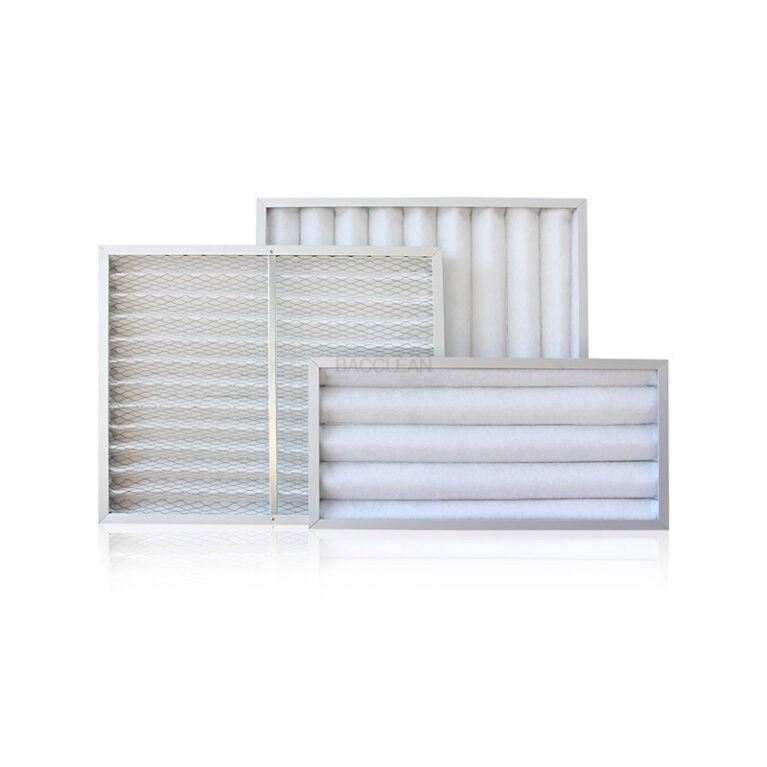
Strictly prohibit handling waste gas containing dust and paint mist: Dust and paint mist will clog the pores of the activated carbon, and a pre-treatment device (such as a bag filter, paint mist filter) should be added before the adsorption chamber.
Establish a maintenance ledger: Record the time, operation content, and detection data of each inspection, maintenance, and activated carbon replacement to facilitate tracking of the equipment’s operating status and formulating reasonable maintenance plans.
Regular anti-corrosion inspection: If handling acidic / alkaline waste gas, regularly inspect the anti-corrosion layer of the chamber and duct, repair if it falls off in time to prevent corrosion and leakage of the equipment.
