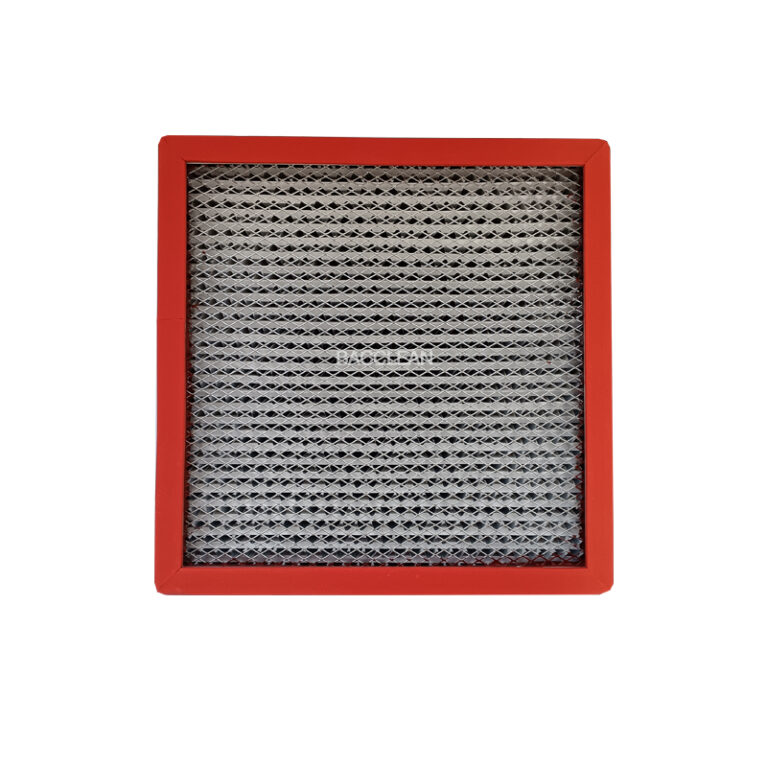
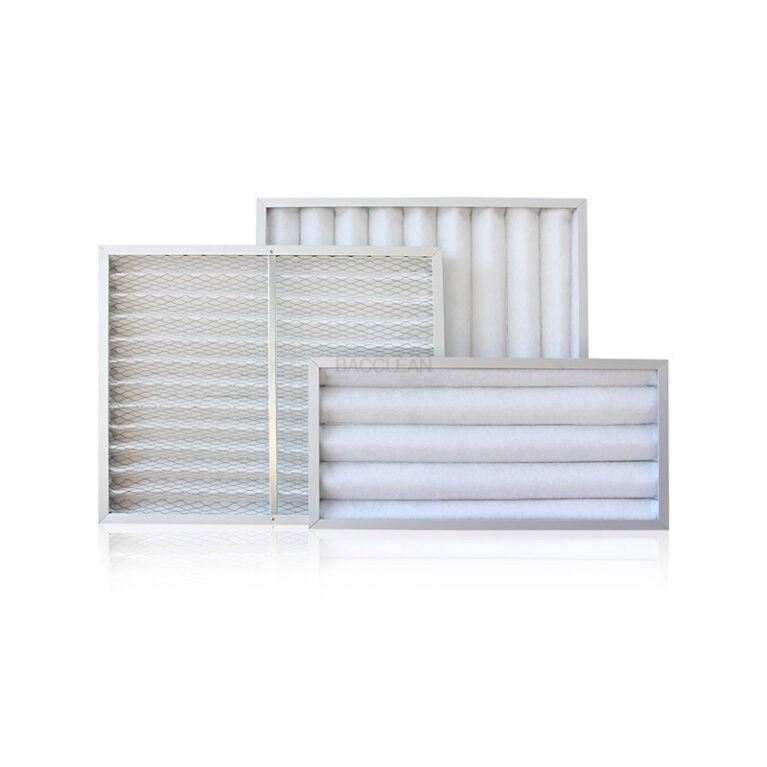
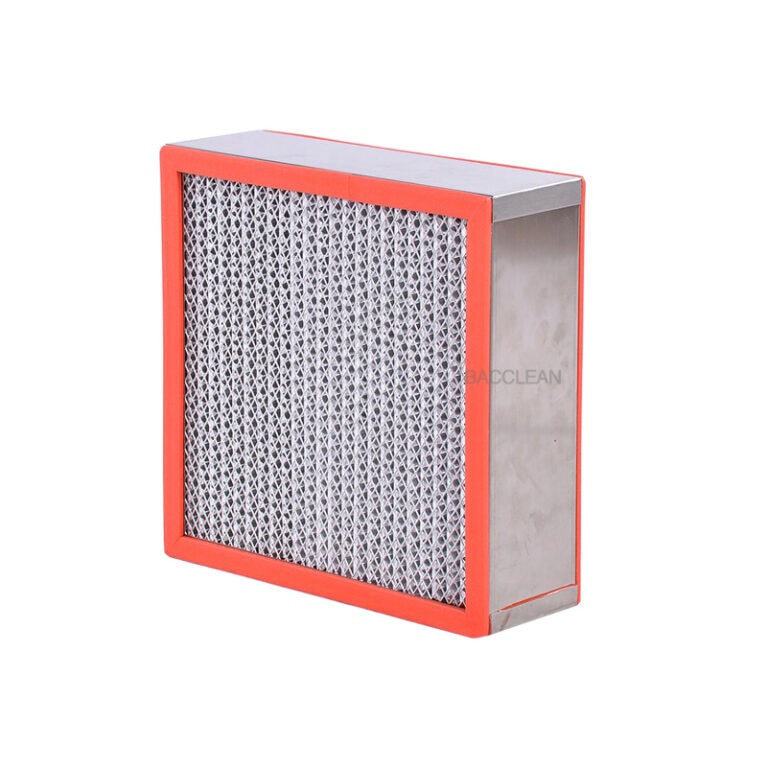
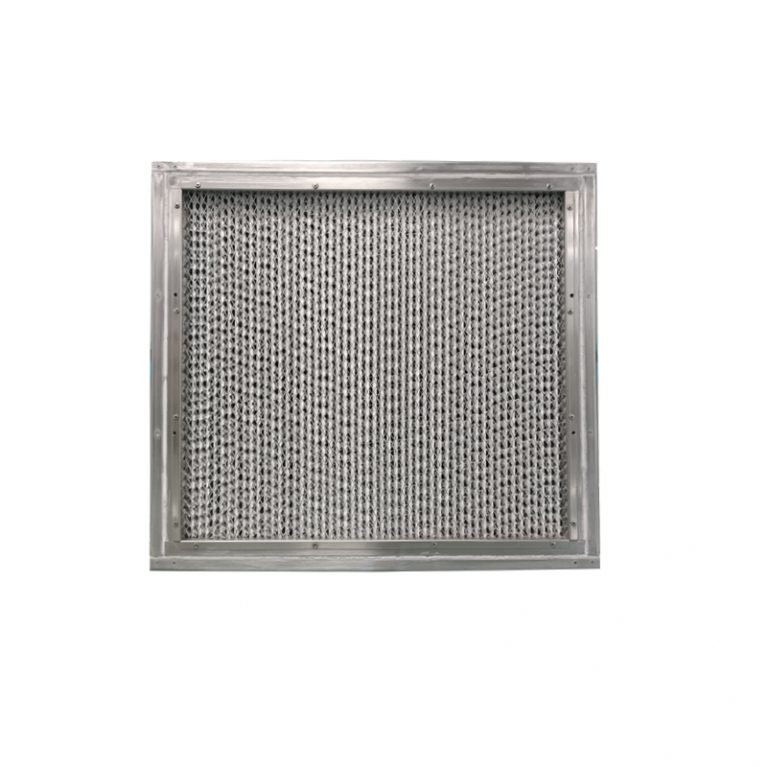
The final resistance standards for different models of high-temperature resistant air filters with separators are not entirely consistent. The numerical differences are determined by three core factors: filter material, structural design, and rated air volume. The specific differences and patterns are as follows:
I. Core Influencing Factors of the Differences in Final Resistance Standards
The material of the filter material determines the basic resistance range
The filter material of high-temperature resistant filters is the core influencing factor of resistance. The pore size and porosity of fibers made of different materials vary, and the reference values of initial resistance and final resistance differ significantly.
Glass fiber filter material (temperature resistance 250℃)
The fiber diameter is fine (0.5-2μm), with a high porosity. The initial resistance is usually 100-150Pa, and the final resistance is calculated as 2-3 times the initial resistance, corresponding to 200-450Pa.
Ceramic fiber filter material (temperature resistance 400-600℃) :
The fiber diameter is thick (2-5μm), and the porosity is relatively low. The initial resistance is usually 120-180Pa, and the final resistance corresponds to 240-540Pa.
Basalt fiber filter material (temperature resistance above 800℃)
The fiber is highly rigid, with a dense pore structure. Its initial resistance can reach 150-200Pa, and the final resistance corresponds to 300-600Pa.
Structural design affects the resistance coefficient
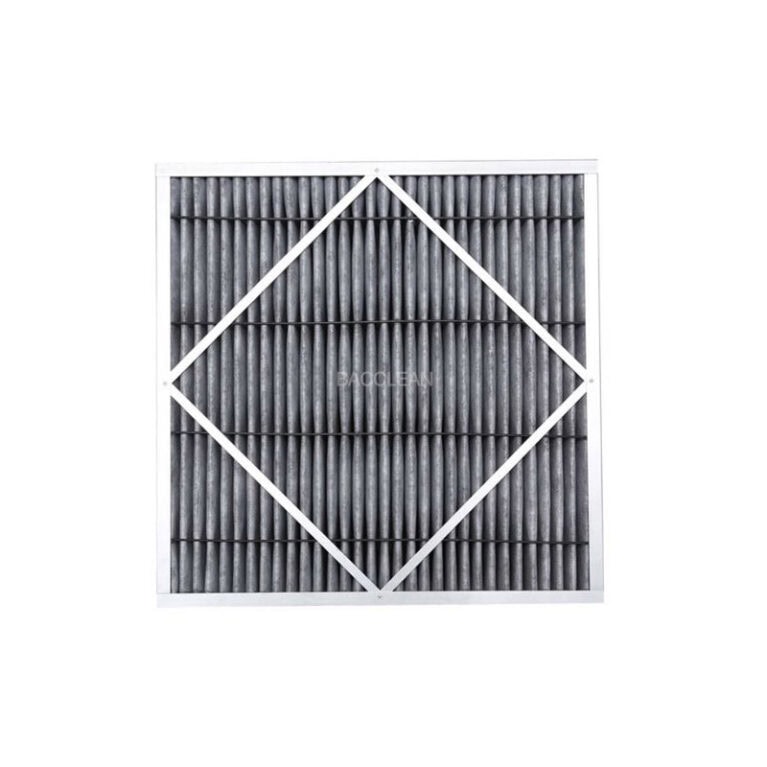
The spacing of the separators, the folding depth of the filter material, and the windward area of the filter with separators will directly affect the air flow passage efficiency and thereby change the final resistance standard.
Small-pitch partition plates (≤20mm) + deep-folded filter materials: Long air flow path, large filtration area, gentle resistance rise, and the final resistance can be set at 2.5 times the initial resistance.
Large-spacing partitions (≥30mm) + shallow-folded filter materials: The air flow resistance is small, and the initial resistance is relatively low. However, the dust-holding capacity of the filter materials is small, and the final resistance is usually set at twice the initial resistance to avoid premature clogging.
The rated air volume determines the working condition resistance value
For filters with the same filter material and structure, the final resistance of different rated air volume models is also different
The greater the rated air volume, the higher the air flow velocity passing through the filter material within a unit of time, and the faster the resistance increases. The final resistance standard will be appropriately reduced (for example, the final resistance of the 1000m³/h model is 300Pa, and the final resistance of the 2000m³/h model in the same series may be adjusted to 280Pa).
The smaller the rated air volume, the lower the air flow velocity, the longer the dust-holding time of the filter material, and the final resistance standard can be appropriately increased.
Ii. Industry General Rule: The calculation principle of the final resistance is consistent
Although the final resistance values vary among different models, the calculation logic is completely unified:
Final resistance = Initial resistance × (2-3)
This multiple range is a universal standard determined by the industry based on the dust-holding limit of the filter material, energy consumption balance, and the critical point of filtration efficiency attenuation. All models follow this principle, with the only difference being the base value of the initial resistance.
Iii. Non-standard setting of final resistance for special models
The final resistance of some customized models will be adjusted according to the working conditions and does not follow the conventional multiple.
Customized for high-dust environments: To extend the service life, the windward area of the filter material will be increased, and the final resistance can be set at an upper limit of three times the initial resistance.
Customized version with low energy consumption requirements: To reduce the operating cost of the fan, the final resistance standard will be appropriately lowered, set at the lower limit of twice the initial resistance to avoid excessive resistance leading to an increase in energy consumption.
الملخص
The final resistance values of different models of high-temperature resistant air filters with separators vary, but the calculation principles are the same. In practical applications, the initial resistance value marked in the product’s factory manual should be taken as the benchmark, and the final resistance should be determined in combination with a multiple range of 2 to 3 times, rather than directly applying the standard values of other models.