الأخبار

الصفحة الرئيسية / Installation, Commissioning, Troubleshooting & Energy-saving Operation Maintenance Technology for FFU Fan Filter Units
مركز المعلومات
اختر جولاتك الخاصة
الحل
المنتجات الموصى بها
آخر الأخبار
اتصل بنا
Installation, Commissioning, Troubleshooting & Energy-saving Operation Maintenance Technology for FFU Fan Filter Units
The installation precision, commissioning standards and daily maintenance quality of Fan Filter Units (FFUs) directly determine the overall purification effect, energy consumption and service life of cleanrooms. Common problems in the industry such as unsatisfied cleanliness, uneven local airflow, excessive energy consumption and abnormal noise mostly stem from non-standard installation, inadequate commissioning and incomplete maintenance systems. From the perspective of engineering practice, this article elaborates on the standardized installation and commissioning procedures, solutions for frequent faults, and refined energy-saving maintenance technology of FFUs, providing technical support for the stable operation of cleanroom systems.

GMP合规称重室设计与气流控制核心技术 12

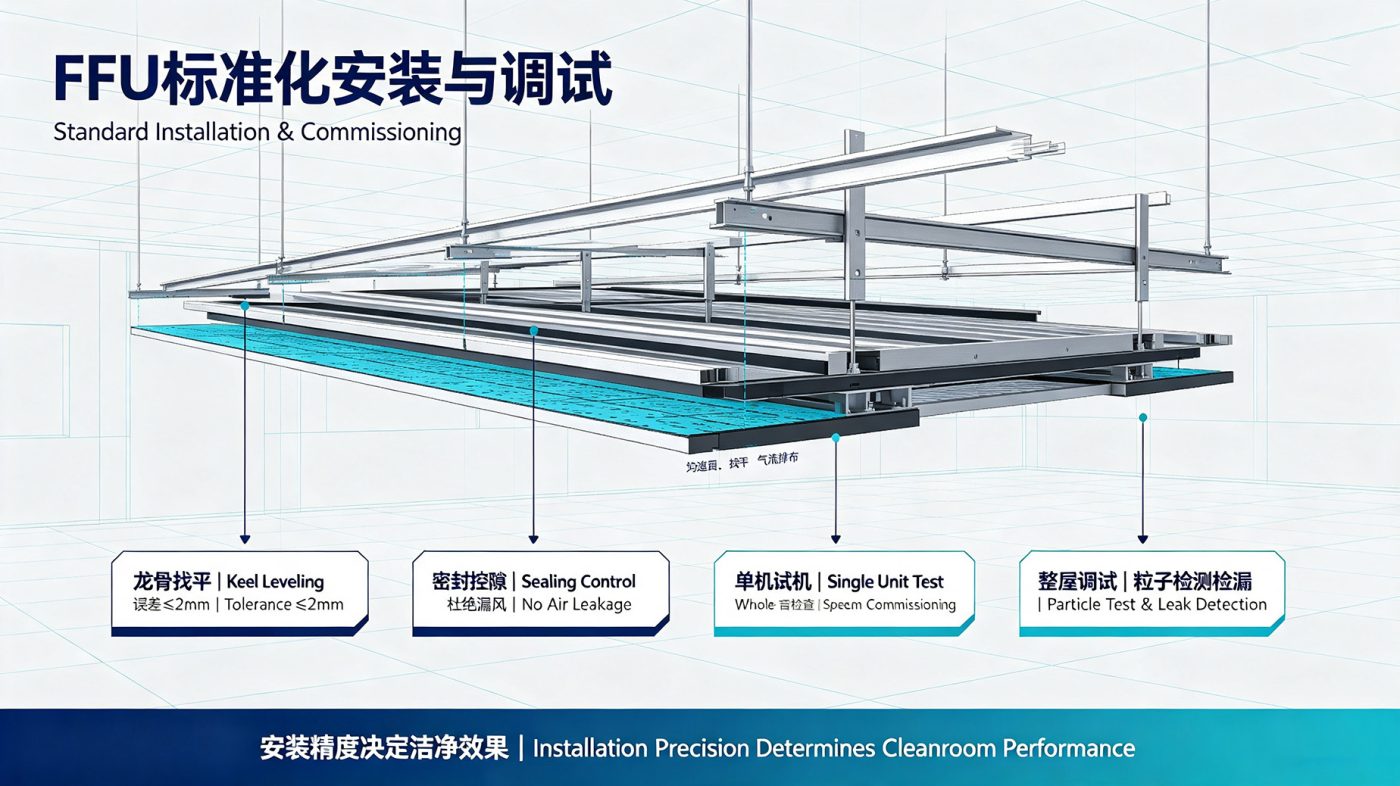
Standardized installation and commissioning lay the foundation for efficient operation of FFU systems. Before installation, ceiling keels must be level calibrated with the horizontal error controlled within 2 mm to guarantee flat installation and tight sealing of FFUs. Place units gently for alignment during installation, compress frame sealing strips strictly and limit assembly gaps to eliminate air leakage risks. Even spacing shall be maintained among multiple FFUs to avoid airflow superposition or vacant zones.


Systematic commissioning shall be carried out after installation: First, perform single-unit test run to verify fan startup & shutdown, wind speed stability and operating noise. Next, conduct whole-room system commissioning. Measure airflow uniformity across the area with an anemometer and adjust the wind speed of FFUs in different zones, ensuring the overall airflow velocity deviation ≤ ±10%. Finally, complete particle counting test and filter leak detection to eliminate air leakage and filter failure, so as to meet cleanliness requirements. For intelligently group-controlled FFUs, network commissioning is required to ensure normal functions including zonal control, wind speed adjustment, fault alarm and data monitoring.

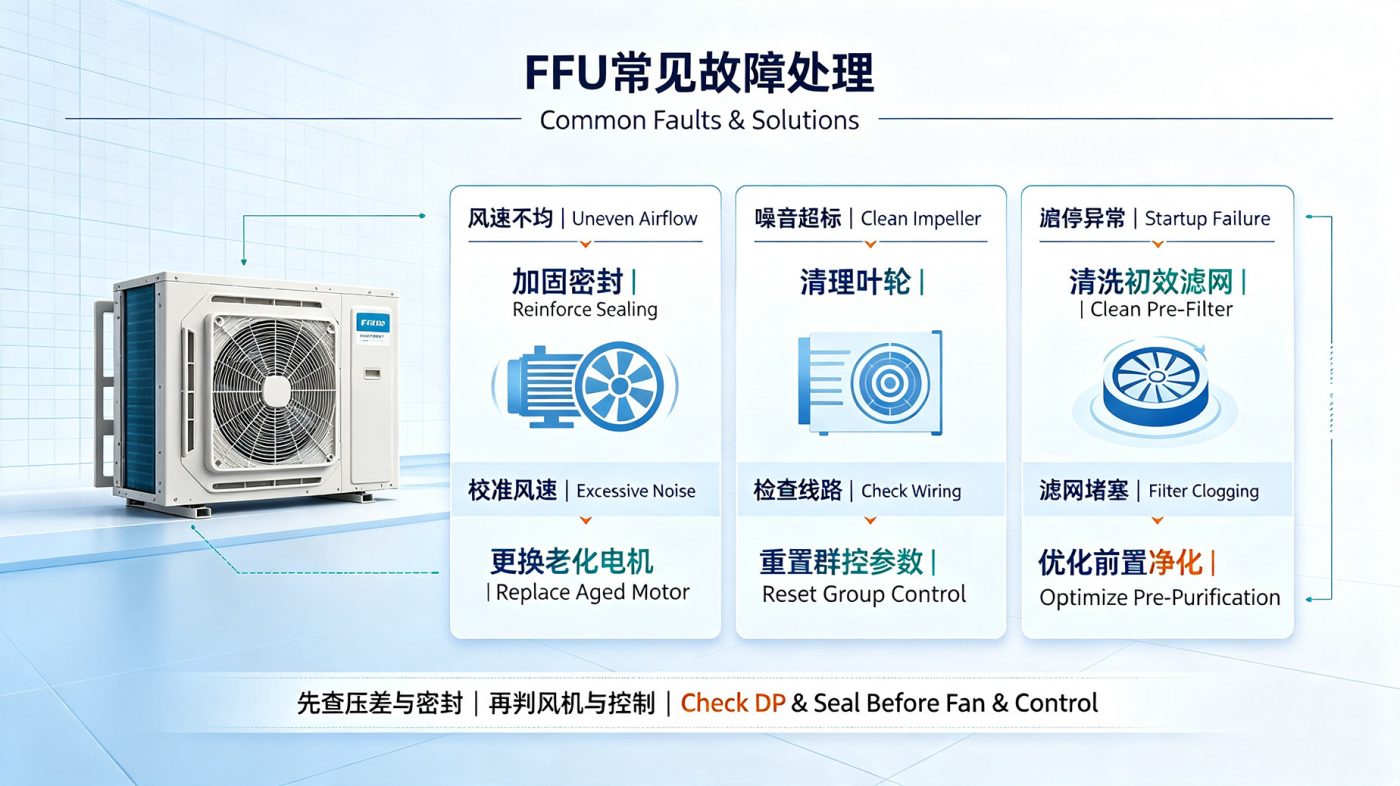
Targeted handling of frequent FFU faults enables rapid resolution of purification abnormalities in workshops.
  1. Uneven airflow & substandard local cleanliness
     

    Main causes: air leakage at assembly gaps, wind speed deviation of individual FFUs, partial filter clogging. Solutions: reinforce sealing, calibrate wind speed, replace clogged filters as needed.

  2. Abnormal fan noise & excessive sound level
     

    Generally caused by dust accumulation on impellers, loose fittings or aging motors. Regularly clean impellers, fasten components and replace aging motors to restore standard quiet operation.

  3. Abnormal unit startup/shutdown & group control failure
     

    Mostly resulted from poor wire connection or control system program errors. Inspect wiring connections, restart the control system, upgrade programs and reset parameters for software faults.

  4. Rapid filter clogging
     

    Mainly due to long-term uncleaned pre-filters and insufficient pre-purification of workshop supply air. Shorten the cleaning cycle of pre-filters and optimize the workshop primary air purification system.
GMP合规称重室设计与气流控制核心技术 13

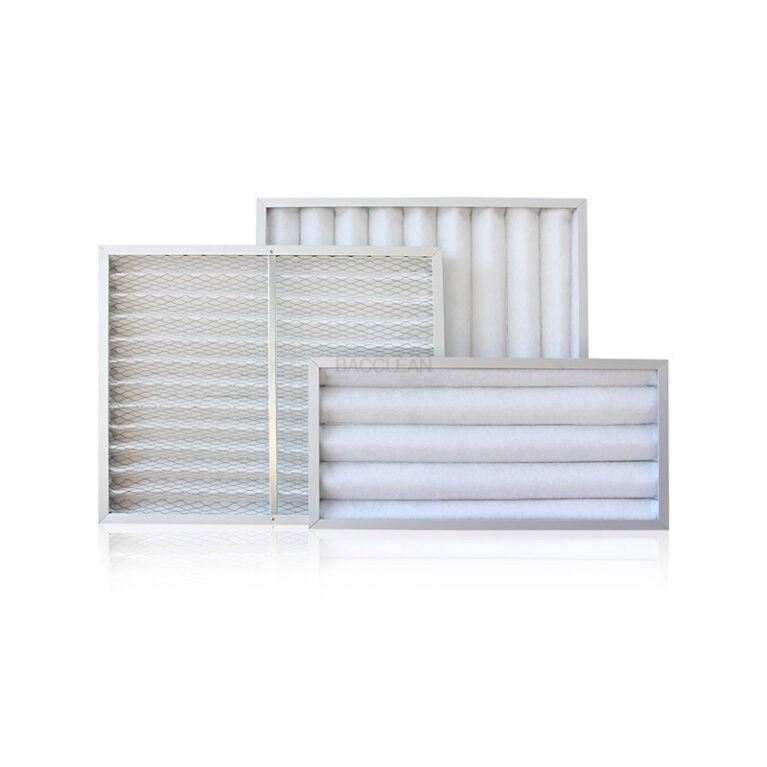
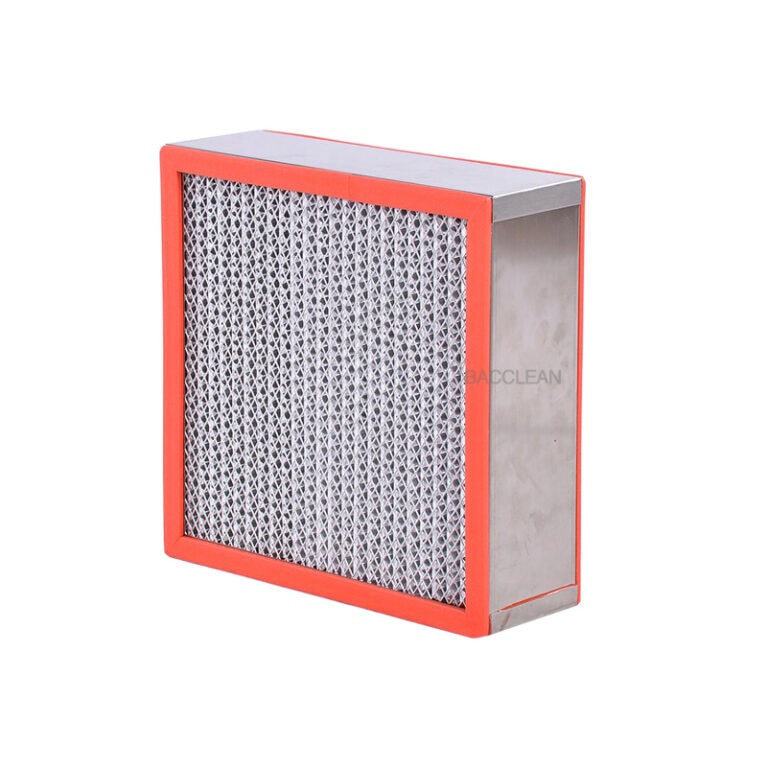
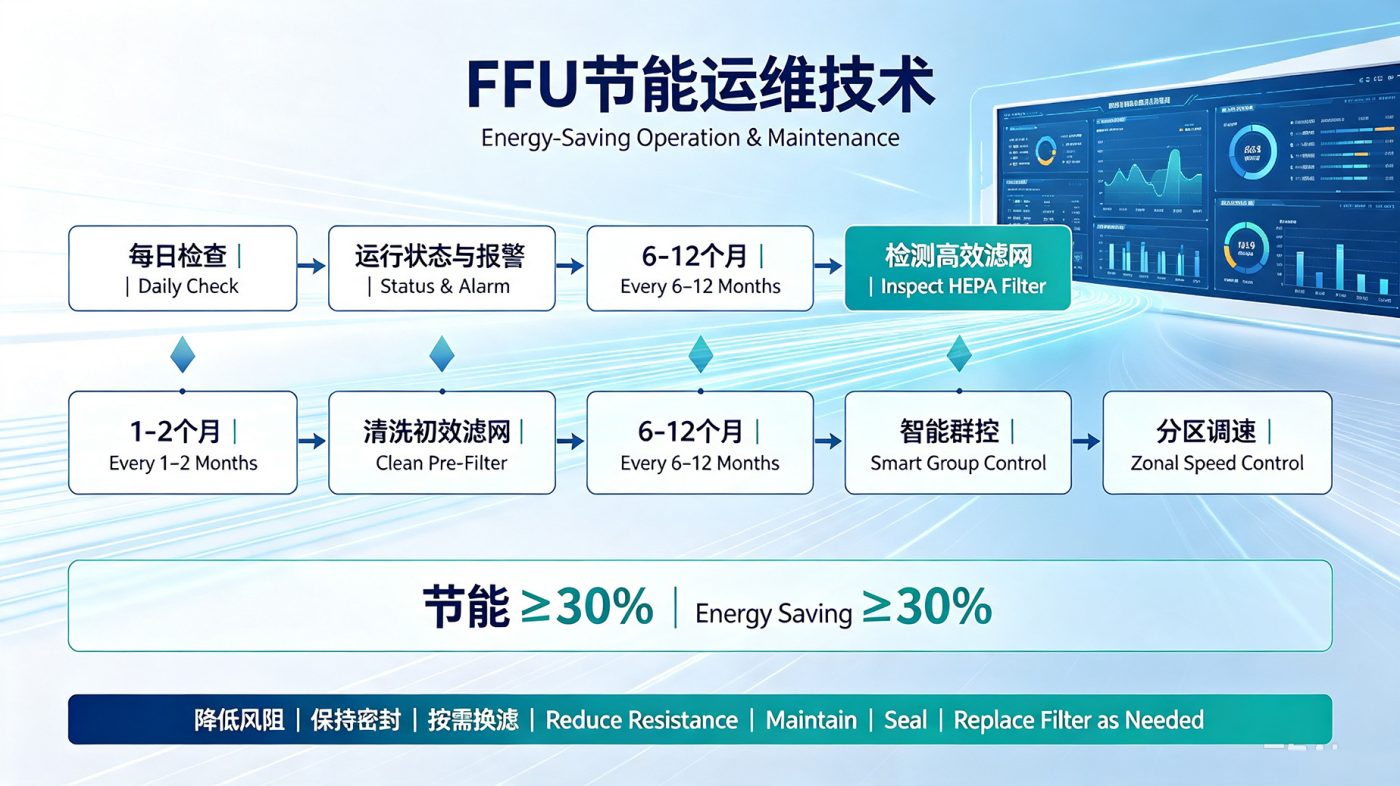
Refined energy-saving maintenance is critical to cutting operating costs of clean workshops. A hierarchical maintenance schedule should be established: Check operating status, wind speed parameters and alarm information every day; Clean pre-filters every 1~2 months to trap large particles and protect HEPA filters; Inspect the performance of high-efficiency filters every 6~12 months and replace filters according to differential pressure data to avoid unnecessary cost from premature replacement.
GMP合规称重室设计与气流控制核心技术 14
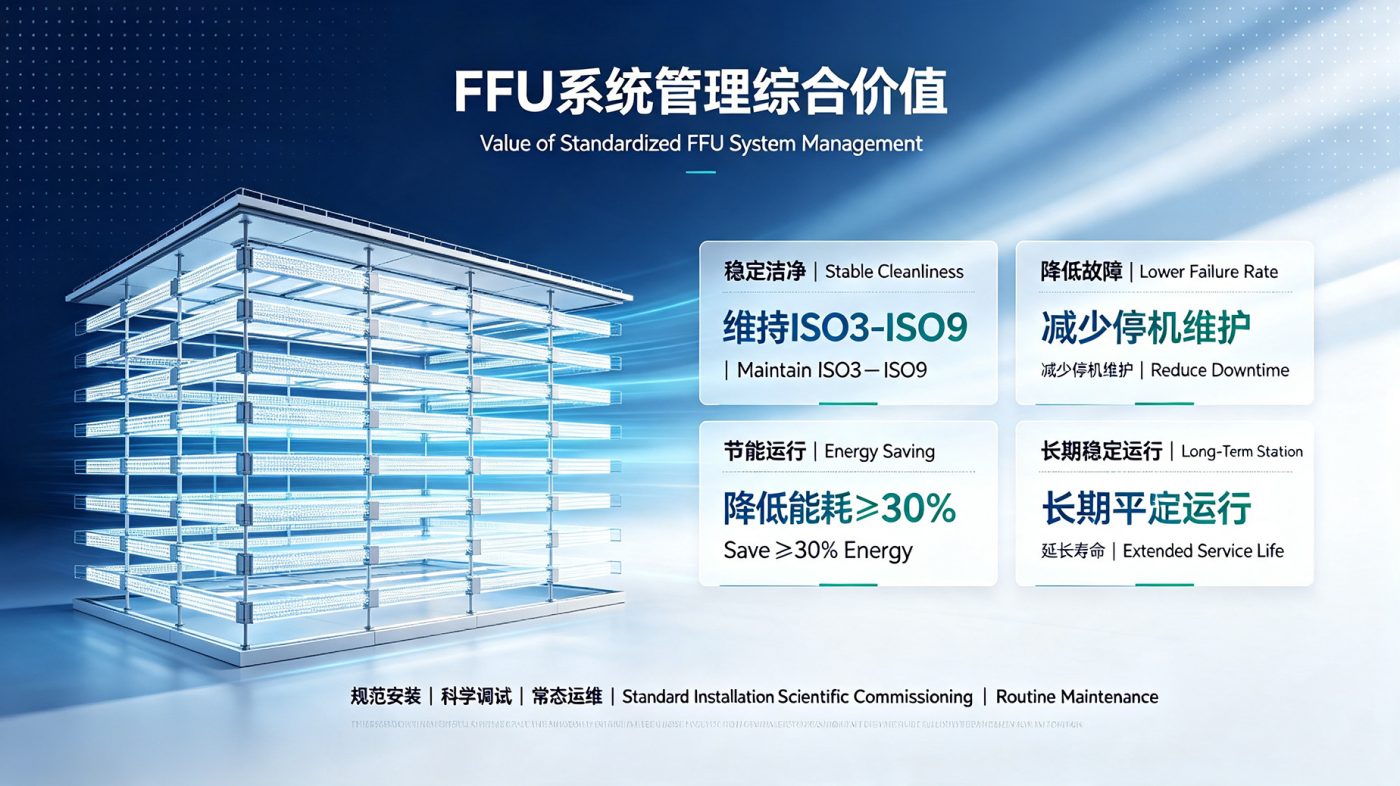
For energy optimization: Utilize the intelligent group control system to adjust wind speed by zones based on production conditions. Run at rated speed during production and switch to low-speed energy-saving mode during standby, which can reduce overall energy consumption by over 30%. Regularly calibrate fan parameters and clean dust inside air passages to lower wind resistance and motor power loss. Maintain unit sealing properly to prevent energy waste caused by air leakage.
GMP合规称重室设计与气流控制核心技术 15
Standard installation, commissioning and regular energy-saving maintenance allow FFU systems to sustain stable cleanliness for long-term operation, greatly reduce equipment failure rate and power consumption, extend service life, and deliver core support for low-cost and high-efficiency operation of clean workshops.

اترك تعليقاً

لن يتم نشر عنوان بريدك الإلكتروني. الحقول الإلزامية مشار إليها بـ *

شارك لـ...